
by Lin, Tzu-Chun
The demand for plastic surgery is growing. The number of clients in the US experienced a three percent growth from 2012 to 2013, and 15.1 million people in America received plastic surgery in 2013 (ASPS, 2014). The growing number of people getting plastic surgery in a way represents a public approval of plastic surgery, however that is not necessarily the truth.
In “Saving Face: More Asian American opting for plastic surgery,” Jennifer Bagalawis-Simes connects plastic surgery and looking natural (Simes 2010). Bagalawis-Simes states that plastic surgery has been seen as mimicry of being more “white”, and thus she wrote that “Many have procedures that enhance natural look instead of altering their ethnic appearance”.
This is similar to people using skin-lightening products to “naturally” obtain the skin they had when they were babies. How could it be “natural” for an adult to have baby skin?
On the topic of plastic surgery, how could people look more “natural” after having artificial surgery, compared to how they looked before the surgery? However, there is another link, that people seem to be consenting to having these baby skin cosmetics appear in the Japanese marketplace, and it may be a similar mental activity as they may give plastic surgery the consent to appear.
Certainly, the influences from aesthetics and other factors should not be ignored. In “The poor have the right to be beautiful,” Alexander Edmonds notices that plastic surgery has been a tool to obtain body capital, where the representation of good looks or aesthetics is influenced by national cultures (Edmonds 2007). Edmonds helped develop the thinking of the possibility that one region’s aesthetics may have its own roots beside the western-dominant “white is right” ideology. The sense that plastic surgery may turn a person more like its own belonging instead of white or Caucasian may also be a reason for the suggested consent from receiver and public to plastic surgery.
However, the consent to baby skin cosmetic and plastic surgery may also be just the illusion as the result of ignorance. In the arguments regarding race and ethnicity, the term “dominant group” refers to the people who are the majority of their society, the advantage of dominant leads to a less concerning to the racial and ethnic issues, which create an ignorance to the issues.
Suppose that men do not use baby skin cosmetics (where some may), and not all women use it, and in addition these baby skin cosmetics are mainly spread in Japan. These facts lead to the suggestion that it is the people who do not use baby skin cosmetics being the dominant group, thus they may had never give consent to it but did not notice it.
This suggestion is valid for me personally, that months before I had never thought about the paradox between natural looking and baby skin cosmetics. Applying this suggestion to plastic surgery, it makes sense that the majority of people are those who do not receive plastic surgery, thus it become possible that they did not give consent to its existing but due to unnoticed on the issue.
References
ASPS. (2014, Feburary 26). Plastic Surgery Procedures Continue Steady Growth in U.S. Retrieved November 25, 2014, from American Society of Plastic Surgeons: http://www.plasticsurgery.org/news/past-press-releases/2014-archives/plastic-surgery-procedures-continue-steady-growth-in-us.html
Edmonds, A. (2007). ‘The poor have the right to be beautiful’: cosmetic surgery in neoliberal Brazil. Journal of the Royal Anthroplogical Institute , 363-381.
Simes, J. B. (2010). Saving Face: More Asian Americans opting for plastic surgery. Retrieved November 25, 2014, from hyphen: http://www.hyphenmagazine.com/magazine/issue-22-throwback/saving-face-more-asian-americans-opting-plastic-surgery



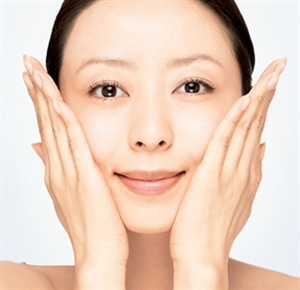 In her research on Japanese whiteness, Mikiko Ashikari (2005) tries to explain where the idea of a specific white skin among the “Japanese race” comes from. According to Ashikari, it seems less likely to be from Caucasians’ influence, since Japanese women considered Caucasian skin as “rough, aged quickly and had too many spots” (Ashikari 2005:82). The idea of white skin in the Japanese society is even more specific than any other features that could define the idea of being “Japanese”. Although Japanese change their hair color with dying products, their eye color with contact lenses, and their physical features with plastic surgery, they would never change their skin color because “the notion of Japanese skin works as one medium to express and represent Japaneseness” (Ashikari 2005:76). As Ashikari notes, by defining a specific skin color to their race, Japanese people are even able to reject the Okinawan people as a “second-class citizens” (Gibney quoted by Ashikari, 2005, p. 80).
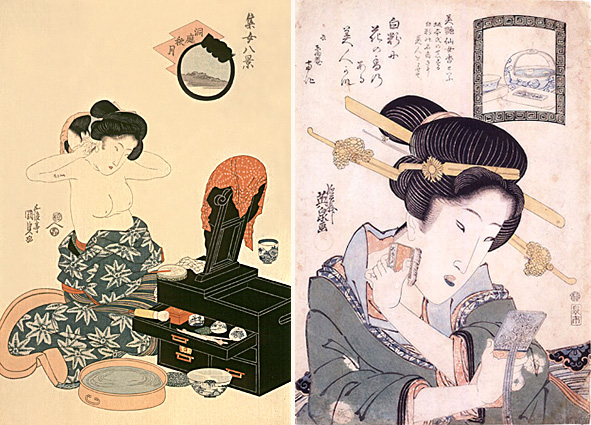 Actually, Japanese whiteness has its roots even before the Black Ships arriving in Japan during the 16th century. It is said that during Nara Period (710–94) and Heian Period (794–1185), Japanese women were already using diverse products to light their skin tone (Kyo 2012). The ideal of white skin is also found in a lot of literature of this period such as the Diary of Lady Murasaki and Tale of Genji (Kyo 2012). Back in the Heian Period, women would blacken their teeth and shave their eyebrows. Nowadays nobody would shave their eyebrows as a sign of beauty but the idea of white skin as the ideal of beauty among Japanese women is still a recurrent topic in Japanese society.
 by Lin Tzu-Chun
 In China, for example, you have to go find some exclusive shops to buy a KOSE products, but here in Japan they are put at the entrance of many drug stores. This different marketing strategy reminds the Chinese phrase “Bai, fu, mei” or “White, Rich, Beauty”, is that white means you are rich because you are able to consume expensive lightening products. Does that mean that the products might be more effective? If we compare the income difference, it may be true that you really need money to buy expensive cosmetics but there is no guarantee they will be effective. For whiteness, I refer to a common saying in China, “one white covers hundred (three) ugly”, which means that if you are white and make it the focus point of people’s sight, people won’t care much about your other problems.


 JAPANsociology