The Portrayal of Black People in Manga and Anime

by Allan Kastiro

UntitledI have been a big fan of Manga and Anime for as long as I can remember. I always admired how the Japanese style of drawing cartoon characters was different from that of popular western comics and animations. The characters in Manga and Anime have always stood out because they are unique. That is, many of them have exaggerated and flamboyant features and this always stood out for me and many other fans alike. Never did it ever occur to me that the way the Japanese creators illustrate their artistic work had significance on how race and ethnicity is viewed or construed in Japan.

As I began to read and watch more Manga and Anime, I began to notice how non-Japanese characters (people of color, specifically of African origin) were drawn and represented and many of them had very stereotypical characteristics. This can be seen in their dressing style, behavior, speech patterns and activities they are engaged in.  One such character is ChocoLove McDonell (pictured above) from the manga and Anime ‘Shaman King’. Where do I even start with this … His name is CHOCOLOVE!!! The character is an African American who has his hair in an afro, has exaggerated lips and wears an African wrap on the lower half of his body. Ohh and his animal spirit is a Jaguar! Many other non-Japanese characters are as controversial for example Mr. Popo from Dragon Ball and Jynx from pokemon who both appear to be in black face, Staff Officer Black and Killa from Dragon Ball, Bugnug or ‘dark eyes’ from Crying freeman et cetera. The characters mentioned are all African American with the exception of Bugnug  (which means Ant-Eater pokemonapparently) who is the leader of the Askari (Swahili word to mean soldier) which is an African revolutionary organization.  Bugnug is first introduced to Crying Freeman manga readers when she launches a surprise attack on Yō Hinomura who is the main character.  She is illustrated to look ‘exotic’. She is beautiful with long curly hair but is muscular and masculine in her behavior. It is  impossible to compare her to the other Japanese females in the same manga as they seem more fragile and feminine.

bugnugDuring the battle with Yō Hinomura (Crying Freeman), Bugnug is completely naked and only carries a blade. When she is finally defeated by Yō Hinomura, the two become allies and she later on gets his assistance to defeat a coup d’état in her organization. It seems as though the creators of this manga and anime went all out to display Bugnug’s supposed ‘Africanness’ by naming the character Bugnug which they go on to translate as Ant-Eater, having her fight naked, which I believe represents a kind of primitiveness and then including a coup d’état in her storyline which occurs within her revolutionary organization. So this leaves me to question why some characters of African ancestry are represented in this manner in manga and anime.  Do all the people of African ancestry have these characteristics and why have these stereotypes been continuously perpetuated?

When trying to answer these questions, it is important to note that Japan has always been a homogeneous nation and this has created a kind of distance between them and other cultures from many parts of the world. Thus, a lot of what Japanese people know and perceive has been spread through western media which is dominated by America through entertainment, news, music et cetera.  In the article ‘What does “American” Mean in Postwar Japan?’ by Yoshimi Shunya (2008) he writes that,

From the late1950’s onward, “America” was distilled as a uniform image with even greater power than before to gain people’s hearts. ..Until the early 1950’s the word “America” was simply invoked as a model to be emulated… “America” also came to be associated with the “pop-culture” of Japanese youth. As “America” became less direct, more mediated, and increasingly confined to images, it conversely became more interiorized and its effect on people’s consciousness became deep. (Yoshimi Shunya, 2008)

slamdunkThis exposure has been both positive and negative in that it has opened up Japan to other cultures and has made the Japanese people more aware of the differences between their cultures, traditions and those of people from other parts of the world but has also promoted the adoption of negative stereotypes thus most of what the Japanese know are imagined racial distinctions that have been created and promoted by the western media.

As I come to the end of this blog post, I would like to point out that not all black people are represented stereotypically in some of the Manga and Anime works and some Japanese characters have even been made to have darker skin tones or even display several characteristics that one would categorize as being black. An example that comes to mind is  Takenori Akagi from Slam Dunk!

In conclusion, I believe that as Manga and Anime continue to spread and attain wider audiences, their popularity will help raise awareness on how race and ethnicity is viewed in different parts of the world and this will in turn create a better understanding of these different cultures and ethnicities.

Reference

Shunya Y. (2008). “What Does ‘American’ Mean in Postwar Japan?” Nanzan Review of American Studies 30:83-87

Constructing the Standard of Beauty

by Wang Yang

In the section “Does Sailor Moon ‘look white’?” of Terry Kawashima’s article “Seeing Faces, Making Races: Challenging Visual Tropes of Racial Difference”, Kawashima argues that facial features and skin color commonly found in the Shojo Manga characters should be understood as “an assertion of a certain kind of aesthetic promoted in contemporary Japan”. Whiteness, as well as those body features (like smallish noses, mouths, and round faces), is read as a standard of beauty. Those elements are not necessarily characteristics of the white. The process of “Japanizing” of “white” figures and “whitening” of Japanese figures occurs simultaneously. The white or the westerners spread their value

One of the contemporary results for a western-dominated world setting up the standard of beauty is just as what Terry mentioned in the next part of her article, “self-alteration” of Japanese. Japanese consumers purchase products to make themselves look white. Seeking whiteness became a fashion and more economic value was created through the idea of being whiter. However, this is definitely not just a contemporary phenomenon. Historically, there are more serious issues which shares similarities with the spreading aesthetic of seeking whiteness.

The example of the “Hadairo” (Skin Color) crayons, which the color of the “Hadairo” crayons selling in Japanese market is actually whiter than the color of Japanese. Japanese children also tend to paint the skin of Japanese with a brighter color, which reminds me of the famous Clark doll experiment conducted by Dr. Kenneth Clark and his wife. The experiment was conducted under the social context of racial segregation in 1954. During the period of racial segregation, whites were separated from African Americans in terms of various social facilities or services such as education, transportation, etc. As segregation and discrimination against African Americans went on, the social image of African Americans was constructed as inferior to whites. Under the legal doctrine of “separate but equal” admitted by the U.S Supreme Court, the segregation was justified. The experiment was a key evidence to show the negative influence of segregation to the children.

Clark Doll Experiment

The construction of the image of a certain race might be through segregation. In the experiment, Dr. Clark showed one white doll and one black doll to African American children and asked them the following questions in such order:

“Show me the doll that you like best or that you’d like to play with,”

“Show me the doll that is the ‘nice’ doll,”

“Show me the doll that looks ‘bad’,”

“Give me the doll that looks like a white child,”

“Give me the doll that looks like a colored child,”

“Give me the doll that looks like a Negro child,”

“Give me the doll that looks like you.”

As a result, most of the black children regarded the black doll as bad one and surprisingly 44 percent of the African American children said that the white doll looked like them. This is indeed similar as the Hadairo crayon case. Both Japanese and black children’s mindset of beauty are influenced and set by the dominant white race.

It is natural for a race with dominant power over other races to create a better self-image and set up the standard of beauty in any historic period. This might be achieved through different methods. In case of the Clark doll experiment, this was achieved through racial segregation. In the modern version, it was through globalization and mass media. Personally I feel that the phenomenon may lead to one possible conclusion: The standard of beauty changes all the time according to the global power balance and there are always new methods to spread those values. I strongly believe that this is an ever-lasting phenomenon.

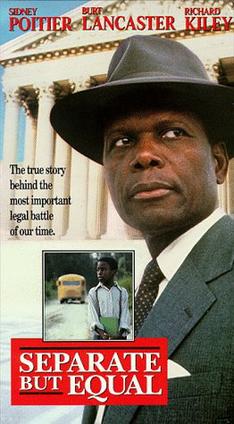
For more information about the racial segregation and Clark Doll Experiment, I would like to recommend the movie, Separate But Equal.


References


Stereotypes and the Clark Doll Test by Clark & Clark (2012). Retrieved from Web site: https://explorable.com/stereotypes


Stevens, G. (Producer), & Margulies.S (Director). (1991). Separate But Equal [Motion picture]. United States: New Liberty Films & Republic Pictures

Do manga characters seem white to you?

by Agathe Schwaar

1337781095390Manga are a topic that has been well-researched in  Japanese Studies. However, when it comes to racial identity, we can see strong wonders about the racial identity found in the manga characters. On the one hand, if you search on the internet the question in English “Do Manga look like white people”, you have 14,000,000 results. On the other hand, if we do the same search in Japanese “漫画キャラクターは白人っぽい“, you only get 736,000 results and it is mainly a translation on the question asked by foreigners.
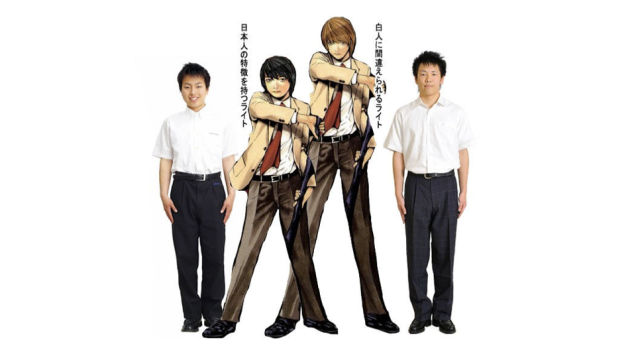
18289p74nf2ixjpgTerry Kawashima (2002), in her essay “Seeing Faces, Making Races: Challenging Visual Tropes of Racial Difference,” argues that the manga characters are mainly based on whiteness’ particularities and they influence the young women when it comes to the concept of beauty. According to her, the manga readers had been “culturally conditioned to read visual images in specific racialized ways that privilege certain cues at the expense of others and lead to an over determined conclusion” and highlight the issues on how “race” is a social constructed category.

It is true that media and films had been marking differences between characters from different countries or social background through racial and social features that had left stigmas in our observation of the World. However, Manga’s drawing is less likely to be considered as a description of “whiteness” characteristics. One the manga’s particularity is the notion of 無国籍 or literally “a country-neutral quality” (Iwabuchi, 2002) which defines manga characters having no any race attributed to them. Koichi Iwabuchi (2002) in his researches calls this particularity as “odorless”: It has not specific features and it is one of the reasons why manga are successful abroad. The most common examples are Hello Kitty and Mario in the Nintendo’s video games.

cc_future_130610_wmainSo why do we see specific racial features in these “odorless” characters? It is mainly because of our personal representation of racial differences. These differences are called “markedness” by Matt Thorn (2004), we used our own culture and features of our own personal experiences to identify the character’s race. For example, look at a manga character with blond hair and blue eyes who is eating a bowl of rice with chopsticks. Where a French person will see a French personage because of its physical features and because he is himself French, the Japanese will see a Japanese person because this he/she is eating a bowl of rice with chopsticks.

It is undeniable that we mark manga characters with racial features which we encountered in our personal life. In this context, it is less likely that Japanese people also see white people in the manga they read. What they must see is a typical Japanese person. It is then difficult to confirm Terry Kawashima’s argument on the “white privileging” perception we may see in manga. Thinking that Japanese readers see white people in manga would imply a sentiment of inferiority of the Japanese community toward the “white race”. If we follow this idea, we fall into a generalization of the supremacy of whiteness in our current society and destroy the main principle of manga’s ideology neutral racial or “無国籍”. However, when it comes to racial stereotypes in manga characters, we actually reach another important issue on racial representations in Mass Media and we should put more attention on this subject.

References

Iwabuchi, K. (2002). Recentering globalization: Popular culture and Japanese transnationalism. Durham: Duke University Press.

Kawashima, T. (2002). Seeing Faces, Making Races: Challenging Visual Tropes of Racial Difference. Meridians, (1), pp.161-190.

Thorn, M. (2004). Do Manga Characters Look “White”? Retrieved from http://www.matt-thorn.com/mangagaku/faceoftheother.html

Skin tone and Self-esteem among African Americans

Malcolm X

Malcolm X (Photo credit: Wikipedia)

by Hiroyuki Matsuyama

As Verna Keith says, skin tone is one of central features for determining one’s self image, and it happens a lot that your occupation or income are decided by looking at your skin tone. It is so sad, but it is the fact that we are facing today. From this point of view, mulattos distanced themselves from the larger African American community by excluding darker blacks from their social organizations. Moreover, they were avoiding intermarriage with people with darker skin so as to pass their advantages on to their children. In this way, even within black communities, there was hierarchy and discrimination against other people.

It is truly difficult to eliminate this injurious racism completely, and it would probably not happen that people would evaluate others and give jobs equally, but prejudicially. In spite of this unfairness, I hope people who are discriminated against to keep having self-esteem, at least to a certain extent. Thus, Malcolm X was really great person because he tried to make people have confidence. He claimed a notion “black is beautiful” in order to fight against racism.

Nonetheless, it is not for criticizing or discriminating against white people, but for attempting to undo black-on-black racism. The reason is because black people were brainwashed by white power, so he thought that he needed to remove this structure as a priority concern. By stating this concept, he tried black people to have self-esteem.

In addition to this, there is a famous speech ‘Who taught you to hate yourself’ by Malcolm X. In the speech, even though his words were sometimes inappropriate, he encouraged audiences well by saying features that are supposed to be words for insulting black people, such as lips, hair texture and so forth. This speech was really helpful for those who were struggling, and they started to have Afro hairstyle to show their self-esteem. This hairstyle enabled black people to express their culture and historical identity.

In conclusion, cruel racism is still going on in today’s modern world unfortunately. Even though people have started to think more about it, racism is still harsh and out of control. However, people who are racially discriminated against should try to stand up and claim your opinion without any fear. Every single person should be oneself, not like others. Being another person by imitating others or dissimulating yourself is not the way you are. In my opinion, that is the end of your life when you have lost your self-worth.

Reference

Keith, Verna M. 2010. “A Colorstruck World: Skin Tone, Achievement and Self-Esteem Among African American Women.” In Shades of Difference: Why Skin Color Matters, edited by Evelyn Nakano Glenn. Stanford, CA: Stanford University Press.

How African Women See Themselves

by Yutaro Nishioka

The term colorism is defined in the work of Verna M. Keith, “A Colorstruck World: Skin tone, Achievement, and Self-Estimation Among African American Women,” as “the privileging of light skin tone over dark skin tone” (Keith, 2009). In other words, people with dark skin are seen as inferior to those with light skin. This view was somewhat hard for me, as a Japanese, to perceive in Japan, especially before I went to Atlanta at the age of 16 as an exchange student. Before I went to Atlanta, I had never known a black person; I had not seen a black person at school, supermarkets, stations, parks, libraries, or any other public places. Hence it is natural that I could not really perceive or feel colorism in Japan.

According to Keith (2009), black women (and even girls) are encouraged or even told to “marry light,” that is, marry a husband of lighter skin tone, so that they can at least “save” their children from having to go through the hardship and pain of being discriminated against for having dark skin, even if they had to suffer it themselves. Young black girls are even told not to play outside in the sunlight because that would make their skin even darker, which would make them “less attractive (often not spoken aloud)” (Keith, 2009).

While white or European features, such as “blue, grey or green eyes, straight hair texture, thin lips, and a narrow nose” are seen as “higher status,” more attractive, and intelligent, black or African features, such as “broad nose, kinky hair, full lips, and brown eyes” are devalued both inside and outside of the black community (Keith, 2009). This phenomenon, in my opinion, is horrible because not only do young black children get discouraged from playing outside—young children naturally like to play outside—but also the reason or excuse that the adults, or society, use for this phenomenon is extremely lame: having dark skin is somehow less attractive, and any attempt to avoid darkening the skin tone is thus justified. This can even affect who black American women will “date and marry” and the kinds of jobs they end up having (Keith, 2009).

To my surprise, these advices are given “out of love, and a deep historical understanding” of the discrimination against those with dark skin tone (Keith, 2009). This may imply that many black American women would rather “suck it up” and teach their children not to darken their skin any further to avoid undergoing the hardship, than fight the society and discrimination. It might be that the power of the discrimination against people with dark skin is so overwhelmingly strong and influential that they do not have a choice but to suck it up and do what the society tells them to do, that is, to avoid darkening their skin tone and marry a light skinned husband to make sure at least their children’s skin tone turns out lighter.

Reference

Keith, V. (2009). A Colorstruck world skin tone, achievement, and self-esteem among African American women. In Shades of Difference: Why Skin Color Matters, edited by E.N. Glenn. Stanford, CA: Stanford University Press.

Colorism within the black community in the U.S.

by Nami Irikuchi

When I first read “A Colorstruck World” by Verna Keith, I could not believe that there was/is a discrimination against black people by black people. As most of us know, white people have discriminated against dark-skinned people, African-Americans in the U.S. People have thought that white people are superior to black people. The lighter skin black people have, the better life they can have.

What I want to say is that the differences of their skin color occurred because of genetics. The activation level of melanocyte is different between blacks and whites, and its activation level is decided by their genes. Even dark-skinned people who did not do wrong things to others have been discriminated against.

In the reading, Keith writes that dark-skinned mothers try to protect their daughters from sunlight not to have darker skin. I thought that if I were a dark-skinned women and had a dark-skinned daughter, what advice would I give to my daughter? If it is now, then I would not, but I would have advised if it was the past, when there was more discrimination against blacks. When I advise my daughter, I would not tell why I would try to protect her from the sunlight. They do not need to know the fact that dark-skinned women would not be preferred, and also black people did not do anything that was worth discriminated. Just because they have the darker skin, they would get discriminated against.

Some black males now also think that black females are less attractive, though they have the almost same color. I think that it is related to not only racism or colorism, but also gender issues. I found an internet article which said that black men try to date light-skinned women because they find them more beautiful than darker-skinned women. Furthermore, if they got married and had children with those light-skinned women, there is a possibility that they could have children who have “favorable features,” such as lighter skin and eye color. Those children might face less discrimination.

However, in that article, there is no statement about women’s preferences. As we can see, women are distinguished by their appearance at first, and if the appearance did not match to the preference, then men do not try to have a relationship with them. Somehow most people have the prejudice for dark-skinned people, and women still get hurt not only in the white community but also within the dark-skinned community.

Slavery is over. Colonialism is over. But there are still or more discrimination against black people. I think that the situation is very similar to the Japanese people’s attitudes toward Korean or Chinese people. Those people were colonized by Japanese government in the past, and although that period has ended, there are still some Japanese people who think that Korean or Chinese people are bad and they have to get out of Japan. I think that they have stereotyped thinking, and maybe do not know the facts. I also do not know the reality both in the U.S. and Japan, so I really want to research about those problems when I go to the U.S., or encounter some demonstrations for Korean and Chinese in Japan.

When I hear the word “discrimination”, I came up with “against black people” at first. Unconsciously, people tend not to be an attacker and that is why Japanese people try to think about “discrimination against black people”, but not “against Korean or Chinese people.”

References

Garrell, M. Colorism in black community still prevalent, unacceptable. The University Star. Retrieved July 1, 2014 from http://star.txstate.edu/node/1047

Huff Post. (January 13th, 2014).  Retrieved July 3, 2014 from http://m.huffpost.com/us/entry/4588825

Keith, V.M. (2009). “A Colorstruck world skin tone, achievement, and self-esteem among African American women.” In Shades of Difference: Why Skin Color Matters, edited by E.N. Glenn. Stanford, CA: Stanford University Press.

Skin tone and self-esteem: Impacts of colorism

by Keisuke Yamada

In “A Colourstruck World: Skin Tone, Achievement and Self-Esteem Among African American Women”, Verna M. Keith examines the relationships between skin tone, social and economic achievement, and self-esteem among African American women. Keith briefly mentions the history of slavery and how lighter-skinned blacks were more accepted than darker-skinned blacks because they had similarities with white people. As history clearly shows, colourism existed in the past when the skin tones you were categorised in decided what you can do and how you are treated. Even after the period of slavery, colourism continued to affect education, occupation, and income of African American women. The graphs the authour provides clearly show differences in education, occupation, and income among groups of people with different skin tones.

Then, Keith moves on to look at the relationship between skin tone and self-esteem, which I personally thought very interesting. Keith provides two graphs which show the relationships between the level of self-esteem and skin tones in adolescents and adulthood. There is not a huge difference in the level of self-esteem in adolescents. However, as they become adults, self-esteem of very dark brown people drops, although the author says that the results may have been different depending on when you were born. More interestingly, Keith mentions how skin tone is not related or ignored in predominantly white environments. One suggestion was that in predominantly white environments, there is only a distinction between black and white. I had a discussion in the class whether this can be applied to other cases. For example, in a country like US where Asian people are the minority, it is often ignored which part of Asia they come from. However, from the perspectives of those Asian people, it is of course a big of deal where they originated.

As we discuss the issue, I heard that the ratio of ‘black’ and ‘white’ people is changing in some parts of the US, and I guess that some parts of the world may be experiencing similar shifts as well. So my last question was whether colorism would still matter for some people, considering this shift may occur in the future. I personally think that it would have less influence on one’s self-esteem and career achievements, but at the same time, it is also possible that there would always be some kind of distinction or differentiation beside the idea of colorism.

Reference

Keith, Verna M. 2010. “A Colourstruck World: Skin Tone, Achievement and Self-Esteem Among African American Women.” In Shades of Difference: Why Skin Color Matters, edited by Evelyn Nakano Glenn. Stanford, CA: Stanford University Press.

Adolescence and migration: Struggling to fit in

by Tomoka Adachi

Currently in global society, there is a comparatively broad definition referring to people who leave their home country and immigrate overseas as global citizens. An increasing number of transnational migrants have been challenging such concepts of the nation-state (Ohno,S 2008). The term immigration is not unfamiliar at all and has even been highlighted in recent years as more issues have been discovered.

Immigrants can be broadly categorized by generation, based on the period of time in their lives that they moved to the host country. In the more precise language of social-science research, the term second generation is usually reserved for those children of immigrants who are born in the host society, while the children who arrived at a young age and thus receive part or all of their schooling in the new society are called the 1.5 generation, a term invented by the sociologist Rubén Rumbaut (Alba & Waters 2011).

Adolescence is one of the most significant steps in the formation of self-identity. There are  outcomes internally and externally for children who migrate at a younger age. In the first place,  immigrant children have to get used to the new environment in the receiving countries, while apart from other close family members, peers and friends in the home country. Homesickness may appear in numerous forms as the result of the diversity of language usage, diet, customs, school system, and citizens from different ethnic groups. All those features certainly depend on the culture and social similarity and differences between the receiving country and home country.

Nevertheless, the efforts immigrant children should take is because they are disadvantaged under many conditions. They are considering who they are and what they tend to be, whether to change or not in the receiving countries as heavily affected by the relation to their surroundings. While at the same time still requires the recognition from people around. Youth immigration demanded changes to the social identity and culture identity in the social and culture environment. The youth may cope with the psychological pressure produced by such dissonance by seeking to reduce conflict and to assimilate (literally, to become similar) within the relevant social context (Rumbaut 1994). However, the invisible pressure which forced assimilation may lead in another direction, in a  reaction of refusing to fit in. For the 1.5 generation, the possibility of segmented assimilation happens in most cases.

In addition, when it comes to 1.5 generation regarding to assimilation, children more or less have the concept of certain social and culture value of their home country, so that it becomes  more of a challenge to define self-identity in the receiving countries. The border and notion of national identity in relation to citizenship belongings blurs.

Furthermore, the reality is that the mass of society tends to offer limited options to classify immigrants. Categories by questioning whether to belong to one culture or not, to socially belong to our culture or outside of our culture. Hence, the lack of social recognition for those who culturally maintained in the middle, such as the 1.5 generation, led those people to fill in the gap and to struggle to connect their self-identity to nation-state citizenship in order fit in the current social position.

References

Alba, R & Waters, MC. (2011) “The Next Generation: Immigrant Youth in a Comparative Perspective Dimensions of Second-generation Incorporation. New York: NYU Press.

Ohno, S. (2008) “Transnational Citizenship and Deterritorialized Identity: The meaning of Nikkei Diasporas’ Shuttling between the Philippines and Japan.Asian Studies 44(1):1-22.

Rumbaut, RG. (1994) The Crucible within: Ethnic Identity, Self-Esteem, and Segmented Assimilation among Children of Immigrants. International Migration Review 28(4):748-794.

The 1.5 Generation: Succeeding for the Family

by Tomoka Adachi

Among international immigrants, there are issues from family as well society, and those factors impact the 1.5 generation. Various external elements pressure each individual immigrant and help to develop the social life of immigrants in relation to the society, whether in the native country or the receiving countries.

Mostly, the social status in the home country is less significant when people migrate overseas. Social ties and qualified careers become less useful and less important in terms of the immigrant life in the host countries. There is a status shift for immigrants, especially the first generation, resulting in various forms which heavily affect the performance of the 1.5 generation. As a consequence, 1.5 generation children are under family pressure in terms of the parents’ expectations to have better performance and social success compared to native speakers.

I would like to take a personal experience to illustrate this problem. I am a 1.5 generation migrant to Japan. I migrated with my family right after I finished primary school. Even though my mother worked as a high school teacher for 15 years in the home country, she was working in the restaurant, shops and so on service-related sectors for part-time work, which are considered as lower-class jobs in Japan. Thus, I tend to push myself and want to improve Japanese language ability as soon as possible to cope with the school curricula.

There are mainly three reasons that drive me to think that way. The first reason is an acknowledgement of the sacrifice of my family members to fulfill my education and expenses in Japan. My parents are not only giving up their stable careers but also social status in the home country to migrate to Japan. This is an invisible and indirect pressure that has influenced me to take the responsibility to work harder on my school studies and activities outside of school to financially support the family.

The potential disadvantage as a foreigner in Japan is the second reason. Scholars have argued about the notion of ‘immigrant optimism’, in that Immigrant parents tend to have expectations about their children’s advance that are significantly higher than those of natives, or the working-class (Alba & Waters 2011). Although in Japan there are privileges as a foreigner, the 1.5 generation is not able to benefit from them. Sometimes they may even have a negative influence. Compared to my classmates, our starting line is different. I am disadvantaged in various means, such as a lack of language capability, social participation, access to the job market, and the possibility to enter university. Under this circumstance, I have been forced to take more effort to compete as a 1.5 generation migrant.

The limited education support and assistance in school is the third account I took. While I was in junior high school, it was tough for me to catch up with my academic studies because there were fewer learning directions and treatment by teachers to me as an international student. Thus, Japanese public schools, like their counterparts in other countries, continue to face the responsibility of preparing immigrant children for their futures in Japan (Moorehead 2013).

Overall struggles within the 1.5 immigrant generation are likely to be ignored, based on what is appeared on the surface.

Reference

Alba, R & Waters, MC. (2011) “The Next Generation: Immigrant Youth in a Comparative Perspective Dimensions of Second-generation Incorporation. New York: NYU Press.

Moorehead, R. (2013) “Separate and Unequal: The remedial Japanese Language Classroom as an Ethnic Project” The Asia-Pacific Journal 11(32):3. http://japanfocus.org/-Robert-Moorehead/3980

Citizenship and migration: Questions of identity and belonging

English: Coat of arms of the Philippines

English: Coat of arms of the Philippines (Photo credit: Wikipedia)

by Mayumi Futagami

As I read the article “Citizenship and immigration: multiculturalism, assimilation, and challenges to the Nation-State,” I am reminded of my own family’s multi-cultural experiences with Japanese culture and Filipino culture. The book says that “immigration challenges and reaffirms identity” (Bloemraad, 2008) I also think that is true, because immigration makes you know and acknowledge a new environment in which you will be found out anew. These new things will change your knowing about the culture that you used to know.

Citizenship is important to have a legal status of “belonging to a country”. I know that we should belong to a country to group ourselves. However I have this kind of doubt for those people who have double blood lineage of other countries. Do we really need to be divided? How can we answer questions such as: What is your nationality?

In a situation in which you are born in the Philippines, your mother is Filipino, and your father has Japanese nationality, because of visa problems these parents have to apply for you to have Japanese citizenship because that citizenship makes it easier to go abroad. They think of your future. For instance my sister is “half” Japanese and Filipino. When you ask her what her identity or nationality is, at home she will proudly say “I am both Japanese and Filipino”, however when you asked her outside (e.g. supermarket, malls, schools) here in Japan, asking “Are you Filipino?, she will say “urusai” means “shut up”.

I feel that citizenship also matters through images. The rule of Japan that you could have a dual citizenship until age 22 is like just giving you time to think. It makes it really complicated for those young people for they are forced by the imagined tradition of the society. Citizenship makes the pressure of participation model in the society (ibid). When you say that your citizenship here in Japan is different, even if you have the lineage blood of Japanese you may feel a little shame. For as the transnational says about the image of your home country or maybe the home country of your mother or father, maybe both, does make differences good or bad. You may also think is true for the superiority of the country in which you live (e.g. comparing Japan and Philippines).

I don’t really feel ashamed of where I come from in social saying that I have Filipino and Japanese blood. However, it makes me feel sad and embarrassed when they compare those 2 countries in culture or tradition or daily lifestyles. It is because when they say something about it I feel like a little loss of which identity. I feel that why do we need to choose between 2 nations to find citizenship?

Sweden adopted dual citizenship in 2001 (ibid.). I envy this kind of policy in some points that when I am here in Japan I could say that “I am Japanese”, and if they say that “no you’re not”. I could say that, “even though I am Filipino I have Japanese citizenship.” As well as I go back to the Philippines I could also say the same thing because I already have the both culture that already compiled in my daily life.

Migrating for me here in Japan at first was a big challenge for even though I am Japanese in DNA, I felt at that time I am completely Filipino. However, as I migrate here and my father is Japanese I could find myself that I have the capacity or right to have the citizenship of Japan. I applied for it and did easily get it. I just feel it’s strange that we really need to have one kind of citizenship to define what kind of people we are. And some are forced, for there is what they called the “beautiful culture” of Japan and some “bad image” of the Philippines (in which people come to Japan to find jobs) which affects children.

Of course there are some exceptions of having the citizenship of the host country, e.g. Japan. Either you are born there, live there for long years, or marry a citizen there. This could happen to people who are old (come for work) or young people (come for education), etc. Taking Japan as a place where people migrate, there are many people do this and that they could find some loss of identity. Even though they are fully strangers in the host country, they feel that they somehow belong to it for they were able to adopt the culture and lifestyles.

A friend of mine in school here also feels that even though she is not really Japanese she could feel that she “culturally” and “traditionally” belongs to Japan. I don’t mean that it is citizenship that matters, I just mean that citizenship relates to identity. I see that citizenship is easy to answer when you never been out of the country. However as you try to move, taking the question where I belong is a really hard question, especially when you need to choose. I think it is not a matter of the society but also matters from your family decision of what to choose. I thought one reason was the importance of culture, or how advantageous it is to have that citizenship in the country or even overseas.

That is why I feel that citizenship matters in many aspects, where you belong, what you take important the most (culture or superiority), and more. In my point of view, citizenship is a hard thing to choose. However if I just think which is better for my future, Japan or the Philippines, maybe I certainly choose Japan as my citizenship for it will be easy for me to travel abroad.