From the many mangas about the pure girl, if she were judged according to western philosophy on the case of chastity she would be described as a ‘slut’. The Western philosophy praises individualism, straightforwardness and linear logic, unlike Eastern philosophy which believes in a circular logic with both sides given equal due, and collectivism which sees what is best for the group as a whole. It is true that trafficking is an issue, but what can be done when poor countries have an ever increasing population and a shrinking of available jobs?
Throughout the world women have been and still are considered second class citizens whose only worth is to be a commodity. From the dagongmei in China who toil away to make home better in the factory via honest work, to the foreign hostesses of Japan who freely or sometimes unwillingly offer extra services. These women have freely left home and while many do it for individualistic reasons, most still send money home. Not all hostesses are trafficked nor are all of them illegal aliens (Parreñas 2011). The returning migrant worker comes home a hero. They are pressured like peers by the bar into getting requests. Requests come via promised sex. Some are forced yet they are not the majority like Noini who was forced into prostitution, yet Noini returned again for hostess work. According to Noini:
“We return from Japan with lots of presents and (are) well-dressed. We are the dream of any girl who wants to help her family. I could never tell a Filipino what I told you. They would consider me the lowest possible person in the world. I could not face that. Everyone here pretends” (Schmetzer 1991).
These women sacrifice themselves for the greater good of making the lives of their families at home better. To them being a hostess is better than being a nanny in a middle eastern country where they have a greater potential to be beaten. The salary of £30 an hour offers more buying power than a professional job (Quinn 2012). Besides such pay is fuelled by the many companies who pick up the tab for their salarymen. Many claim that the reason for such clubs is due to Japanese males who fear rejection from Japanese women and that Japanese men look down on all other asians. Also many Japanese people do not like the idea of Filipino women taking care of their elderly. Besides these views justify the right of these men to harass women on the job.
In order to improve the lives of these workers laws Parreñas suggests that laws should be created to protect such women from sexual harassment. These women shouldn’t even be considered as migrant workers, but rather as contract workers or indentured servants as many now can’t enter without the rigorous training required of those entering with an entertainment visa. What was originally intended to eliminate trafficking; the strict regulations for an entertainment visa has caused more to become contract workers. Perhaps the West is meddling too far into the East, trying to press Western morality into an Eastern mindset.
In the end these women are faring way better than their at home counterparts and are helping their country. No one may feel proud about such work as they keep it a secret from home, but even with the Western morality that has been pressed onto the Philippines Eastern morality still seems to prevail overall.
English: Domestic worker in Colombia Nederlands: Huishoudster in Colombia (Photo credit: Wikipedia)
by Lisbeth Damsbo Lyngs
Women in the 21st century are on the move as never before, as labour migration has become a response to demands created in mostly America and Europe. As women in these areas of the world have increasingly joined men in working outside of the home, less time has been left to do the the traditional housework labour, such as taking care of the children. Women from poorer countries in the world respond to this demand and migrate from their home countries to work as care takers and nannies, fueled by the need to support their own family financially. They then work in other people’s houses, do the laundry, cook dinner, clean the house, take care of children that are not their own, but all for a salary much higher than the standard they come from.
Ehrenreich and Hochschild discuss this movement of labour and it is consequences in their text “Global Woman”. They also discuss how the migrant women workers leave their own children to be taken care of by the children’s older siblings or grandmothers, how sons and daughters do not see their mothers while growing up and may experience neglect, while their said mothers’ affection is being given to other people’s children in a foreign country.
Additionally, not every domestic woman worker gets what she was promised. A minimum wage a month gets cut in half. Eight hours of rest a day gets ignored, seven days a week. They get overworked, stressed and in many cases abused and forced into giving sexual favors. The problem is, that many of these women are under migrant contracts through United Arab Emirates, which ties them to a single employer to act as their visa-sponsor. Even if they experience abuse and mistreatment, it is not possible to switch employer. The following video is a short documentary, encouraging this contract system to change, so the domestic workers can be protected by law:
My question is, why does it have to be like this?
It is great how women in first world countries today work outside the homes and more frequently do “men’s work”, as it fuels equality. It is no longer expected of the woman to do the domestic labour. She can get an education and work just as much as her husband. But the domestic labour still needs to be done, and so it transfers to migrant women workers with little to no other options of making enough money to support their family. Add to that an ill mentality of the employer, “I bought you, therefore I own you,” and you have grounds for a dangerous situation.
So how can we change this pattern of women from third world countries leaving their family behind, migrating to do domestic work and risking abuse?
Since the demand comes from countries where women’s position has shifted from being at home to being out in the work market, I have a question:
Where are the men?
If things are falling apart because women cannot do all the domestic work anymore, shouldn’t there be another half of the population to step up? If men in first world countries split the labour at home with their wives, picked up the children from daycare institutions and cooked dinner while the other did the laundry, etc., wouldn’t it work?
I am aware that it is not as simple as “get men to do more housework”. But as the social expectation has shifted for women to get an education and a job in first world countries, so is it shifting for men. Slowly, but surely, the traditional gender roles are fading and it is becoming more common for men to do more household chores that is not “fixing the light when it’s broken” and “cutting the hedge”. I believe, even if I may simplify it too much, that there is a way to balance work, children, house chores, and free time if we divide the effort and prioritize the right things.
Finally, as a result the demand for domestic workers would decrease, and women from third world countries would not have to face poor treatment, non-satisfying salary, discrimination and abuse when migrating to a first world country. They could stay with their family, raise their own children and focus their energy on their own household.
But the money really has to come from somewhere, doesn’t it?
As Ashikari (2005) mentions in “Cultivating Japanese Whiteness: The ‘Whitening‘ Cosmetics Boom and the Japanese Identity”, in contemporary Japanese society, the strong preference for light complexions and skin tone was actually expressed as a dichotomy of ‘white’ and ‘black’. Another interesting result coming from the survey she conducted was that although in contemporary Japan the dark skin was spoken of negatively, “many informants, both men and women, insisted that white skin was the ideal only for women, and that dark skin was the ideal for men.” I found similar arguments in many Chinese media, although recently I was actually against this argument since I felt that seeking whiteness is no more a social phenomenon, which just limited to the Asian women. Asian men are also gradually involved.
According to International Enterprise (IE) Singapore, the sales of skin care products for men increased 30 percent to over $280 million in China. Some industry giants including L’Oreal from France and Shisedo from Japan are looking forward to the boost of their business in China. China is going to account for half of the global growths in the men’s skin care market within the next five years.
Personally I did not realize this tendency until I met one of my roommates in my high school. In the first day of entry, the small bags he brought to the dormitory surprised all of his roommates, including me. There were so many bottles of cosmetics that we had never heard about and there were also some foreign cosmetics. He was always the last to go to class since he usually spent around twenty minutes to put on makeup. We were even more surprised that after a month, some female students started to ask him for advice on choosing the right white-lightening cosmetics. His skin was truly lighter compared to most male students, due to long-term use of different kinds of cosmetics. After I came to study in Japan, I also found male students using white-lightening cosmetics in order to keep their skin looking good and white. Some of my classmates in my high school have also started to use whitening cosmetic products.
So question here is whether lightening cosmetics are also “must-haves” for Asian men?
Research conducted by Zheng (2010) shows that the main reason for the increase in men’s use of cosmetics is that cosmetic use has become a symbol of men who care about their appearance, while previously this use had been regarded as feminine. Zheng argues that this change is due to the influence of mass media and advertisements. Meantime, rapid economic development has made cosmetics affordable for more men. Being able to using cosmetics is also one way to show one’s social status. These factors have made whiteness more appreciated. However, Zheng also pointed out that this tendency does not challenge the idea that tanned skin is a proper skin color for males. These two standards have become parallel in Asian countries.
The spread of whiteness as a standard of beauty seems unstoppable in Asian countries. With globalization and the spread of western aesthetics, whitening cosmetics are becoming must-haves for both men and women. It is creating massive business chances as well as changing people’s taste of aesthetics. I feel it is interesting if Ashikari can do her survey again, this time focusing on the opinions of Japanese men. They result might be similar as it was for women in contemporary Japan.
References
Ashikari, Mikiko. 2005. Cultivating Japanese Whiteness: The ‘Whitening’ Cosmetics Boom and the Japanese Identity. Journal of Material Culture, 10 , 73-91.
Trafficking of women, children and men (Photo credit: Wikipedia)
by Michael McDonnell
The introduction to the 2008 Trafficking in Persons Report notes, “The common denominator of trafficking scenarios is the use of force, fraud, or coercion to exploit a person for profit. A victim can be subjected to labour exploitation, sexual exploitation, or both”. In Illicit Flirtations: Labor, Migration, and Sex Trafficking in Tokyo, Rhacel Parreñas explains the identification of the majority of Filipino women working as hostesses in Japan as victims of trafficking, and how the clampdown in visa sponsorship that resulted has in fact been detrimental to their freedom overall. According to Parreñas, the women she encountered who came to Japan to work, came of their own free will and many already knew what to expect from having spoken to women who have previously made the journey. They enter Japan with legitimate entertainer visas and employers willing to sponsor them.
She states that rather it is the restrictive conditions of these visas that make women more susceptible to forced labour and exploitation. For example, in order to be granted a permanent spouses visa, the applicant has to remain married to a Japanese citizen for five years creating a situation where the wife is indebted to the husband. If an employer asks a worker to do a job she is not comfortable with for whatever reason she cannot leave the job without becoming an undocumented illegal worker, becoming reliant on an employer to provide both work and protection from being found out. These unbalanced relationships are, according to Parreñas, what increase the likelihood of forced labour and abuse, not the position as a Hostess itself.
This exploitation of vulnerable workers exists all around the globe. In Bangladesh, workers, more than 85% of whom are female, in clothing factories many making goods on behalf of international sportswear companies are still paid below the minimum wage, are forced to work overtime, and are sometimes verbally and physically abused. Attempts to protest or strike are met with police brutality. Their dependence on this money to support their families prevents them from leaving.
Photo credit: Wikipedia
The anti-poverty charity War on Want, who are involved in ending the exploitation of Bangladeshi workers in the clothing industry, advise against boycotts of the goods produced in these factories as it could lead to job losses for the people they are trying to protect. War on Want are instead pushing for a change in the practices of these sportswear companies and the guarantee of improved pay and conditions for the workers.
The labeling of migrant workers from the Philippines as victims of trafficking by TIP led to a 90% drop in women being sponsored to work in the hostess industry further reducing their options for advancement. The answer to this problem is not to crack down on the employment of foreign workers in this industry but, much like in the case of the Bangladesh, to improve the conditions for the workers. By giving more control to the women working in the hostess industry to choose their own employers and to change jobs if they want the likelihood of exploitation would be greatly reduced.
References
Parreñas, Rhacel. 2011. Illicit Flirtation: Labor, Migration, and Sex Trafficking in Tokyo. Stanford: Stanford University Press.
美白 (bihaku) is a Japanese commercial term that refers to beauty products with functions of skin whitening or brightening. Aiming at prevent or reverse skin imperfection and provide a clean and fair complexion, bihaku has becoming very desirable among Japanese women since the late 1980s. I’m very surprised to find out that the skin-whitening market in Japan essentially is way more massive than I had thought. Products are comprehensive from head to toes. Regardless of using cosmetic products such as BB cream to create a lighter skin, Japanese women have been also purchasing whitening skin-care products like whitening toner and cream that not constrained to target on face but also other parts of body. Despite of that, quasi-drugs that contain vitamins and other ingredients to promote skin regeneration are also very popular. Japanese women will also go to clinic for whitening their skin. What’s more, with newly developed technologies, nowadays people can also do whitening injections either in a clinic or by themselves.
Just by walking into any drug stores in Japan, it won’t be hard for you to find skin-whitening products. Therefore people start to question why Japanese women have been so obsessed with a lighter complexion? Some people claimed admiration for Caucasians should be the vital factor, whereas objection voices argued ‘white’ has been a significant standard of beauty historically.
Ashikari (2005) pointed out, such a Japanese whiteness idea which based on Japanese identity as a race should not be devalued simply as a beauty issue nor as western mimicry. First and foremost, throughout the whole representation by mass media including tv programs, idol image-building, magazines, etc., light skin tone has become an important feature for defining beauty.
Secondly, Japanese people turn out to believe that they originally share a special Japanese skin that is soft, resilient and slightly moist, which is highly related to racial factors. Therefore, they consider people without that kind of skin are either of other races or are Japanese who have been tanned by sunshine. In this sense, white skin tone then works as one medium to express and represent Japaneseness. By being a “proper” Japanese, you need to have a light skin tone, and the same goes for being beautiful in Japan. Hence, to be a pretty and proper Japanese woman, light complexion turns out to be crucial.
Nevertheless, why is that the consumption of whitening cosmetics boomed around the late 1980s? From my perspective, it could be linked with Japanese political as well as economical conditions at the time. After the economic bubble burst, the Japanese government decided to be more liberal and international, both politically and economically. This means that cross-cultural communication had been also stimulated. Is it possible to say that, by sensing so numerous foreigners Japanese people then gained a crisis awareness of their own culture so that began to cultivate tons of “Japanese uniqueness” to separate themselves with others? If that could be taken into account, in such a globalized world how long can Japan maintain such a unique Japanese whiteness concept without being influenced by global trends?
Another question is that, why there is only a “Japanese whiteness” which is marked as unique from all other types of whiteness? As a Chinese, I don’t think there is anything specifically defined as “Chinese whiteness”. Or I’ve also never heard people talk about “special Korean whiteness”. Why do we only see this in Japan?
Reference
Ashikari, Mikiko. 2005. “Cultivating Japanese Whiteness: The ‘Whitening’ Cosmetics Boom and the Japanese Identity.” Journal of Material Culture 10(1):73-91.
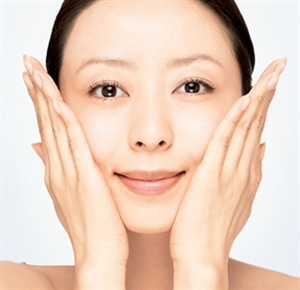
The old Japanese proverb “white skin covers the seven flaws [iro no shiroi wa shichinan kakusu]” means that a fair-skinned women looks beautiful even if her features are not good enough. As this proverb describes, Japanese women have been passionate about getting fair skin throughout the centuries. In addition, in contemporary Japan bihaku [beautiful and white] skin should be moist, elastic, smooth, free of blemishes and wrinkles. In the article “Cultivating Japanese Whiteness”, Mikiko Ashikari (2005) argues that the white skin is represented as a symbol of beauty and that of Japaneseness; moreover, this is authorized in public in contemporary Japan.
The custom of face-whitening in Japan goes back to Nara period (710–794). At that time, women belonging to the upper class started to put white powder called oshiroi on their faces due to be more beautiful. According to research conducted by Miho Sato (2002), a professor of the Human Science department of Waseda University, compared to people in other countries, Japanese prefer whiter colors. Sato pointed out that Japanese people have seen the color white as holy [shinseina] and mysterious [shinpiteki] for a long time. Therefore, Japanese women’s preference for a white face was not constructed by westernization but it was emerged from inside of Japanese culture. Experiencing globalization, a white face became not only a Japanese standard of beauty but also an international standard. White skin has been a symbol of beauty for Japanese women. Actually, that is why many Japanese women avoid getting tanned.
Ashikari (2005) says that the dichotomy of white and black leads to division of people: “us” and “others”. She also mentions that Most Japanese unconsciously believe that they are members of Japanese group (racial group) and they share the same skin that is white skin (this differs from the white skin that white people describes). This leads people to have a membership of “us” and also this is linked to the exclusion of people with different skin color as “others”. However, in my opinion, skin color does not help distinguish Japanese people from other people; for example, I cannot say whether my skin looks like Japanese skin or Chinese one. The reason why Japanese think that they have the same skin and other racial groups do not is that Japanese have not enough opportunities to meet someone from other countries or they merely go abroad not just for trip. I think white skin is not so important to examine people’s Japaneseness.
It is common for women in other Asian countries such as the Philippines to bleach their skin due to get more whiter skin. However, in Japan, Japanese women do not try to do that but they use various skin-whitening stuffs including bihaku cream. Do you think agree that Japanese women practice skin-whitening to keep their white face that is a symbol of beauty and Japaneseness? Japanese whiteness is quite complex, but it is really interesting to think about this topic.
References
Ashikari, Mikiko. 2005. “Cultivating Japanese Whiteness: The ‘Whitening’ Cosmetics Boom and the Japanese Identity.” Journal of Material Culture 10(1):73-91.
Shikisaishikou to kokorono kankeiwo gakusaitekina shitende tuikyu [Pursuing the link between color preferences and heart from interdisciplinary perspective](April18, 2002). Kenkyusaizensen [the forefront studies]. Retrieved on Oct 30, 2014. Retrieved from http://www.waseda.jp/student/weekly/contents/2002a/960o.html
For the four years I have been living in Japan, I have never felt attracted to Japanese cosmetic products, and for many different reasons. First of all, the TV commercials. They always show beautiful Japanese ladies with perfect skin, they would compliment the effect of their “whitening lotion”. They also would have this strange way to play with their skin as it was some British jelly and cry out how their skin is soft after applying the product. Second, I had never been able to find my skin tone among all the Japanese makeup available in the drug store. The foundation creams in Japanese are so pale that I would have looked sick if I had tried to wear some.
To remedy this situation, every time I go back to France I buy all the products that I need from face cleansing to shampoo and conditioner (for thin hair, which is not like Japanese hair). By being a western women in Japan, I clearly felt the assumption that Japanese people consider their skin tone as unique and specific to their “people”.
In her research on Japanese whiteness, Mikiko Ashikari (2005) tries to explain where the idea of a specific white skin among the “Japanese race” comes from. According to Ashikari, it seems less likely to be from Caucasians’ influence, since Japanese women considered Caucasian skin as “rough, aged quickly and had too many spots” (Ashikari 2005:82). The idea of white skin in the Japanese society is even more specific than any other features that could define the idea of being “Japanese”. Although Japanese change their hair color with dying products, their eye color with contact lenses, and their physical features with plastic surgery, they would never change their skin color because “the notion of Japanese skin works as one medium to express and represent Japaneseness” (Ashikari 2005:76). As Ashikari notes, by defining a specific skin color to their race, Japanese people are even able to reject the Okinawan people as a “second-class citizens” (Gibney quoted by Ashikari, 2005, p. 80).
Actually, Japanese whiteness has its roots even before the Black Ships arriving in Japan during the 16th century. It is said that during Nara Period (710–94) and Heian Period (794–1185), Japanese women were already using diverse products to light their skin tone (Kyo 2012). The ideal of white skin is also found in a lot of literature of this period such as the Diary of Lady Murasaki and Tale of Genji (Kyo 2012). Back in the Heian Period, women would blacken their teeth and shave their eyebrows. Nowadays nobody would shave their eyebrows as a sign of beauty but the idea of white skin as the ideal of beauty among Japanese women is still a recurrent topic in Japanese society.
In the case of Japan, we are actually not facing an issue of white supremacy on a “secondary” race, but the emergence of the uniqueness of a specific and idealised race through notions of a Japanese race. The idea of a race is still a controversial subject in scientific research, and I think that the Japanese people’s attitude toward their own skin as a part of their own race should be also considered as controversial. If we follow the idea that whitening one’s skin in order to follow an old tradition that dates back to the 10thcentury, then the “French race” also should wear white makeup in order to respect the traditions from the 15th century.
The commerce of whitening products in Japan is not an issue of how much Japanese people spend on those products, it is an issue of how it feeds the Japanese mentality on their own uniqueness. As Ashikari (2005) explains, white skin in Japan is not only a beauty feature among Japanese women, it idealises the white face as a symbol of the “Japanese identity as a race and therefore very different from — and even “superior” — to western whiteness” (p.89). The marketing is using a single element to increase the belief of a unique race in order to make more profits. With these actions, they instill in Japanese people a fallacy of their identity and create an idea of a skin superior to any other white skin and so superior to any other kind of “white race”.
Reference
Ashikari, Mikiko. 2005. “Cultivating Japanese Whiteness: The ‘Whitening’ Cosmetics Boom and the Japanese Identity.” Journal of Material Culture 10(1):73-91.
Kyo, C. (2012). Search for the Beautiful Woman: A Culture History of Japanese and Chinese Beauty (Asia/Pacific/Perspectives). Rowman & Littlefield Publishers.
Recently we read an article by Rhacel Parreñas and her experience working as a hostess in Japan. When I hear migration and the Philippines the first few things that come to my mind are nurses, domestic helpers or construction workers in the Middle East. Growing up in the Philippines I used to hear a lot of stories about working “that kind” of job in Japan. Although I think nowadays it’s very rare for Filipinas to leave the country and work as entertainers in Japan. Instead, they study nursing in the Philippines and apply for nursing positions in the US or elsewhere. Some end up working as caregivers. Filipina domestic helpers are quite common in places such as Hong Kong, Saudi Arabia, and some European countries.
Although it may seem that the Philippines is a very poor country with little opportunity for people to provide better a life for their family the reality is a bit different. Indeed we are a third world country, but that does not mean that every single Filipino is poor. There are jobs especially for those with college degrees and those who are desperate for work end up in call centres. Whether you are a professional or a call centre agent, wages are enough to provide for your families. A lot of Filipinos often believed that working abroad would gain them more money. True, however they only think that they can gain money because the exchange rate between currencies is high and fail to realise that they work in countries with a much higher cost of living and that their wages are enough to cover for their living expenses. So they end up exactly in the same situation as they where when working in the Philippines.
So then why do we leave our country? For some Filipinos, especially those who did not finish school, they do not see these opportunities, think that there is no chance of earning money in the Philippines and only see migration as the answer for a better life.
Personally I think the reason is a lot more than that. It’s because of bad governance and corruption from the government.There’s very little care from the government that we receive that some us are forced to migrate. Even though there are jobs as I mentioned there are some benefits such as healthcare that are not properly provided by the government. The fact that there is little support from the government is a reason why Filipinas from poor families in particular are forced to work as domestic helpers and endure the harsh working conditions and abuse of their employers. Wealth distribution is not fair – the rich get richer while the poor remain poor. If the distribution of wealth is fair and equal and there is good governance, then maybe there wouldn’t be a need for Filipinos to leave.
Reference
Illicit Flirtation: Labor, Migration, and Sex Trafficking in Tokyo, by Rhacel Salazar Parreñas. 2011. Stanford University Press.
In a world where the standards of beauty are held explicitly by people of fairer complexion, a damsel, with her ebony hues, would be seen as substandard, under par, or, to put it simply, ugly. Therefore, in order to assimilate into an ideal beauty, she must find a herbal concoction that will lighten her features and allow her to fulfill her destiny.
This sounds like it should be the beginning of a sort of adventure-type fairytale; and yet, this is not the case.
This is the reality faced by many young people around the world today.
This is the reality that many young women feel they have to conform to in order to be successful.
Sure, there are young men who may feel the same, and older women too, but it’s the youth who are having their potential and their self-esteems curbed. Not only is it colorist, but it is gender-based. Women are more likely be targeted by advertising agencies for these reasons; women are more likely to be scrutinized for their looks; women are more likely for their success to be judged on the color of their skin, rather than their individual talents or merit, especially in places like the workplace. Women are the largest target audience for beauty products, because why look at what is on the inside without looking at what is being sold on the outside?
Because of consumer culture, where we are taught to sell ourselves into a market that’s demand is never satisfied, women are turning to any means to become the commodity of the moment. Being beautiful seems to equal employability, marriageability, and long-term success. To achieve this, white skin is a must – in the minds of these affected women.
This mentality of white is right has been around since the times of colonization, the time when the white man decided that having “white” skin was the epitome of civilized, and therefore the lighter you were the more “privilege” you were afforded (Glenn 2009). This mentality still exists today, in its more extreme forms, but this form is rarely ever addressed. The need for cosmetics and procedures to lighten ones skin can be seen as misplaced vanity, or as an unwanted legacy of imperialism, or a strange mixture of both. Despite the fact people realize that discrimination based on looks is universally wrong, there seems to be something keeping this mentality strong in the beliefs of women globally.
Globally is being used here, as cosmetic whitening products are a multibillion dollar industry worldwide. There is effectively no country where these creams and lotions are not sold, no matter legal status (Glenn 2009). This basically implies that, globally, women want whiter skin. This also uncovers a larger problem when someone explains what goes into the creation of the facial scrubs.
The main ingredients include mercury salts and hydroquinone, two highly toxic substances, and a large cocktail of steroids and copious amounts of other highly addictive substances, that work together to artificially lighten the skin (Ravichandran 2013). Women are being told that it is okay to put highly lethal powders onto their faces because society says so. Many women don’t know of the harm they are doing, but many also do. In a twisted form of vanity, these women believe that their health is worth less than their beauty (Anekwe 2014).
These women are vulnerable, already facing different stigmas of being of a darker color in their societies, and the markets are effectively preying on these women. I say ‘targeted’ because that is what it is. These women are being lured into a trap by these marketing agencies and are shown pictures of how their lives could be if they were lighter (Goldstein 2012). If you are put into a position where you can see everything you want in your grasp, you’d naturally do anything to get it.
Essentially we try to preach gender and race equality at the front of the stage, and then we sell the very things we are against at the back stage door. Is the contradiction clear?
But moving away from the social values that dictate the need for light skin and the dangers of obtaining light skin, I came across a speech, given by a woman who, only days later, received the Academy Award for Best Supporting Actress (Selby 2014). This speech that took everything that is wrong with what was ‘”safe” and “known” about skin color and turned it on its head. Singlehandedly, Lupita Nyong’o, a Mexican-born Kenya-raised actress who made her film debut in the acclaimed feature film “12 Years A Slave”, managed to raise a question, an opinion, about something that had been shoved under the rug for so long.
As mentioned previously, people never seem to speak out publicly about skin whitening. We never address the often superficial way in which we define what is beautiful. We never speak about the ensuing self-esteem issues, loss of opportunity, false consciousness and stigma that stem from societies where color is more than a shade; it’s a life sentence. Ms. Nyong’o speaks from experience, remembering in her speech a letter from a young girl who was about to purchase whitening cream, because one could not “be so black” in Hollywood, let alone be considered beautiful or successful (Nyong’o 2014). She speaks on the limitations she felt as a young person because she was quite distinctly “not white”, and places a large amount of emphasis on the images she had been force-fed by international media about the ideal beauty. She poses questions about why this is the “reality”, why this is thought to be a “fixed” ideal? For the young girl mentioned in the speech, Lupita Nyong’o was a beacon of hope that girls with “night-shaded skin” could be beautiful, or be a prominent figure in society for reasons other than her body. The message that everyone has potential, that no one standard of beauty is correct, and that is certainly is not worth dying for.
If only Ms. Nyong’o’s message could have come earlier, before the whitening industry became so large, and before the creams and powders and lotions became such a pivotal point of young women’s lives. Yet starting with this one girl, and maybe many more since then, the message that Lupita Nyong’o sends may revolutionize, or even save, many lives – we just need to let it be heard by the over one billion potential users of skin whitening creams for it to work and then we can start to take the “color” out of “colorism” and put it into “colorful”.
Glenn, E. N. (2009). Consuming Lightness: Segmented Markets and Global Capital in the Skin-Whitening Trade. In E. N. Glenn (Ed.), Shades of Difference (pp 166-187). Stanford, CA: Stanford University Press
As Verna Keith says, skin tone is one of central features for determining one’s self image, and it happens a lot that your occupation or income are decided by looking at your skin tone. It is so sad, but it is the fact that we are facing today. From this point of view, mulattos distanced themselves from the larger African American community by excluding darker blacks from their social organizations. Moreover, they were avoiding intermarriage with people with darker skin so as to pass their advantages on to their children. In this way, even within black communities, there was hierarchy and discrimination against other people.
It is truly difficult to eliminate this injurious racism completely, and it would probably not happen that people would evaluate others and give jobs equally, but prejudicially. In spite of this unfairness, I hope people who are discriminated against to keep having self-esteem, at least to a certain extent. Thus, Malcolm X was really great person because he tried to make people have confidence. He claimed a notion “black is beautiful” in order to fight against racism.
Nonetheless, it is not for criticizing or discriminating against white people, but for attempting to undo black-on-black racism. The reason is because black people were brainwashed by white power, so he thought that he needed to remove this structure as a priority concern. By stating this concept, he tried black people to have self-esteem.
In addition to this, there is a famous speech ‘Who taught you to hate yourself’ by Malcolm X. In the speech, even though his words were sometimes inappropriate, he encouraged audiences well by saying features that are supposed to be words for insulting black people, such as lips, hair texture and so forth. This speech was really helpful for those who were struggling, and they started to have Afro hairstyle to show their self-esteem. This hairstyle enabled black people to express their culture and historical identity.
In conclusion, cruel racism is still going on in today’s modern world unfortunately. Even though people have started to think more about it, racism is still harsh and out of control. However, people who are racially discriminated against should try to stand up and claim your opinion without any fear. Every single person should be oneself, not like others. Being another person by imitating others or dissimulating yourself is not the way you are. In my opinion, that is the end of your life when you have lost your self-worth.
Reference
Keith, Verna M. 2010. “A Colorstruck World: Skin Tone, Achievement and Self-Esteem Among African American Women.” In Shades of Difference: Why Skin Color Matters, edited by Evelyn Nakano Glenn. Stanford, CA: Stanford University Press.


 by John Wang


 The custom of face-whitening in Japan goes back to

 In her research on Japanese whiteness, Mikiko Ashikari (2005) tries to explain where the idea of a specific white skin among the “Japanese race” comes from. According to Ashikari, it seems less likely to be from Caucasians’ influence, since Japanese women considered Caucasian skin as “rough, aged quickly and had too many spots” (Ashikari 2005:82). The idea of white skin in the Japanese society is even more specific than any other features that could define the idea of being “Japanese”. Although Japanese change their hair color with dying products, their eye color with contact lenses, and their physical features with plastic surgery, they would never change their skin color because “the notion of Japanese skin works as one medium to express and represent Japaneseness” (Ashikari 2005:76). As Ashikari notes, by defining a specific skin color to their race, Japanese people are even able to reject the Okinawan people as a “second-class citizens” (Gibney quoted by Ashikari, 2005, p. 80).
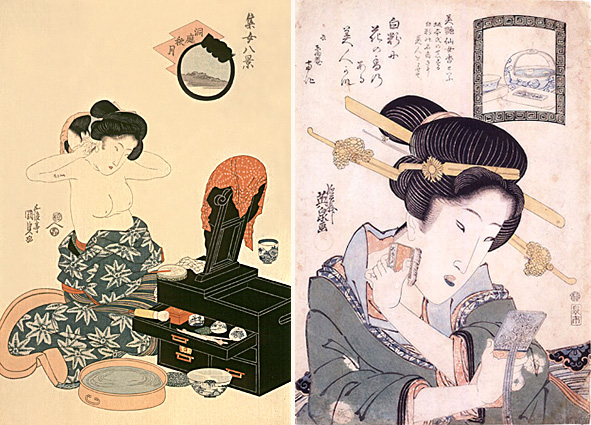 Actually, Japanese whiteness has its roots even before the Black Ships arriving in Japan during the 16th century. It is said that during Nara Period (710–94) and Heian Period (794–1185), Japanese women were already using diverse products to light their skin tone (Kyo 2012). The ideal of white skin is also found in a lot of literature of this period such as the Diary of Lady Murasaki and Tale of Genji (Kyo 2012). Back in the Heian Period, women would blacken their teeth and shave their eyebrows. Nowadays nobody would shave their eyebrows as a sign of beauty but the idea of white skin as the ideal of beauty among Japanese women is still a recurrent topic in Japanese society.


 JAPANsociology