How could social media transform racism?

by Miho Tanaka

Could internet communications change the structure of race? The revolution of media has changed how people communicate and connect with the others, and forms of media have been constantly changing as internet technology has been developed. Internet communications have enabled us to communicate each other without borders. In other words, people have gotten unrestricted tools to get to know the others having far different cultures and backgrounds.

In this post, I attempt to discover the relevance between media and race and how the emergence of social media could make changes, especially in the United States. Therefore this post looks first at the development of media from tangible products to intangible services, secondly how race awareness or consciousness has been transforming as the forms of media have been changing, and thirdly some expectations that could positively or negatively influence race structure in relevance to the changes of media.

Development of media: Imagined communities

Media is one of the strongest tools to foster and penetrate some ideas, biases and stereotypes to its viewers and construct their perception toward their world. Newspapers, magazines and printed advertisements were the major media for the last centuries, however new types of media such as online media, social media and so forth have appeared in the last decade and these dynamically influence people’s lives. Jessie Daniels (2013) posted on Racism Review that newspapers used to play a role to function for creating “imagined communities” among those who engage with the communities. However Joanne L. Rondilla (2009) argues that globalization and technological advances have changed the formation of imagined communities (p.64-65). Rondilla borrows Hall’s description of globalization and cites that globalization is:

the process by which relatively separate areas of the globe come to intersect in a single imaginary “space”; when their respective histories are convened in a time-zone or time-frame dominated by the time of the West; when the sharp boundaries reinforced by space and distance are bridged by connections (travel, trade, conquest, colonization, markets, capital and the flows of labor, goods and profits) which gradually eroded the clear-cut distinction between “inside” and “outside.” (p. 64-65)

Online media has enabled us to shorten our communication style and has released the West-dominated time-frame. An imaginary space platform, in the case of online media, works as an intersection of people in different areas. She concluded that “globalization involves the flow of ideas, products, images, and so forth, that, through technological advances in the media, closes the gap between perceived differences among people” (p. 65). Considering how media has been changing especially in the 21st century the range of imagined communities must have expanded. Now social media has started to function just like newspapers, as people go to online in order to affirm their racial identity and to seek community around that identity (Daniels, ibid).

Media’s objectives

Popukin, Kabashima, and Taniguchi (2008) point out that public media controlled by national institution and private media owned by private companies take different roles (p.71). Public media seeks societal objectives including political and national purposes, since it considers the viewers or listeners as voters for next elections, while private media seeks profit since it considers the customers as buyers (ibid). As Harris (2009, p. 1) insists, racism is constituted through “economies of difference.” In other words, “economies of color” have great power over market capitalism. Before the emergences of social media, the messages of media were always sent from companies or institutions to consumers based on the senders’ objectives, which are often “selling more products and increasing revenue” or from public organizations to the supporters to achieve some kinds of political goals.

However social media totally broke the previous rule and now the senders of message also include individuals or users on the internet. They do not have to seek certain outcomes because they can send any messages even if they are not tied from some groups, therefore their messages might be sometimes emotional. Racial minorities also got a chance to speak out their feelings and experiences on the internet.

Changes of race awareness

Daniels clarified the fact that “people go online to affirm their identity and to find community, often along racial lines.” In 2009 the chart of popular social network sites shows BlackPlanet.com was ranked in as 13th (Daniels, 2013). There are further more social networking sites focusing on the encouragement of African Americans and the other minority groups in the U.S. For instance, Atlanta Blackstar is one of the media which strives for becoming the central voice in black media. It applauds black peoples’ achievement and self-esteem, and simultaneously analyzes and reflects black culture or its representation in societies, which is often considered as a negative phenomenon.

Especially some media focusing on encouragement of isolated minorities such as BlackPlanet.com and Atlanta Blackstar are considered an enhancement of self-esteem among them. According to Verna Keith, self-esteem is defined as “the evaluative dimension of the self” (2009, p.33) and borrowing Porter and Washington’s definition, it is “feelings of intrinsic worth, competence and self-approval rather than self-rejection and self-contempt” (ibid). Among black people in the United States, media would be used for both sides, in negative and positive ways. In negative ways it is used for accelerating black culture and its representation, and the images are often applied to all black people without considering characteristics of the individuals. However in positive way it could be used for encouraging themselves and applauding black culture and its experiences. In this case the idea of “double consciousness” would be related.

Double consciousness is presented by W. E. B. Du Bois and according to Craig (2009), the concept “provides a useful way to think about the interrelationships between white and black systems of representation” (p.84). Double consciousness is two dimensions of how black see their world from their view. One dimension is that blacks have to see themselves and judge themselves as whites see them, which describes the internalization of racist systems of representation. Another is an internalization of dominant views of oneself and a critical awareness of the structure of racism along with an ability to recognize the presence of racism (ibid, p.84-85).

Until the emergence of social media, only the former dimension had covered people’s viewd, but social media gave them an opportunity to share their second insight, a critical awareness of the structure of racism. If it might have been the great chance to recall black consciousness and lighten their self-esteem, what kind of positive aspects would appear?

Positive and negative aspects

Now this paper will look at whether the emergence of social media is positive or negative. Grasmuck, Martin, and Zhao (2009) explored racial issues which often come along with injustice frequently included by the African American, Latino, and Indian students on their Facebook wall. The authors theorize that these wall postings accelerate “a sense of group belonging, color consciousness, and identification with groups historically stigmatized by dominant society” (ibid). That means racism still occurs in social media.
However Daniels also examined that some dominant groups rarely signed up as their racial categorized group and they foster an idea of “racelessness” through it. In addition according to Popukin, Kabashima, and Kawaguchi, the internet doesn’t work for erasing racism and even ignorance is very dominant on the internet (p.64). Though the internet has been penetrated and larger number of people now have access to talk openly about issue of racism, the open network works not only to improve the issue but also to foster blindness toward racism and colorism.

Through this post, I have looked at the relationship between media and racism and how it has changed. As media has been developing, the racial awareness and consciousness has changed, however media could not only influence racism in positive way. In social networking sites and social media, people have started to get around with the others belonging in the same group but simultaneously race blindness and racelessness have gotten bigger power than before. Whether the feud between more powerful voices and encouragements which minorities got in social networking and racelessness that racial dominant group of people often foster would weaken or not will be the next challenge of racism we will face.

References

  1. Craig, Maxine Leeds. (2009). The color of an ideal negro beauty queen: miss bronze 1961-1968. In Glenn, E. N. (Ed.) (2009). Shades of difference: why skin color matters. Stanford, CA: Stanford University Press (pp.81-94).
  2. Daniels, Jessie. (March 2nd, 2013). Race, Racism & Social Networking Sites: What the Research Tells Us. Retrieved on December 23, 2013 from http://www.racismreview.com/blog/category/social-networking-sites/
  3. Gordon, T., Jones, J. & Morris, S. (2014) Atlanta blackstar: about us. http://atlantablackstar.com/about-us/
  4. Glenn, Evelyn Nakano. (Ed.) (2009). Shades of difference: why skin color matters. Stanford, California: Stanford University Press.
  5. Harris, Angela P. (2009). Introduction. In Glenn, N. E. (Ed.) (2009). Shades of difference: why skin color matters. Stanford, CA: Stanford University Press.
  6. Keith, Verna M. (2009). A colorstruck world: skin tone, achievement, and self-esteem among African American women. In Glenn, E. N. (Ed.) (2009). Shades of difference: why skin color matters. Stanford, CA : Stanford University Press.
  7. Popukin, L. S., Kabashima, I., & Taniguchi, M. (Eds.) (2008). Changing media, changing politics. Tokyo: University of Tokyo Press.
  8. Webb, L. S. (n.d.). How colorism affects light skinned girls and women. Retrieved on December 21, 2013 from http://www.npr.org/2012/09/13/161082306/william-julius-wilson-ending-poverty-is-possible
Enhanced by Zemanta

From arranged to love marriages in Japan

by Seimu Yamashita

I researched the relationship between Japan’s marriage scene and race and ethnicity by comparing the cases of Japan and India. The vast majority of marriages in India are arranged marriages, in which usually a family member initiates and determines the marriage partner. However, more than 90 percent of marriages in Japan are love marriages. If we look at the data showing the shift of the percentage of love marriages and arranged marriages in Japan, we see that arranged marriages accounted for nearly 70% of all marriages in Japan in the 1930s. The proportion of love marriages gradually increased (and that of arranged marriage decreased relatively), surpassing arranged marriages in the 1960s.

Japanese-style arranged marriage is called miai. In the process of miai, a profile with a picture, called tsurigaki, has been used as a marriage ad. It functions as a curriculum vitae for marriage. A person who wants to get married gives his/her tsurigaki to a matchmaker. The matchmaker tries to find its partner either from other tsurigaki he or she has or from tsurigaki that other matchmakers have.

In the miai process, there was racial, class, and genetic discrimination. The most common discrimination was against members of the Burakumin. A matchmaker requires candidates to submit a family history to prove that they are not a member of the Burakumin. Many Zainichi Koreans were also discriminated against for being non-pure Japanese. Members of the Ainu, an indigenous people in Hokkaido, were usually avoided as well. As a genetic discrimination, descendants of Hibakusha, those who were exposed to the radiation from the atomic bombs in Hiroshima and Nagasaki, were avoided since there were stories of possibilities of rare diseases. Due to such discriminations, those people could not even have the opportunity for having miai.

There were preferences in ascribed characteristics such as class and family standing in miai. Moreover, in miai, there was a preference for women with a fair complexion, but not as much as India’s case. The existence of a preference for a white skin can be seen from Japanese old proverb: 色の白いは七難隠す, which literally means a fair complexion hides faults. It is basically saying that as long as a woman has a fair skin, she can be forgiven for her faults.

In conclusion, the form of marriage has shifted from arranged marriage to love marriage in Japan. Comparing to the marriage scene in India, Japan’s preference in fair complexion seems to not be as prominent, but still exists.

References

  1. National Social Security, Population Problem Research Center. (n.d.) Basic research for trends in births. Retrieved December 23, 2013 from http://www8.cao.go.jp/shoushi/whitepaper/w-2009/21webhonpen/html/i1112000.html
  2. Hendry, J. (1981). Marriage in changing Japan: community and society. New York: St. Martin’s Press.
  3. Ironoshiroiwa shichinan kakusu (A fair complexion hides faults). (n.d.). Old Proverb Dictionary. Retrieved January 4, 2014, from http://kotowaza-allguide.com/i/iroshiroishichinankakusu.html
  4. Uchida, T. (2002, October 26). Research Institute about discrimination in marriage. Buraku Liberation and Human Rights Research Institute. Retrieved January 3, 2014, from http://blhrri.org/kenkyu/project/kekkon/kekkon_0002.html
Enhanced by Zemanta

The Role of Skin Tone in Konkatsu (Looking for a Marriage Partner)

by Mitsumi Yamamoto

In 2007 sociologist Masahiro Yamada proposed a new term “konkatsu” to describe the act of looking for a marriage partner (Yamada & Shirakawa, 2008). Konkatsu is an abbreviation of “kekkon katsudo”, which means marriage hunting. Since the first use of this term in a weekly journal AERA, there has been a big boom in konkatsu with mass media actively broadcasting about this phenomenon in Japan.

Today there are around 3,700 websites aimed to support people in konkatsu and Yahoo! has sponsored two websites that encourages konkatsu and arranges parties for unmarried people (Yahoo! JAPAN). The number of single men and single women in konkatsu who have struggled, and currently are struggling, with selecting their marriage partner is not small.

By studying konkatsu we can see what kind of qualifications people are looking for in their prospective marriage partners. This blog post will highlight how skin tone plays a role in the process of choosing a future wife or husband in Japan and how there is a correlation between race and gender regarding skin color.

Firstly what kind of qualifications and requirements do people set for choosing their partner? According to a survey released by the Japanese Ministry of Health, Labour and Welfare, both men and women tend to consider a good personality (honest, kind, considerate etc.) as the most important factor. Personal values come in second (Co. dentsu, 2004).

Although both men and women consider personality and values as major points when choosing their partner, there are differences in how they evaluate the possible candidates. The same study indicates that the third most common qualification men tend to consider is their partner’s appearance while women rather ask for financial stability. Possibly due to the importance men place on their partner’s appearance, women themselves seem to take good care of their appearance for konkatsu.

For example, the ladies’ magazine FRaU featured an article about konkatsu-hada (skin for marriage hunting), explaining how women can make konkatsu-hada with skin care products such as liquid foundations, body oils and cheek blushes in order to succeed in konkatsu (X BRAND, 2013). The article suggested that they help to make your skin whiter and clearer, showing your purity and honesty like Cinderella appearing in a fairly-tale.

It seems that the article implies that light and clear skin is regarded as favorable for finding a marriage partner. How about men’s skin tone? According to an investigation carried out by Panasonic, 70% of women answered they prefer men with tanned skin rather than men with white skin (Co. Panasonic, 2007). The electronic commerce and Internet giant Rakuten Inc. also researched about the connection between the use of sunscreen and maintaining white skin. When comparing results between men and women in their twenties, it seems that only 13% of men use sunscreen in order to maintain a lighter skin tone, while 60% of women answered that this is their main goal. In fact, as many as 50% of men answered that they do not even care about sunscreen, whereas 90% of women were keen on using it (Rakuten, Inc., 2013). The results of this survey that show men are often not concerned about the lightness of their skin.

It can be said that men and women consider different attributes in konkatsu and that skin color is gender-specific, with skin color playing an especially important role for women. Having lighter skin is considered an important factor for women who are looking for future husbands. This shows us that there seems to be correlation between skin color, race, and gender, since favorable skin color varies greatly between different races and between genders. For example, recently it seems that tanned skin is favorable among Caucasian men and women, however in Japan and India women with lighter skin are preferred. On the other hand in Japan it seems that men who have tanned skin are preferred over men with light skin tone, showing that there are great variations between ideal skin tones.

References

Yamada, M., & Sirakawa, M. (2008). Konkatsu Jidai [KONKATSU Period]. Tokyo: Discover 21

Yahoo! JAPAN. Retrieved from http://omiai.yahoo.co.jp/

Co. dentsu. (2004). Syoushika ni kansuru ishiki chousa [survey about decreasing birth rate]. Retrieved from http://www.mhlw.go.jp/topics/bukyoku/seisaku/syousika/040908/

X BRAND. (2013). Kirei no takurami [trick for beauty]. Retrieved from http://xbrand.yahoo.co.jp/category/beauty/10947/1.html

Co. Panasonic. (2007). Otokomae Chousa [survey about man’s good looking]. Retrieved from http://panasonic.jp/beauty/men/chosahoukou/chosa/

Rakuten, Inc.. (2013). Shigaisen taisaku ni kansuru chousa [survey about UV protection]. Retrieved from http://research.rakuten.co.jp/report/20130802/

Enhanced by Zemanta

Changes in the beauty standard for men and women

by Satona Kato

Jyotsna Vaid’s research shows us that lighter skin is a requirement for marriage. We learned many people think lighter skin is better and is one of the conditions of beauty in various countries.

However, it is also true that the standard of beauty varies by regions or countries. In Japan, it also has changed depend on the generation. There was the time when the skin browned by the sun was seen as more beautiful. For example, in the ‘ganguro’ boom or ‘komugihada’ boom, people preferred dark skin and many people went to tanning salons. When I was 3 or 4 years old, many Japanese high school girls made their skin dark and I longed for their skin and I wanted to be like them. In that time, the models who had sunburned skin were popular and that was the standard of ‘kawaii’ for young girls. But when I became a high school girl, there were no girls who made their skin dark and the standard of “kawaii” was having white skin. Most advertisements of cosmetic products also uses models with white skin.

More and more people come to think we want white skin, not only girls, but also boys. Surprisingly, recently the boys who have white skin are increasing. In the Japanese drug store, there are many sunscreens or whitening lotion for men and many men use that, especially young boys between the ages of 15 and 30. Nippon TV interviewed 55 boys whether use whitening lotions, and 33 boys answered “Yes”.

Then, which do women like better, white skin boys or sunburned boys? The answers about this question were different depending on the women’s age. Young girls (10~30) tend to like boys who have white skin better, but most of women over 30 years old like boys who have sunburned skin. The reason why that difference exist is the influence of media. Today, many young actors and models have white skin. But, it was different 20 to 30 years ago. You can see this difference if you compare the popular actors 5 to 10 ago with actors who are popular now.

As you can see, the trend of skin color has changed. In Japan, both boys and girls become to more and more like the white skin. Last year, we were surprised the publication of the popular young men’s magazine “Men’s Egg” was suspended. When I was a junior high school student, many young boys read this and tried to be “Gyaru-o” by having browned and meshed hair, and tan skin. The reason for suspending the publication was that young people’s trend were changing. Today, most Japanese people like white skin better, and use whitening lotion. But there are possible that standard of beauty “white skin is beautiful’ will change in the future in Japan.

Are such changes in views toward skin color occurring in countries that have a connection between skin color and social status?

Enhanced by Zemanta

Environmental Racism – A problem with no visible solution

Save our water

Save our water (Photo credit: uusc4all)

by Jonas Horvei

The world as we know it is still very much an unequal society.  It is unequal because how others will treat us in our lives is already to a certain extent pre-determined on the day when we are born. Where we are born, our nationality, our family’s background, one’s looks, and the color of one’s skin and so on all plays different in how others will perceive and treat you. A few weeks ago I learned of another new concept related to inequality and discrimination called “Environmental Racism”. According to the USlegal (2013) definition, environmental racism can be defined in the following way:

Environmental racism refers to intentional or unintentional targeting of minority communities or the exclusion of minority groups from public and private boards, commissions, and regulatory bodies. It is the racial discrimination in the enactment or enforcement of any policy, practice, or regulation that negatively affects the environment of low-income and/or racially homogeneous communities at a disparate rate than affluent communities. (2013, USLegal)

Hand in hand with the concept of environmental racism, we also have the concept of environmental justice. In short, environmental justice can be said to be a movement’s response to solve the issues of environmental racism. It is more or less a social movement who strives to put an end to environmental racism, or at the very least to create a more even distribution of both the benefits and burdens.

According to the basic principles of Environmental justice, the movement strives towards the following goals:

  • For everyone to be protected from environmental harm
  • The elimination of environmental threats
  • That everyone has the freedom to participate in environmental decision making

Whether it is possible to realize these ideals or not is a completely different question. What we can conclude so far though is at least, that social movements such as these do help, and they do have results. Pellow and Brulle (2007) describe in one article how the environmental justice movement has been able to fight against cases of environmental racism in the United States. They describe first how researchers managed to provide conclusive evidence that there was in fact a large bias in hazardous waste sites being located in communities where the majority of the citizens were minority groups. Through years of long battles the environmental justice movement helped stop the construction of over 300 garbage incinerators in the United States just in the period short period from 1985-1998. At the same they also influenced the large decline of municipal waste and medical incinerators also in the United States.

In such cases, we can clearly see that social movements do provide a very important element on the local level to stop the construction of sources of hazardous emissions. They highlighted the issues of environmental racism, and the dangers associated with chemical waste incinerators. Without the environmental justice movement, it is hard to say what the situation would be like, but it is evident that social movements do help.

As can be observed, the movement of environmental justice in America has had a strong impact on American society and has had a positive effect, whereas many of the most hazardous polluters have either been shut down or forced to relocate, and has made it difficult in the creation of new such polluting sources in America. Nevertheless even with such incredible results achieved, I cannot help but having this pessimistic view that there is still a long way to go and that future outlook certainly might not exactly be optimistic as many are to believe.

Then comes the problem, what do we actually do with the waste? With larger volumes of waste being produced, where do we put it, what do we do it? We put it somewhere else and ignore the problem. In my opinion, it seems like we are simply witnessing a relocation of the problem itself, that is to say that the problem is instead being transferred to somewhere else. Due to the influence of globalization, more and more industries take the leap abroad, often to developing countries. In such countries not only are labor costs cheaper, the emission restrictions are often much more relaxed. As a result the developed country can remove its pollution problem from its own border, while at the same time gaining profit from not having it in locating it their home country. So even if we might see an improvement in terms of hazardous waste and pollution in our local culture, it does not necessarily mean that the problem has disappeared. In fact in many cases it is highly likely just that it has simply been relocated somewhere else. America does it, Japan does, China does it, even Norway does it, and every country is guilty of it. For instance you have the case of Thor Chemicals, Inc, who during the 1980s moved its mercury reclamation processing facility from the corporation’s home in England to a village in South Africa. (Harper, Rajan 2004, p.3) Cases on international scale where the Northern countries move production, or move the waste disposal to southern countries are unfortunately far too common.

Then what is the solution to environmental inequality and environmental racism? Environmental emissions, pollution and hazardous waste are some of the biggest problems we are facing on a worldwide scale. There is no easy fix, it is as simple as that. Stricter restrictions, finding more environmental friendly solutions, raising awareness of the problem, and stopping making companies benefit from polluting rather than operating environment-friendly are some of the solutions off the top of my head. That is how we I believe we can minimize the problem. As long as issues of environmental pollution exist, inequality will also exist. As sad as it may sound, this is a natural part of human nature, we discriminate against those who are different. As long as we can get away with it, we discriminate, and as long as it remains more profitable to dump waste in neighborhoods with minority groups, or shipping off tons of waste to the Philippines or Bangladesh, environmental inequality will persist, without taking into account the health of other human beings that do not belong in our local environment.

References

Harper, Rajan. “International Environmental Justice: Building the Natural Assets of the World’s Poor.” University of Massachusetts, August 2004. Web 18.December. 2013. http://www.peri.umass.edu/fileadmin/pdf/working_papers/working_papers_51-100/WP87.pdf

Brulle, Pellow. “Poisioning the planet: the struggle for environmental justice” the American sociological association, 2007. Web 18 December. 2013.

“Gaijin” to Japanese: What Japanese Often Expect from Foreigners

by Satona Kato

comediansTerry Kawashima argues that people have a consciousness about race, and this consciousness depends on their background. We can see this by comparing various ways of thinking about shojo manga characters by Western people and Japanese people.
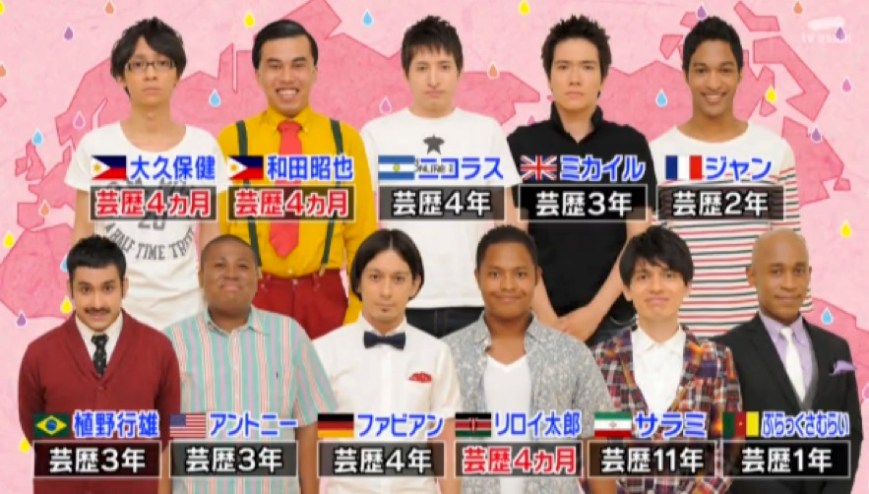
In Japan, many people put the people who are not Asian (Japanese, Korean, Chinese, South East Asian) into one category called “gaijin”. Many Japanese people do not think about the country where the “gaijin” were born. Furthermore, they tend to stereotype that sort of people have specific skills. In Japan, some of the people who are unilaterally labeled as “gaijin” have experiences that they are wounded or feel alienated, especially the people who are multiracial or who were born and grown up in Japan.

As you know, in Japan, multiracial models on TV have been popular. Recently, multiracial comedians become popular as well. They do not act like fashion models. They make people laugh by talking the story about the incident happened around them only because they are multiracial. First, Japanese are surprised that they can speak fluent Japanese and cannot speak English or another foreign language. Japanese also laugh at the characteristics the multiracial comedians share with other Japanese.

They had had many troubles and unique experiences which happened just because they are “hafu.” If we listen to their stories, we can know how hafu people are treated by Japanese. For example, Anthony, he is one of the ‘hafu comedians’. He is American and Japanese. People laugh at the fact that his hometown is Tokyo and his father managed a Sushi shop. He has knowledge about sushi because his home is sushi shop, but when he goes to a sushi shop, the master of sushi shop offered him ‘California roll’ and he was surprised. He has had other interesting experiences. He is bad at English, and when he was an elementary school student, he decided to go to English conversation school. On his first day of English conversation school, when he entered the classroom, other students misinterpreted him as an English teacher and they said “Hello, how are you?” to him.

I want to tell you about one more ‘half comedian’, Ueno Yukio. He was laughed at because of his obvious Japanese name. He is Brazilian and Japanese. When he plays soccer, the opposing team judged Yukio was a good soccer player by his appearance and many defenseman surrounded him. The opportunities to watch TV programs in which many ‘half comedians’ gather and talk about the things often happen around them are increasing. According to them, following things often happen: 

  • are judged to be foreign people
  • are often stopped by the police 
  • are asked by Japanese to sing foreign songs 
  • are laughed at by Japanese when they sing Japanese songs
  • are often expected to have high athletic ability
  • have difficulty getting a part time job
  • are invited to BBQ parties or Halloween parties
  • are called ‘Bob’ or ‘Michel’ 
  • are treated as tourists everywhere

Of course their nationality is Japanese and most of their hometown is Japan. Why they are laughed? Why do Japanese people stereotype their abilities? When Japanese look at people who look like “gaijin’’, Japanese often expect some specific skills because they have some assumptions. They think that people who have white, black, or other foreign appearance have foreign names and can speak foreign languages, and cannot speak Japanese at all.

It is true that hafu people are not a majority in Japan and many Japanese have little familiarity with thinking about race. That’s why people have expectations about the skills hafu people have. If hafu do not have these skills, Japanese laugh at them and hafu are unilaterally discouraged. 

Mimicking the non-existent

Anonymous student post

Body alterations are a strange thing. Just the words themselves—“body alterations”—make them seem so foreign to our lives, like they’re not something natural. Yet looking at people throughout my life has made me realize that body alteration has become the norm for many people, and desired by, perhaps, many more. If we were to look at how many people use make-up, have surgery, aim for a different body weight/composition, or even just get a piercing, we would see just how widespread this notion of changing our bodies is.

Yet, after reading Terry Kawashima’s (2002) article on racial indicators, I find body alterations strange in another sense. Kawashima discusses this idea of mimicry, in particular the mimicry of “white” traits by Japanese people, arguing throughout her paper that this is not the case for most of Japanese society. But it raised an interesting question about mimicry in relation to body alterations for me: When someone aims to alter their body, is it because they are trying to mimic something or someone else?

This can be a tricky question to navigate, as some will find it too broad a question while others will point out that there are as many reasons for changing one’s body as there are people. Despite this, I can’t help but feel that, at least from what I’ve seen and read, the answer just might be yes, but not in the way that the question is worded. The cautious reader will be skeptical, and thus, I suppose, explanations are in order.

Part of my answer is reinforced by some particular experiences of mine. Growing up with sisters can be difficult, especially when they are constantly attempting to put make-up on and dress fashionably, even when it makes you late for school. Anxiety, I learned, fueled my sister’s actions; she wanted to look “normal”, and thus she would groom herself constantly. For her, body modification was a way of becoming invisible. This resonates with my own experience growing up with raised bumps on my back. My mother, in all honesty, was more worried about them than I; she blamed them for the way I dressed and the activities I gave up when I was older, as well as for my shy and withdrawn personality. She went so far as to offer me a chance to have plastic surgery. Unable to explain to her (or myself) why my scars were not a problem to me, I consented.

After having plastic surgery on only two bumps, and after having grown up with more time to mull over that experience, I’ve realized that my mother believed I couldn’t think of myself as “normal” while I had something “subnormal”, especially when she saw the anxieties my sister held. Body modification, in this context, meant to her an attempt to elevate myself back to “the standard”.

Broadened to a larger scope, we can see in other’s experiences through things like blogs and academic literature that body modification extends across the board. It affects how people relate their body to race, gender, age, culture, health, and all these other touchy subjects that people seem afraid to address sometimes. And—again, from what I’ve seen and read—I think that all these changes that we make to our bodies has something to do with trying to obtain an ideal. In the end, it’s difficult to say that there’s some definitive “real” thing that people try to mimic, because most of the things I’ve listed are just social constructs. Race doesn’t biologically exist, health is relative, and age is reliant on different perceptions of time. In the end, perhaps all people are really trying to do is aim for something that’s not really obtainable because it does not exist in any measurable way. So in a way, we are trying to mimic something; it’s just not something that we can point to and say “there it is”.

Environmental Class Discrimination Takes on a Global Scale

by Miko Borys

Throughout the 80’s, less affluent neighborhoods began noticing that they suffered a highly disproportionate share of the pollution from the same industry that produced resources for all. Demonstrations such as the one in Warren County in 1982 where 550 citizens protested non-violently and were arrested, or in Southeast Chicago in 1987 where African-Americans blockaded 57 trucks from entering a waste incinerator, were happening all over America. Furthermore, the minority neighborhoods were statistically the most affected, having more toxic waste in their neighborhoods than any surrounding area: “of [the] nine proposed and constructed incinerators in the greater Chicago area… seven were in African American communities and two were in working class and/or white ethnic neighborhoods” (Pellow 90).The lesser chance of litigation in poorer minority neighborhoods supposedly made it an attractive option for industry initially. Groups like PCR, the People for Community Recovery led a movement in the US dubbed the “Environmental Justice” movement. The EJ movement believed, among other supporting ideals, that “all people have the right to protection from environmental harm” and they challenged the environmental inequality all over the U.S. Eventually, they successfully brought reform hindering the proliferation of environmentally unsound civil development. But where did the pollution go?

Thanks to such movements the environmental burdens of industrial development were seemingly abated. But the burdens were not abated in terms of distributing them more evenly, rather they were moved physically until they were no longer local. The regulations passed were so stringent, that environmentally challenging industry decided it would be in their best interest to remove their factories from the country entirely. The regulations and the effects weren’t exactly harmonious with what the EJ movement idealized. Even though the activists succeeded with getting pollution out of their neighborhoods the issue with pollution wasn’t resolved, it was just shifted further away.

Poorer neighborhoods might not be struggling with keeping pollution out as much as poorer countries are now. The pollution haven hypothesis states: when firms from industrialized nations seek to setup factory or office abroad, they will choose the country with the cheapest resources and labor, often at the expense of sound environmental practice. Even though the EPA might be seeing guidelines met in the U.S. for reduced emissions, the resolution might have just been “fancy bookkeeping” from the companies part. For instance, in Oregon the last coal-fired power plant is set to close by 2020. Yet the same town of Boardman closing down the power plant is considering the construction of a new large coal export facility. This coal export facility like others will take Powder River Basin coal from Montana and Wyoming and export it to the less environmentally restricted markets of Asia.

Even when we’re cautious to keep pollution out of our own neighborhoods it still finds its way to the climate through cracks in environmental policy elsewhere in the world. Even though one of the core fundamentals of the “Environmental Justice” movement was for “all people [to] have the right to protection from environmental harm” the movement stopped short when polluting industry crossed international borders. Even once the environmental movements cross borders, will pollution still find its place? Perhaps extra-terrestrially.

References

Environmental Racism” http://www.pollutionissues.com/Ec-Fi/Environmental-Racism.html

“Cutting Carbon Means More than Fancy Bookkeeping” http://content.time.com/time/health/article/0,8599,2112907,00.html

David N. Pellow. “Garbage Wars: The Struggle for Environmental Justice in Chicago”

Gunnar E. Eskeland and Ann E. Harrison. Moving to Greener Pastures? Multinationals and the Pollution Haven Hypothesis. NBER Working Paper No. 8888. http://www.ncpcbarchives.com/

Tanned skin: the new look?

by Kyungyeon Chung

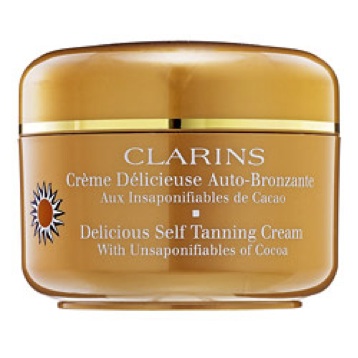
clarinsToday, open up any international beauty magazine – you will find models that are dominating the colorful pages are not all so pale boasting ‘porcelain’ complexion. Instead, beauty sites and entertainment pages have been filled with new trend – tanning. Just take a look at some gossipy newspaper articles based on curious speculation how Mitt Romney, who must have been so busy at the time, maintained the glowing tanned skin throughout his presidential campaign. Kate Middleton and her sister Pipa Middleton also captured the gossip followers with their bronzed skin complexion. Whether it happens on the stunning Greek beach, or while backpacking in Vietnam, or in a sunbed salon in New York, the result, tanned skin has become the new trendsetting skin complexion.

Among those who can afford and dream of tanned skin, the darker complexion comes with numerous labels: sun-kissed, glowing, bronze, naturally tanned… If you examine, all these words used to describe tan, entail a deep implication that tanned skin is healthy; that it is a product of healthy practice, perhaps swimming in the open ocean, hiking under the sun, or out playing by the beach. No long ago were these associated with toiling in farms under the sun, a mark of laboring, lower class. Yet in 21st century when most of people in industrialized countries, people are usually spending most of their days in their offices, then on cars or public transports, then in shops and their homes, all under the fluorescent lights and hardly under the natural sun rays. And that is exactly why “sun-kissed’ skin is glorified and sought after.

clarins2Popular legend holds that Coco Chanel first initiated this world-wide boom of tanned skin, which she got while vacationing in the Mediterranean in the 1920s. It was a look that signified health and vitality. From then on, tanned skin became associated affluence and luxury of, in short, having enough money to go on holidays and lay under the sun. This was also in such direct contrast with ‘others’ who were unfortunate and had neither time nor money to enjoy such holiday.

However, as mounting medical and scientific studies find the clear link between sun exposure and skin cancer, the trend did not end – instead, it simply turned from ‘natural’ to fake. Today at cosmetics shops, one can find an array of products that promise you evenly tanned skin and beautiful glow. So many different types of products are used to serve different purposed, from tanning lotion to bronzer powder, and fake sprays to imitate tans. You can walk into aesthetic shops and salons in your natural skin color then walk out a few shades darker in a matter of few hours and days of efforts.

The important thing about the logic behind the popularity of tanning, is that, it has fundamentally the same idea as skin brightening. It is the idea that skin complexion is a mark of certain class or socio-economic status, and that can be bought and fixed with money. The idea that beauty queue exists based on skin complexion, and consuming certain products will make you move up along the ladder. So at the end, who ‘wins’ at this game? Think about it – the same company that produces tanning creams and bronzers have different lines for skin brightening and whitening. Whether light skin or tanned skin is the trend of the year, they will never have a problem marketing either product.

Bigakuseizukan – Who Are the Beautiful Students?

by Lilia Yamakawa

A friend asked me to go with her to a party sponsored by a website called Bigakuseizukan, Picture Book of Beautiful Students. Both the photographers and the “beautiful” students they photograph are students from Japanese universities. Since have been talking about people’s concepts of “beauty” in our Race & Ethnicity class, I thought this would be a good opportunity to do fieldwork and see what this group considers attractive, what the trends are, why students agree to be posted on the website, and why this website is popular.

In class, we discussed what beauty is and found that a majority considers one type of appearance as beauty. Like the contestants in the Miss Korea contest that we saw in class, I expected most of the students at the party to be similar: skinny chins, double eyelids, small noses. I thought there would be many people with the Japanese kawaii style, with the same brown hair, same length bangs, and wearing the fluffy white and pink cutie skirts.

It turned out not to be what I expected! Most of the people there had different styles: many different hair colors and styles, different facial characteristics, many different body types, with totally different styles of clothes. Kawaii wasn’t especially big. I was both disappointed and relieved by what I actually saw. I was in a way disappointed that I couldn’t see an expected trend with my own eyes, and also relieved to find that there were many kinds of beautiful students there.

I think this has something to do with the popularity of the Picture Book of Beautiful Students website. The models are students who might actually go to your school, and they all look different. When you look at their snapshots, you might feel that they are close to you and possible to reach. This sense of closeness would be hard to have if you are looking at a model of a magazine or on TV. Bigakuseizukan’s uniqueness is that it doesn’t show only one type of beauty considered as perfect. It really shows lots of different types of students.

Another question I had in mind was why do people say yes to being photographed and having pictures posted of them online? And why do they attend such a gathering? I had a chance to ask around yesterday. I got a lot of answers, but basically they fall into three categories. In the first category, there were many students who were running for beauty contests, such as Miss Ritsumeikan, Mr. Japan and Miss Universe. These types of people answered they did it to get their name out and remembered through the Bigakuseizukan. The second group said they tried it for their personal record and their future career. It will look good when applying for a job, which might have a lot to do with your appearance, such as newscasters and announcers. The third group was more vague, and they said there was no reason not to try it or that they just enjoyed modeling for fun. One girl said, “Well, everybody posts their selfies on Twitter and other sites like that, so why not post a better picture of yourself taken by a photographer with a real camera?”

One more thing I expected to find was that everyone would be outgoing. Instead, there seemed to be all sorts of types of personalities at the gathering, and some people seemed very quiet and reserved. I think you could probably say that they all had some sense of confidence in the way they look, though.

This fieldwork only lasted three hours, but if you were interested in finding out why people in a certain group are judged to be attractive, I think studying a group such as the Bigakuseizukan would be a good method. It would be necessary to find more things that the models have in common and to question both the beauties and the photographers in more detail.