Accepting a Cheap Imitation of “White Features” as Beauty in Japan

Anime Drawing / Download & Color it yourself!

(Photo credit: Serena.)

by Yuta Kobayashi

Shoujo Manga has existed in Japan since the early 1900s. Consisting of sensitive artwork and a storyline aimed for young girls, these visual novels have been a part of the lives of many Japanese women since childhood. Although the original target audience of these Shoujo Manga was the young female population in Japan, the release of animations and live action dramas of these mangas in recent years have broadened the target audience towards a much larger population. For this reason, Shoujo Manga can be currently considered to be a widely accepted genre within the Japanese society.

Shoujo Manga is generally known for their sensitive artwork and their dramatic storyline. In most cases, the audience understands that the stories and characters involved are purely constructed from the imaginations of the authors and realize that these visual novels do not necessarily portray reality. However, at the same time, it can be considered true that these visual novels have the potential to influence the lives and the behaviors of the audience in reality.

In “Seeing Faces, Making Races: Challenging Visual Tropes of Racial Difference,” Terry Kawashima (2002) suggests how in Japan, the modern ideal image of beauty consists of a mix of both traditional Japanese and White values. She introduces the fact that some of the features of the modern Japanese concept of beauty, for instance, large eyes, small hook like noses, small mouths, and a round face, are represented on the characters illustrated in Shoujo Manga. In Japanese society, women tend to value beauty very highly. As suggested by Kawashima (2002), what is considered as ideal and beautiful within the Japanese society will be performed and “imitated.” In essence, young women who read these Shoujo Manga will unconsciously attempt to imitate the beautiful looking role models in the novels.

Kawashima (2002) introduces the idea that the modern concept of beauty in Japan can be considered a cheap imitation of Western beauty. To an extent, this can be considered true. In Japan, hair coloring and the usage of Bihaku, or skin lightening, products as a means to enhance looks, especially among women, are common. This artificial form of beauty, in essence, can be obtained through the consumption and usage of cosmetic products. In this manner, it can be assumed and accepted that the modern concept of Japanese beauty is heavily influenced by various aspects of Western beauty.

Kawashima (2002) suggests that Japanese beauty is “oppressed” by Western values. For some people, it may seem odd that Japanese people prefer beauty that is considered not their own. To deny one’s own sense of “traditional” beauty for something artificial or foreign may be interpreted negatively by others. However, I believe that it is not always bad for one to accept an oppressed concept of beauty, especially if the society is willing to accept the idea. The concept of beauty is forever changing. The spontaneous behavior of people in society to act in such way is natural. To add, in a society like Japan, to be beautiful means many things. This cheap imitation of beauty may be interpreted negatively by some people, but for many Japanese people living in the Japanese context, this cheap imitation of beauty is an essential part of life in society.

Some Questions:

Who decides what Japanese people should look like?

Should Japanese people be free to define for themselves what Japanese beauty is?

References

Kawashima, T. (2002). “Seeing Faces, Making Races: Challenging Visual Tropes of Racial Difference.” Meridians, Vol. 3 – 1 (pp. 161-190).

Response to “Women of Fukushima” Documentary

by Miranda Solly

The idea behind “Women of Fukushima” is one that you can see everywhere in charity and aid appeals. You take an issue, like drought, homelessness, or radiation, and you link it to ordinary people. Appeals in the UK for aid during a drought do not just tell you the facts of how many children starve every day; they often tell you about a single child and how much of a struggle they are facing, putting a name and a face to that statistic. This human link is supposed to build empathy between the target of the campaign and the people the campaign is aiming to help. Although it is shameful to admit it, people do not seem to care if they are told that thousands of civilians have died in a war, but are more likely to if they are given just a few names and faces. That being said, I have grown up surrounded by calls to action, so much so that I couldn’t possibly participate in every one, and perhaps the idea has become overused. I’ve found that even such a technique crafted to evoke empathy has lost most of its impact. That is why I was surprised when the documentary “Women of Fukushima” affected me as much as it did. In this blog post, I would like to explore why.

Perhaps one of the more effective parts of the documentary was the way in which it showed just how ordinary these women are. When you first see their faces, they are flashed up onto the screen to the beat of the protest song, almost like the heroes of an action film. That brings how ordinary they look into sharp relief. The documentary also allowed space for the women’s personalities to come through. In other documentaries I have seen, the viewer is faced with a barrage of how awful the situation is, but this allowed you to see how sometimes people make light of their situation. Take, for example, the way Setsuko Kida talked with wonder about attending her first protest at the age of 57, or Yukiko Takahashi joked about turning up dressed as a pregnant woman. The way they perceive their situation as somewhat absurd makes the women far more relatable, which then drives me to imagine how it would feel to end up in the kind of situation where I, too, would be driven to something so outside of my comfort zone.

The other significant difference I found with this documentary was the space it allowed for the viewer to draw their own conclusions. The opening sequence presents you with the ominous clicks of a Geiger counter, without comment. The viewer is left to recognise what they are hearing, how the clicks increase, and how frightening that is. The women talk about how playgrounds are no longer safe for children, or how a friend stays inside concrete buildings to protect her child. Even before they tell us explicitly how dangerous the situation is for children, we have felt it through the anxiety the woman are feeling.

While the film has won awards internationally, the lack of attention in the Japanese media means that we can only imagine the impact the film might have if a larger number of Japanese people saw it. But from the way it affected me, I do think that we could take lessons from it about how to frame issues to gather support. We live in a world where the richest could make a huge difference to the lives of the poorest, only they rarely do. When calls for aid come from halfway across the globe, we can find it especially difficult to relate to the suffering described. If instead of merely telling a target audience about others’ pain, we represented things in a way that allows the target audience to feel their pain, maybe we would prompt more people to try to make a difference in the world.

References:

http://www.women-of-fukushima.com/

Ryan and Gamson, “The Art of Reframing Political Debates” Contexts Issue 1, 2006, pp. 13-18 (University of California Press)

Environmental Class Discrimination Takes on a Global Scale

by Miko Borys

Throughout the 80’s, less affluent neighborhoods began noticing that they suffered a highly disproportionate share of the pollution from the same industry that produced resources for all. Demonstrations such as the one in Warren County in 1982 where 550 citizens protested non-violently and were arrested, or in Southeast Chicago in 1987 where African-Americans blockaded 57 trucks from entering a waste incinerator, were happening all over America. Furthermore, the minority neighborhoods were statistically the most affected, having more toxic waste in their neighborhoods than any surrounding area: “of [the] nine proposed and constructed incinerators in the greater Chicago area… seven were in African American communities and two were in working class and/or white ethnic neighborhoods” (Pellow 90).The lesser chance of litigation in poorer minority neighborhoods supposedly made it an attractive option for industry initially. Groups like PCR, the People for Community Recovery led a movement in the US dubbed the “Environmental Justice” movement. The EJ movement believed, among other supporting ideals, that “all people have the right to protection from environmental harm” and they challenged the environmental inequality all over the U.S. Eventually, they successfully brought reform hindering the proliferation of environmentally unsound civil development. But where did the pollution go?

Thanks to such movements the environmental burdens of industrial development were seemingly abated. But the burdens were not abated in terms of distributing them more evenly, rather they were moved physically until they were no longer local. The regulations passed were so stringent, that environmentally challenging industry decided it would be in their best interest to remove their factories from the country entirely. The regulations and the effects weren’t exactly harmonious with what the EJ movement idealized. Even though the activists succeeded with getting pollution out of their neighborhoods the issue with pollution wasn’t resolved, it was just shifted further away.

Poorer neighborhoods might not be struggling with keeping pollution out as much as poorer countries are now. The pollution haven hypothesis states: when firms from industrialized nations seek to setup factory or office abroad, they will choose the country with the cheapest resources and labor, often at the expense of sound environmental practice. Even though the EPA might be seeing guidelines met in the U.S. for reduced emissions, the resolution might have just been “fancy bookkeeping” from the companies part. For instance, in Oregon the last coal-fired power plant is set to close by 2020. Yet the same town of Boardman closing down the power plant is considering the construction of a new large coal export facility. This coal export facility like others will take Powder River Basin coal from Montana and Wyoming and export it to the less environmentally restricted markets of Asia.

Even when we’re cautious to keep pollution out of our own neighborhoods it still finds its way to the climate through cracks in environmental policy elsewhere in the world. Even though one of the core fundamentals of the “Environmental Justice” movement was for “all people [to] have the right to protection from environmental harm” the movement stopped short when polluting industry crossed international borders. Even once the environmental movements cross borders, will pollution still find its place? Perhaps extra-terrestrially.

References

Environmental Racism” http://www.pollutionissues.com/Ec-Fi/Environmental-Racism.html

“Cutting Carbon Means More than Fancy Bookkeeping” http://content.time.com/time/health/article/0,8599,2112907,00.html

David N. Pellow. “Garbage Wars: The Struggle for Environmental Justice in Chicago”

Gunnar E. Eskeland and Ann E. Harrison. Moving to Greener Pastures? Multinationals and the Pollution Haven Hypothesis. NBER Working Paper No. 8888. http://www.ncpcbarchives.com/

Sharing Culture

by Alexander Austad

As a globally intertwined society, what would be different if entertainment didn’t spread across borders in such a huge way as it does today? This question struck me after having discussed the export and import of media like movies and TV shows in sociology class.

I’m a Norwegian living in an international dorm in Japan, where I communicate with people of various nationalities every day. When I came here I was astonished by how easy it was to get along with everyone, as we quickly started joking around with this and that, often involving references from commonly known shows, music or what have you.

In Norway, a huge part of what is broadcasted on TV is from English speaking countries, and ever since I was little I have been playing video games in English, as most games do not get translated to Norwegian. I have always been grateful that I have been able to understand English from a young age thanks to this, but there is a cultural aspect to it as well that I had not thought of before.

If I was perfectly able to speak English, having learned it in school without any help from the media, chances are I couldn’t as easily had a lighthearted conversation with my friends here in my dorm, and I would most certainly feel slightly out of place if everyone around me was talking or sharing laughs about stuff that I had no idea what was.
With the huge flow of media comes the aspect of inclusion, and this on a different level than what we get from sharing for example intelligence and research across borders.

So does this mean less culture or more culture?

Norway is a small country, population wise, and we cannot really compete with the big dogs in the media industry, like Hollywood. This means that people like me will be kind of Americanized, if you will, and I have even been told here that I am “pretty much an American”.

Chatting with English native speakers here, while I feel like I may be lacking a cultural identity of my own at times, it is merely just that other people don’t see it as much, as I am adapting to ‘them’ when I’m here and not the other way around. I have my own set of references which I can only share with my Norwegian friends, and quite frankly I think that’s enough.

You shouldn’t just learn the language, because with it comes a culture, and I think the entertainment industry, although not necessarily the best source for portrayal of accurate culture, is a very important source, as it is about having shared common experiences with other people, and shared experiences is often what carries conversations.

Tanned skin: the new look?

by Kyungyeon Chung

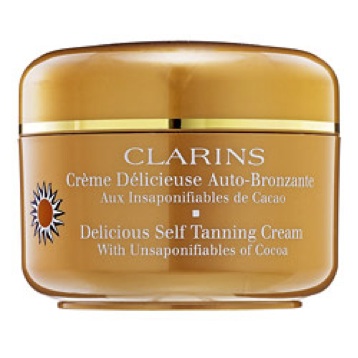
clarinsToday, open up any international beauty magazine – you will find models that are dominating the colorful pages are not all so pale boasting ‘porcelain’ complexion. Instead, beauty sites and entertainment pages have been filled with new trend – tanning. Just take a look at some gossipy newspaper articles based on curious speculation how Mitt Romney, who must have been so busy at the time, maintained the glowing tanned skin throughout his presidential campaign. Kate Middleton and her sister Pipa Middleton also captured the gossip followers with their bronzed skin complexion. Whether it happens on the stunning Greek beach, or while backpacking in Vietnam, or in a sunbed salon in New York, the result, tanned skin has become the new trendsetting skin complexion.

Among those who can afford and dream of tanned skin, the darker complexion comes with numerous labels: sun-kissed, glowing, bronze, naturally tanned… If you examine, all these words used to describe tan, entail a deep implication that tanned skin is healthy; that it is a product of healthy practice, perhaps swimming in the open ocean, hiking under the sun, or out playing by the beach. No long ago were these associated with toiling in farms under the sun, a mark of laboring, lower class. Yet in 21st century when most of people in industrialized countries, people are usually spending most of their days in their offices, then on cars or public transports, then in shops and their homes, all under the fluorescent lights and hardly under the natural sun rays. And that is exactly why “sun-kissed’ skin is glorified and sought after.

clarins2Popular legend holds that Coco Chanel first initiated this world-wide boom of tanned skin, which she got while vacationing in the Mediterranean in the 1920s. It was a look that signified health and vitality. From then on, tanned skin became associated affluence and luxury of, in short, having enough money to go on holidays and lay under the sun. This was also in such direct contrast with ‘others’ who were unfortunate and had neither time nor money to enjoy such holiday.

However, as mounting medical and scientific studies find the clear link between sun exposure and skin cancer, the trend did not end – instead, it simply turned from ‘natural’ to fake. Today at cosmetics shops, one can find an array of products that promise you evenly tanned skin and beautiful glow. So many different types of products are used to serve different purposed, from tanning lotion to bronzer powder, and fake sprays to imitate tans. You can walk into aesthetic shops and salons in your natural skin color then walk out a few shades darker in a matter of few hours and days of efforts.

The important thing about the logic behind the popularity of tanning, is that, it has fundamentally the same idea as skin brightening. It is the idea that skin complexion is a mark of certain class or socio-economic status, and that can be bought and fixed with money. The idea that beauty queue exists based on skin complexion, and consuming certain products will make you move up along the ladder. So at the end, who ‘wins’ at this game? Think about it – the same company that produces tanning creams and bronzers have different lines for skin brightening and whitening. Whether light skin or tanned skin is the trend of the year, they will never have a problem marketing either product.

Bigakuseizukan – Who Are the Beautiful Students?

by Lilia Yamakawa

A friend asked me to go with her to a party sponsored by a website called Bigakuseizukan, Picture Book of Beautiful Students. Both the photographers and the “beautiful” students they photograph are students from Japanese universities. Since have been talking about people’s concepts of “beauty” in our Race & Ethnicity class, I thought this would be a good opportunity to do fieldwork and see what this group considers attractive, what the trends are, why students agree to be posted on the website, and why this website is popular.

In class, we discussed what beauty is and found that a majority considers one type of appearance as beauty. Like the contestants in the Miss Korea contest that we saw in class, I expected most of the students at the party to be similar: skinny chins, double eyelids, small noses. I thought there would be many people with the Japanese kawaii style, with the same brown hair, same length bangs, and wearing the fluffy white and pink cutie skirts.

It turned out not to be what I expected! Most of the people there had different styles: many different hair colors and styles, different facial characteristics, many different body types, with totally different styles of clothes. Kawaii wasn’t especially big. I was both disappointed and relieved by what I actually saw. I was in a way disappointed that I couldn’t see an expected trend with my own eyes, and also relieved to find that there were many kinds of beautiful students there.

I think this has something to do with the popularity of the Picture Book of Beautiful Students website. The models are students who might actually go to your school, and they all look different. When you look at their snapshots, you might feel that they are close to you and possible to reach. This sense of closeness would be hard to have if you are looking at a model of a magazine or on TV. Bigakuseizukan’s uniqueness is that it doesn’t show only one type of beauty considered as perfect. It really shows lots of different types of students.

Another question I had in mind was why do people say yes to being photographed and having pictures posted of them online? And why do they attend such a gathering? I had a chance to ask around yesterday. I got a lot of answers, but basically they fall into three categories. In the first category, there were many students who were running for beauty contests, such as Miss Ritsumeikan, Mr. Japan and Miss Universe. These types of people answered they did it to get their name out and remembered through the Bigakuseizukan. The second group said they tried it for their personal record and their future career. It will look good when applying for a job, which might have a lot to do with your appearance, such as newscasters and announcers. The third group was more vague, and they said there was no reason not to try it or that they just enjoyed modeling for fun. One girl said, “Well, everybody posts their selfies on Twitter and other sites like that, so why not post a better picture of yourself taken by a photographer with a real camera?”

One more thing I expected to find was that everyone would be outgoing. Instead, there seemed to be all sorts of types of personalities at the gathering, and some people seemed very quiet and reserved. I think you could probably say that they all had some sense of confidence in the way they look, though.

This fieldwork only lasted three hours, but if you were interested in finding out why people in a certain group are judged to be attractive, I think studying a group such as the Bigakuseizukan would be a good method. It would be necessary to find more things that the models have in common and to question both the beauties and the photographers in more detail.

Color complex and constant degradation

Sign for "colored" waiting room at a...

Sign for “colored” waiting room at a Greyhound bus terminal in Rome, Georgia, 1943. (Photo credit: Wikipedia)

by Miho Tanaka

In our class on racism and colorism, we have been talking about how light skin is considered as one of the crucial elements of beauty in and how the idea is fostered all over the world. Not only people with dark skin but also all people, especially women, try to lighten or whiten their skin color without any specific necessaries and reasons to be light. Overall the main issue is how the idea of colorism is getting fostered then racism has taken its place on this capitalism world. As everything can be bought by money, wealth is literally measured by how much economic power people have. “Power of consumption” (Rondilla 2009, p.78) is then directly connected to “economies of color” (Harris 2009, p.1).

Under this condition, people with dark skin would try to be lighter by consuming skin lighteners if they had money to consume these. Therefore impoverished people would stay in a lower status since they wouldn’t be able to buy skin lighteners, and it is the problem that people with dark skin are often needed to stay in poor communities where many problems such as crimes, drugs or robberies exist. According to Rondilla (ibid), “controlling images are designed to make racism, sexism, poverty and other forms of social injustice appear to be natural, normal, and inevitable parts of life” (p.65). Regarding African American communities in Detroit, I’ve heard from my friend the images are so natural that even inhabitants of the community cannot get rid of them. “People are so caught with personal aesthetic and social positions, than actually embracing their own features, cultures and talents” (Brandosoul 2013), and I would call it a “constant degradation of certain racial people.” As Atlanta blackstar (2013) shows, unfortunately it might be true that young African Americans are often targeted as people who resort to violence but the system in which they are stuck should be transformed.

As Angela Harris explains in the introduction to the book Shades of Difference, “[o]ne of the challenges for scholars and activists concerned with colorism is thus to disrupt―and if possible prevent―’Latin Americanization,’ in which color hierarchy is pervasive yet its relationship to racism denied” (Harris, 2009, p.5). Racism exists and the first step we could take is not to deny it and not to be ignorant.

References

Atlanta blackstar. (2013). 5 reasons young black men resort to violence. Retrieved on November 29, 2013, from http://atlantablackstar.com/2013/11/26/5-reasons-young-black-men-resort-violence/2/

Brandosoul. (2013). Colorism: the jaded mystery of race and skin color. Retrieved on December 9th 2013 from http://misedublack.wordpress.com/2013/12/11/colorism-the-jaded-mystery-of-race-and-skin-color/

Harris, A. P. (2009). Economies of color. In Glennn, N, E. (Ed.) (2009). Shades of difference: why skin color matters. Stanford University Press.

Rondilla, J. L. (2009). Filipinos and the color complex : ideal Asian beauty. In Glennn, N, E. (Ed.) (2009). Shades of difference : why skin color matters. Stanford University Press.

How to Solve the Problem of the Working Poor in Japan

In Justice

In Justice (Photo credit: Wikipedia)

by Megumi Takase

Under capitalist society, the poor can’t earn enough money to make a living while the rich own the large portion of the total wealth of their home countries. It is also true for Japan. Japan Broadcasting Corporation (NHK) featured the problem of the working poor and attracted attention in 2006.

People who are called the working poor live at the low standard of living though they work hard. The problem of the working poor is caused by the structure of society. In Japan, corporations tend to recruit only new college graduates. Thus, it is difficult for people who can’t enter the high school or university for economical reasons to be recruited as regular employees. They tend to become non-regular employees and fall into the working poor. It happens not because of their faults but the social structure.

I think that the government should take action to solve this problem because it is difficult for individuals and corporations to do it which the structure of society made. Above all, the government should promote redistribution of wealth. Whether you succeed economically or not depends on luck. For example, suppose you were born in a rich household. You can enter the private university even if you can’t get good grades in high school. In job hunting, you will have an advantage over the poor who can’t enter the university only because you graduate from the university. After you enter a company, you will earn more income than the poor who are high school graduates. Of course, college graduates must do effort to develop their skills after entering a company. However, if they were born in a very poor household, they must not have an advantage of being a college graduate. Thus, the rich should distribute their wealth to the poor who unfortunately fall into the poor situation.

For the government to promote redistribution of wealth smoothly, the rich should have tolerance for distributing their wealth to the poor. In addition, the poor of course shouldn’t depend on social welfare program. Both the rich and the poor should consider and help each other. For creating a society where everyone considers others, I think that education is important. In high school, I had “Modern Society” class twice a week. However, I only studied the structure of the law, the Diet, or taxation. I had few opportunities to discuss about social inequality in the class. Before I took “International Sociology” class, I hadn’t considered this problem very often. Under this situation, people won’t be interested in the unfair society and understand redistribution of wealth. They will pursue their own benefits. For solving the problem of the working poor, Japanese government should draw up the curriculum which makes the young interested in social inequality.

K-Pop Beauty Factory

Korean wave, hallyu in Singapore

Korean wave, hallyu in Singapore (Photo credit: KOREA.NET – Official page of the Republic of Korea)

by Adelle Tamblyn

Coming in at US$180 million in 2011, Kpop (Korean pop) has become South Korea’s largest export. After watching a handful of Kpop music videos, it’s not hard to see why it’s become known as Hallyu, or the “Korean Wave“: every music video I watched had addictive beats and perfectly synchronised choreography, and it’s hard not to be mesmerised by a group of twenty year-olds with six-packs and make-up a la B2ST, or the perfect faces of SNSD, all with button noses, delicate, pointed chins, and big, sparkly eyes. Kpop’s main target market are teenagers: teenagers from France to Fiji, Australia to Austria have succumbed to the Korean Wave. Due to the clever utilisation of the internet to market Kpop, entertainment companies SM Entertainment, YG Entertainment and JYP (known as the “big three”) have helped create an entirely new generation of teens who sing lyrics they don’t understand. But Kpop has created a new trend: cosmetic surgery.

This year’s contestants for the Miss Korea contest look starkly different to the contestants just 30 years prior. 30 years ago Miss Koreans had a very different face: slumberous, slanted eyes, a round face and a wide nose. In exchange for these features, the Miss Korean contestants today have large, double-lidded eyes, a pointed chin and tiny, pointed noses. The same look can been seen, replicated again and again in the Kpop industry. Children as young as nine or ten get recruited by entertainment companies, in which they are signed into 10-15 year contracts: it is no big secret that along with this, new recruits are contractually obliged to have plastic surgery to “improve” their image and become more sellable. In other words, these children are moulded and manufactured, ready-made and sold globally for company profit. In an interview with Kpop group D-Unit, Charlet of Vice asks what the ideal Korean beauty is: one girl answers that ideally, Korean beauty would be that of Westerners, because of its “distinctiveness”. “Big round eyes, straight nose and round face”, the D-Unit member says. Has this become the template for beauty in South Korea? The “Western” face?

The advancement of cosmetic surgery technology and techniques means that this Western look is readily accessible, and attainable. In a nation increasingly becoming obsessed with notions of Western beauty, boosted by the Kpop industry, one in five South Koreans have turned to plastic surgery, as opposed to one in twenty people in America. Parents in South Korea are helping to encourage the importance of beauty in their society: as a middle school or high school graduation present, instead of luxury goods, it is now quite common for parents to foot the bill for their children’s plastic surgery (typically, double eyelid surgery). Supposedly, this is meant to increase their child’s chances of getting into a prestigious high school or university. It is not only teens who are affected by the cosmetic surgery: some employers make recruiting selections based on physical attractiveness. If Western phenotypes are the ideal Korean beauty, then those who have undergone cosmetic surgery would be the people getting the jobs: such hiring techniques resembles the employment patterns of companies, who give preferential treatment of White people over other types of people.

Kpop is much more than South Korea’s largest export: besides influencing plastic surgery tourism, endorsement deals with a variety of Korean products have helped stimulate the country’s economy, and the deification of Kpop stars has also boosted agriculture. Worshipping teens will make donations of rice at music concerts in order to feed their idols. With so much socio-economic profit, it doesn’t look like the Kpop and plastic surgery will come to an end soon.

Kpop has become the “face” of South Korea, whilst their real faces are hidden behind more than a nip-and-tuck. If South Koreans keep turning to plastic surgery as the answer to their problems, constantly Westernising themselves, they are only telling themselves that White phenotypes are the only type of beauty.

Furthermore, they are ethnically cleansing themselves psychologically and physically through plastic surgery.

References

Lee, H. (2013, October 10). Plastic surgery lifts South Korean tourism. Retrieved from http://www.businessweek.com/articles/2013-10-10/plastic-surgery-lifts-south-korean-tourism

Stone, Z. (2013, May 24). The K-Pop plastic surgery obsession. Retrieved from http://www.theatlantic.com/health/archive/2013/05/the-k-pop-plastic-surgery-obsession/276215/

Vice (2012, October 23). Seoul Fashion Week – K-Pop to double eyelid surgery [Video file]. Retrieved from http://www.youtube.com/watch?v=0wWKjxxM6q8

Willett, M. (2013, June 6). Korea Is obsessed with plastic surgery. Retrieved from http://www.businessinsider.com/korea-is-obsessed-with-plastic-surgery-2013-5

Yasukuni Shrine and Korean Identity

English: Yasukuni Shrine in Tokyo.

English: Yasukuni Shrine in Tokyo. (Photo credit: Wikipedia)

by Lilia Yamakawa

In his research on nationalism, Craig Calhoun talks about when and how nations were formed. Some people say nations are primordial, that they have been around forever, that they are “natural” phenomena. Others, including Calhoun, believe that nations and nationalism are modern and constructed. By 1815, the world was full of nations. He calls nationalism the most momentous phenomenon of modern history. He writes:

In East Asia, nationalism has throughout the twentieth century been the rhetoric not only of anti-imperialist struggles but of calls for strengthening and democratizing states from within. (p213-214) 

Calhoun cites references on China, relating how anti-Japanese imperial protest, the May Fourth Movement in 1919, was both anti-imperialist and served to strengthen and democratize China. This was later to have led to the revolution.

It seems as Korean nationalism has beeb strengthened through protest against Japanese policies. Recently, the Korean president refused to negotiate with the Japanese because Japan refuses to apologize for its wartime actions. One of my Korean friends told me that he cannot talk about the history of his country without talking about what Japan did when it controlled Korea from 1910 to 1945.

Jukka Jouhki (2009) discusses the Japanese politicians’ visits to Yasukuni and the impact of those visits on Koreans. In the following passage he describes Yasukuni as a “wormhole”:

Symbolically, Yasukuni can be thought of as a wormhole that goes through time and space. When this wormhole crops up, the entire Korean nation seems capable of being transported backward into the era of Japanese colonial rule. 

Jouhki says that the Korean image of Japan is as she was in the colonial period, and Yasukuni represents imperial Japan just as if it were now. The image exaggerates the difference between us and them, Korea and Japan. He says that when the Koreans were colonized, it made the Koreans see themselves as “Other”, just as they saw the Japanese as “Other”, and Yasukuni represents an identity that they are trying to work through.

Japanese leaders’ nationalism, such as visits to Yasukuni Shrine and the museum and textbooks that fail to show wartime atrocities, is not only a means to form a certain Japanese identity. It seems that Japanese nationalism strengthens a certain Korean identity as well.

References

Calhoun, C. (1993). Nationalism and ethnicity. Annual Review of Sociology19, 211-239.

Jukka, J. (2009, May 8). The second invasion: Notes on korean reactions to the yasukuni shrine issue. Retrieved from http://www.academia.edu/179474/The_Second_Invasion_Notes_on_Korean_Reactions_to_the_Yasukuni_Shrine_Issue