Skin Whitening as Social Uplifting and Achieving the Ideal “beauty”

by Moe Miura

There are many skin-whitening products in global markets today. One can easily purchase skin-whitening products even without knowing it, because whitening one’s skin tone is already a big phenomenon in the 21st century all over the world. However, South Africa has significant story about its history of the phenomenon of skin whitening.

In Evelyn Nakano Glenn’s Shades of Difference: Why Skin Color Matters (2009), author Lynn M. Thomas focuses on the history and the use of skin lighteners in South Africa. Today, 35% of the South African women are said to be using the skin-whitening products. Then these questions pop up: why do South African women try to whiten their skin tone? Is there a history behind it?

South Africa is widely known for its history of apartheid, where black and colored people did not have the same political or economic rights as white people, and also were forced to live separately from white people. This policy led to the further discrimination of black and colored people, segregation, and the skin color preferences influenced by the European colonialism (Thomas, 2009). Thus it created the idea of lighter skin equals more liberty and less/no discrimination. Historically, the use of skin whitening products had a lot to do with the fact that there was a significant racial discrimination against black and colored people.

pictureAnother reason of using the skin lighteners was “technology of the self”, meaning people decorate themselves to transform themselves, so that they can achieve happiness or perfection. This can range from concealing blemishes to bleaching their faces. Advertisements have played a big role in informing people about this idea that whiter is more beautiful, using musical stars and beauty contest winners. Capitalism also pushed this idea because the more difficult the thing to achieve, the harder people try; concealing flaws and having lighter skin was difficult thus people would purchase more stuff to achieve this “ideal beauty”. The market of skin lighteners had become multimillion-dollar-per-year endeavor.

As it can be seen, reasons of South African women purchasing skin whiteners ranged from racial uplifting, capitalist commerce, to making themselves look better as a “technology of the self”.

Reference

Thomas, L. M. (2009). Skin Lighteners in South Africa. In Shades of Difference: Why Skin Color Matters, edited by E.N. Glenn. Stanford, CA: Stanford University Press.

Enhanced by Zemanta

Skin Lightening in South Africa

by Yutaro Nishioka

The trend of skin lightening, especially among women, is getting increasingly common all over the world, including South Africa, where the major part of its population is black. According to a study from the University of Cape Town, as many as one in three African women use bleaching products to lighten their skin.

Skin lightening products often create serious medical complications; many patients suffer from diseases caused by a combination of use of lightening products and sunlight (africa.com).
The World Health Organization (WHO) has also mentioned the negative effects of some skin lightening products. Mercury, one of the common ingredients in lightening creams, is said to have harmful effects and could also lead to kidney damage, as well as other side effects such as “skin rashes, skin discoloration and scarring, as well as a reduction in the skin’s resistance to bacterial and fungal infections” (africa.com).

Why is skin lightening becoming so common in South Africa despite its negative health effects? Professor Lynn Thomas, co-author of the book Shades of Difference: Why Skin Color Matters, mentions the history of South Africa being colonized by Europeans. The Europeans and South Africans were not treated equally, and there was the notion that light skin was somehow better, not much unlike Hitler’s idea that Jews were inferior. More recently, apartheid, the government policy of racial segregation against black Africans in South Africa, was renounced officially only in 1992.

The effects of the history of discrimination can still be seen in the current South African society. For example, Nomoto “Mahoza” Mnisi, a famous South African musician, is known for her extensive use of skin lightening products. She says, “I just want to be light skinned… I was tired of being ugly.” She is assuming that dark skin is “ugly” and light skin is not.

People that have heard of this news have reacted differently, but the majority of the comments on the internet do not seem to approve of her changed appearance: “she was so much prettier before; her husband must be blind”, “God created her black and she looked so pretty. She looks pretty now but she looked better before”, “She is insecure and that’s bad.”

As there is a difference between Mahoza’s view and that of her fans, it is questionable to say that the history of the colonization and discrimination is the sole cause of the contemporary trend of South Africans’ skin lightening, but it is probably one of the factors that have contributed to the trend.

Reference

“Not Happy Being Black?” – Posted by Africa.com Editorial Staff. http://www.africa.com/blog/not-happy-being-black/

Thomas, Lynn M. 2009. “Skin Lighteners in South Africa: Transnational Entanglements and Technologies of the Self.” Pp. 188-210 in Shades of Difference: Why Skin Color Matters, edited by E. N. Glenn. Stanford, CA: Stanford University Press.

Enhanced by Zemanta

Color complexes in the Philippines

by Lulu Maginde

In ‘Filipinos and the Color complex,’ Joanne Rondilla questions the reader, especially readers here in Asia, what the ‘ideal’ concept of beauty is, and how different people within Asia perceive beauty. As Rondilla focuses specifically on the Philippines and how skin whitening is utilized, or rather highly emphasized, it was interesting to find how skin-lightening products are marketed and sold as well as what these products are saying about beauty.

Rondilla claims that this concept of having a fairer complexion/lighter skin, stemmed from the Philippines’ deep history of colonization, after having been occupied by Spanish for over 300 years. This history most indefinitely influenced the way of life, culture and traditions, not to mention language and the concept of what is deemed beautiful.

After the departure of the Spaniards, then came the Americans, and many Filipinos will claim that until present, the Philippines is still a colony of the US, as most of the way of life in the Philippines has been greatly structured around a more Western way of life. Of course the country still has its rich culture and heritage, as well as its strict religious value system, however it is not hard to deny that US presence has greatly affected life in the Philippines.

This ties in perfectly to my next point of how Rondilla compares standards of skin color between Asian immigrants to the US to Asian Americans born and raised in the US. The main difference between these two groups is that while Asian Americans chose to tan, as it symbolizes wealth and a more luxurious life, Asian immigrants, for instance the Filipinos who immigrate to the US, are more likely to use skin lightening products in order to assimilate  into society. In the Philippines, having darker or more of a tanned complexion immediately reflected what social class one belonged to. If one had a fairer or lighter complexion, they belonged to an a higher social class, simply because they were not as exposed to the sun as working-class laborers.

This notion of a ‘relatable ideal’, or the claim that a certain type of beauty is the shared/common ideal amongst women in the Philippines is what is striking. Consciously or unconsciously, these women buy into an industry, in conjunction with certain media institutions, that greatly influences what may be deemed as beautiful. Thus, they buy into the idea that, due to capitalism, ‘everything can be bought and exchanged’.

Reference

Rondilla, Joanne L. (2009). “Filipinos and the color complex.” Pp. 63-80 in Glenn, E. Shades of Difference: Why skin color matters. Stanford, CA: Stanford University Press

Enhanced by Zemanta

The trend of Japanese whiteness

by Yusuke Shiga

For women in modern society, whitening the skin by cosmetic products is so prevalent, and this trend is becoming more significant in terms of racial discrimination today. The influence of colonialism on not only developing, but developed countries is incalculable in various aspects. Still today, one’s appearance, especially skin color, plays a tremendous role in one’s access to essential stuff, from necessities for life such as housing, food, and clothing, to social security and social welfare. By lightening the skin color, people can more easily get these kinds of advantages and live more comfortably in a society. This social structure promotes the preference of whiter skin, however the skillful advertising and marketing strategies of cosmetic firms also affects this social inclination to white skin. Evelyn Nakano Glenn (2009) argues that the giant multinational corporations have grown by meeting the needs of women in each nation, thus the market for cosmetic products has expanded. When you focus on the Japanese case, the complicated contents can be seen.

Recently, Japanese women have sought white skin, as they think that white skin is beautiful or healthy and they persist in trying to to have whiter skin. There are some arguments about the reasons for this tendency, and some claim that Japanese ideal image of women is almost Caucasian because of the advertisements of media and companies. They insist that in most cases, whites are chosen as the models of cosmetic companies, and regarded as beautiful women, and therefore Japanese women try to mimic Westerners. On the other hand, others claim that whitening one’s skin color is part of Japanese traditional culture, because even in the Nara period, people already had customs to whiten their skin tone by using “Oshiroi” (White powder). However, in my opinion, these arguments neglect some important points toward this question “Why do Japanese women seek white skin?”.

Of course, we cannot define the main cause of Japanese preferences for white skin, since there are lots of causes and all of them are associated with each other. Through the discussion of my class, many of the interesting, persuasive ideas are came up and I consider this issue deeply, then I came to the conclusion.

In my opinion, we Japanese all share the misleading idea “Japanese must have nearly same white skin tone naturally”. Therefore, we sometimes discriminate against “Jiguro people (people who naturally have blacker skin compared to other Japanese)” regardless of their birthplace, and draw the line between “naturally white Japanese” and “naturally black Japanese”. Furthermore, because of this premise, “skin whiteness” symbolizes one’s youth or health. Having white skin implies that you make an effort to keep your youth by caring for your skin condition.

In Japan, a proverb says “stand out from the crowd and you just invite trouble for yourself”. Not to be “others”, to keep one’s youth, and to become healthy, Japanese women are paranoid to have white skin, I guess.

Enhanced by Zemanta

Beauty Standards in the White Imagination

by Shinoko Itakura

The phenomenon of changing skin color has been happening all over the world. Some attempt to get lighter skin and some attempt to get tan skin. The reasons behind those two attempts seem opposite yet, the purpose is the same, “high class”. The symbol of high class depends on where you are, and how the standard of the beauty has been created in your society, because the standard of beauty  includes class status.

But who created the standard of beauty and how? We tend to describe people who have straight jet-black hair, and large, double lidded, almond-shaped eyes as “Asian beauty”. Even though we are Asian, whenever we see people who have those facial features, we say, “You are beautiful like Asian beauty!” In fact one of my colleague just described another colleague as an “Asian beauty” the other day. It just feels weird when Asian people describe another Asian as an “Asian beauty”. This is because the idea of Asian beauty has been created in the white imagination. We do not say European beauty or Latin beauty, because the standard of beauty is already based on European (white) features. What is more, something which is called a “universal standard” or “universal beauty” is just not universal. It always based on physical features of white people.

The standard of beauty seems to be controlled by mass media and the marketing of cosmetic products. Cosmetics companies use many strategies to gain more and more profits. “Relatable” is one of the important key concepts; if consumers find any similarity to the advertising models, for example “Asian-ness”, they believe that they can achieve those models’  look, and the universal standard of beauty. Those advertisements do not directly say “you guys can be like this model, if you use this products!” yet they are implying this by using racially ambiguous models. In order to sell the products, they also give us images of dark skin as dangerous, unhealthy, bad, and wrong by using terms such as aging or skin cancer. But what really matters is “skin color”.

I feel wrath about how skin-lightening products are marketed. It is so depressing that somehow we have to feel pressure of skin color or looking, and have to try to look like someone else, just because we are not white. This situation must be stopped and there should be the world which do not judge you by your skin color.

Enhanced by Zemanta

Symbiosis in the World of Beauty: The Cosmetics Industry and the Western Beauty Ideal

English: Super Skin Lightener skin lightening ...

English: Super Skin Lightener skin lightening cream (Photo credit: Wikipedia)

by Kyungyeon Chung

Upon walking into a drug store in Japan, one will find an array of cosmetic products that promises hopeful transformation into what today’s Japanese society perceives as beauty. These end results the products promise – fairer, whiter skin, brighter teeth, bigger eyes, and longer eye lashes – all embodying the ideal that originated from the Western, Caucasian-centric beauty standards.

The cosmetics industry, even on a global scale, operates on the platform provided by Western standards of beauty, and especially by the colorism ideology that has penetrated into deep corners of modern society. At the same time, the beauty ideal and colorism are not self-sustaining. Their presence and growing prevalence are made possible by numerous industries that profit from the growth, with the cosmetic industry being a major stakeholder in play. By constantly being made to consume products designed with a limited set of objectives and outcome, the consumers are constantly reminded of the beauty ideals behind the products. The global cosmetics industry and the Western beauty standards based on colorism, mutually reinforce each other’s existence and influence.

In order to fully understand the core of modern society’s beauty standards, it is imperative to know the colorism ideology that frames the entire discourse. Colorism refers to “the preference for lighter skin and social hierarchy based on skin tone”, and has been widely expanding throughout the globe (Glenn, 2009, p.166). Being one of the main axes behind inequality today, it occurs at societal, systemic level through social structure that permits systematic discrimination towards darker skinned people. In many different regions and nations around the world, light skin tone has historically been preferred to dark skin tone, and given higher social status and easier access to social and economic resources (Keith, 2009, p.25). Although the beauty ideal does include other phenotypic aspects than skin complexion such as desirable weight, body shape, and facial structures, skin tone does hold significant importance, if not the most.

This ideology of colorism has been directly translated into the Western beauty ideals. Up high on the list of what composes the ideals is ‘fair’ skin. Having lighter, fairer, and whiter skin gives a great advantage in one’s life, and is central to the very definition of beauty. Having been spread as part of the ideological rationale for slavery and colonial imperialism of the European powers (Keith, 2009, p.27), the “white is better” or “white is right” idea still pervades modern societies thanks to mass media. Today, these ideologies are strongly embedded in ways we admire, desire, and look upon fair skin. Its importance can be easily understood and highlighted by the popular practice of skin whitening, which will be elaborated further later. It is also important to note here that females are subjected to these standards much more frequently and strictly than males (Keith, 2009).

In modern societies with capitalist economic system, the beauty standards manifest themselves as profitable industries whose products promise the achievement of ideal beauty via consumption. As societies are deeply instilled with consumerism, selling and buying beauty have been a huge, popularly sought-after business than ever. Plastic surgery is one of the most common and provocative examples. Cosmetic surgeries have spiked up in number and scale around the world: 14 million surgery procedures were performed in the US in 2011 (American Society of Plastic Surgeons, 2012); close to 7% of the population has undergone knife in South Korea in 2010 (Bates, 2013). A wide range diet-support programs, machines, and food products are readily available to help people lose weight.

Among many industries that thrive on our search for beauty, the cosmetics industry deserves particular attention. For instance, unlike plastic surgery, which may seem invasive, dangerous and rather extreme, putting on makeup is seldom-questioned practice for women. While showing up at school after a holiday with larger breasts may cause a stir, putting on mascara would hardly be an issue. For many, it is a daily routine, an ordinary and even expected behavior. It is also continuous – women who use skin care products will probably continue to do so for years to come. While it may seem trivial at first, considering the commonality and regularity of skin care and makeup, the cosmetics industry is massive, universally pervasive, and commercially successful.

The cosmetics industry owes much of its existence and enduring popularity to the beauty standards. An impressive array of products is available to help people achieve beauty as prescribed by the Western ideal. Eye makeup products are a great example. A dozen different types of products are readily available to make one’s eyes look bigger and more defined: mascara, eyeliner, eye shadow, eyelash curler, eyebrow shaper, highlighter, etc. In East Asia in particular, the desire to have the Western look has also led to the popularity of double eyelid (Bates, 2013). In Korean and Japanese cosmetics shops, one can easily find glue or sticker-like products that hold the skin of upper eyelid together, creating an illusive double-lid. For those unwilling to undergo surgical procedures to create double eyelids, those products are a way to go.

Yet, the segment within the cosmetics industry that is perhaps the most influenced by, shaped by, and reflective of the Western ideals, is skin whitening products. Colorism has effectively produced a social view that associates whiteness with superiority and darkness with primitiveness, something to be avoided and fixed. In her book Shades of Differences, Evelyn Nakano Glenn argues that light skin has come to hold symbolic capital that furthers one’s life chances (2009, p. 166). This relates to the concept of beauty queue in society, whereby the level of beauty and social status are judged by the shades of complexion, the lightest at the top and the darkest at the bottom. For such reason, men and women from all parts of the world have strived for lighter complexion by consuming copious amounts of skin whitening products, supporting a multibillion-dollar global industry.

In the Asia Pacific region, the skin lightening market was valued at over US$13 billion in 2012 (Tan, 2012). In African continent, studies have found that up to 50% of population use skin lightening products in Dakar, Senegal; and even up to 77% in Lagos, Nigeria (Ntambwe, 2004). Almost all major cosmetic brands have a product line specifically dedicated to brightening care: Estée Lauder’s ‘CyberWhite’, Shiseido’s ‘White Lucent’, Clarins’s ‘Bright Plus’, Vichy’s ‘BiWhite’, Chanel’s ‘Le Blanc’. The list is endless. The prevalence and magnitude of the industry indicate how the widespread Western ideal of beauty and reverence for lighter skin tone has led to increasing demand for skin whitening products. The unabated expansion of the skin whitening products is a clear manifestation of colorism in action.

The highly interrelated relationship between the cosmetics industry and the Western beauty ideal can also be traced back from the other way around. The cosmetics industry work to constantly and persistently reinforce the ideal into the mindset of people, making it into an accepted social norm. Commercials by cosmetic firms continuously remind the consumers of what they should look like, and thus eventually what they should consume in order to achieve the said goals. These commercials tactically employ models that will spark the feeling of desire, which make the viewers think the goal – of looking like the model – is attainable. In essence, the models will look Caucasian enough to fit the White beauty standard, yet still possess enough ‘local’ features not to alienate the viewers too much. For instance, in Japan, half-Japanese and half-Caucasian models have rose to prominence for such reasons, brining the ‘ha-fu boom’ in entertainment and media (Krieger, 2010). In such manner, the constant bombardment of strategically produced advertisements on TV, magazines, and in shops, works to ensure the beauty ideal is here to stay.

As seen in the case of skin whitening products, the industry ushers consumers to fix their blemishes and dark spots, to get rid of undesirable features, and to become closer to the ideal beauty. Prominent cosmetic manufactures reveal supposedly bettered, new products every season. The products are ‘upgraded’ in a sense that they claim to produce better results, such as longer eyelashes, darker eye lines, more durability, brighter effects, to name a few. Consumers absorb such ideas: those results are good; those results are better; those results are what they should seek after. Through this process, the beauty standard gets repeatedly ingrained in the subconscious of society as a whole.

There is a wide range of factors at play that help maintain the global obsession with the White ideal of beauty, and especially that of light skin tone. One of the perpetuators is the cosmetics industry. In modern capitalist economy in which consumerism has become the social norm, the cosmetics industry prospers, thanks to the consumers’ ceaseless quest for beauty as dictated by the Western ideal. The quest for fairer skin, in particular, embodies the reality of colorstruck world – to borrow Verna Keith’s words – where colorism is firmly established as part of social structure.

The cosmetics industry and the White beauty ideals function as lifeline to each other. The ideals condition society for the industry to profit from, while the industry works to reinforce the ideals. It is a mutually interdependent, symbiotic relationship. If we want to start tackling the racially charged foundation behind the White ideal of beauty, we must first understand how it is perpetuated and internalized by consumption of products that cement the said ideal. Only when both ends are understood and questioned, can the process of deconstructing the colorstruck world begin.

References

  1. American Society of Plastic Surgeons (2012, September 2). 13.8 million cosmetic plastic surgery procedures performed in 2011. Retrieved from: http://www.plasticsurgery.org/News-and-Resources/Press-Release-Archives/2012-Press-Release-Archives/138-Million-Cosmetic-Plastic-Surgery-Procedures-Performed-in-2011.html
  2. Bates, C. (2013, January 31). 15 million people worldwide had plastic surgery in 2011. Daily Mail Online. Retrieved from: http://www.dailymail.co.uk/health/article-2271134/15million-people-plastic-surgery-world-just-year–SOUTH-KOREA-leading-way.html
  3. Glenn, E. N. (2009). Consuming lightness. In Glenn, E. N. (Ed.), Shades of difference: Why skin color matters. (pp. 166-187). Stanford, CA: Stanford University Press.
  4. Keith, V. (2009). A colorstruck world. In Glenn, E. N. (Ed.), Shades of difference: Why skin color matters. (pp. 25-39). Stanford, CA: Stanford University Press.
  5. Krieger, D. (2010, November 29). The whole story on being ‘hafu’. CNN. Retrieved from: http://travel.cnn.com/explorations/life/whole-story-being-hafu-722376
  6. Ntambwe, M. (2004, March). Mirror mirror on the wall, who is the fairest of them all? Science in Africa. Retrieved from: http://www.scienceinafrica.co.za/2004/march/skinlightening.htm
  7. Tan, D. (2012, September 18). Who’s the fairest of them all? Asian Scientist. Retrieved from: http://www.asianscientist.com/features/skin-whitening-products-asia-2012/ 
Enhanced by Zemanta

How could social media transform racism?

by Miho Tanaka

Could internet communications change the structure of race? The revolution of media has changed how people communicate and connect with the others, and forms of media have been constantly changing as internet technology has been developed. Internet communications have enabled us to communicate each other without borders. In other words, people have gotten unrestricted tools to get to know the others having far different cultures and backgrounds.

In this post, I attempt to discover the relevance between media and race and how the emergence of social media could make changes, especially in the United States. Therefore this post looks first at the development of media from tangible products to intangible services, secondly how race awareness or consciousness has been transforming as the forms of media have been changing, and thirdly some expectations that could positively or negatively influence race structure in relevance to the changes of media.

Development of media: Imagined communities

Media is one of the strongest tools to foster and penetrate some ideas, biases and stereotypes to its viewers and construct their perception toward their world. Newspapers, magazines and printed advertisements were the major media for the last centuries, however new types of media such as online media, social media and so forth have appeared in the last decade and these dynamically influence people’s lives. Jessie Daniels (2013) posted on Racism Review that newspapers used to play a role to function for creating “imagined communities” among those who engage with the communities. However Joanne L. Rondilla (2009) argues that globalization and technological advances have changed the formation of imagined communities (p.64-65). Rondilla borrows Hall’s description of globalization and cites that globalization is:

the process by which relatively separate areas of the globe come to intersect in a single imaginary “space”; when their respective histories are convened in a time-zone or time-frame dominated by the time of the West; when the sharp boundaries reinforced by space and distance are bridged by connections (travel, trade, conquest, colonization, markets, capital and the flows of labor, goods and profits) which gradually eroded the clear-cut distinction between “inside” and “outside.” (p. 64-65)

Online media has enabled us to shorten our communication style and has released the West-dominated time-frame. An imaginary space platform, in the case of online media, works as an intersection of people in different areas. She concluded that “globalization involves the flow of ideas, products, images, and so forth, that, through technological advances in the media, closes the gap between perceived differences among people” (p. 65). Considering how media has been changing especially in the 21st century the range of imagined communities must have expanded. Now social media has started to function just like newspapers, as people go to online in order to affirm their racial identity and to seek community around that identity (Daniels, ibid).

Media’s objectives

Popukin, Kabashima, and Taniguchi (2008) point out that public media controlled by national institution and private media owned by private companies take different roles (p.71). Public media seeks societal objectives including political and national purposes, since it considers the viewers or listeners as voters for next elections, while private media seeks profit since it considers the customers as buyers (ibid). As Harris (2009, p. 1) insists, racism is constituted through “economies of difference.” In other words, “economies of color” have great power over market capitalism. Before the emergences of social media, the messages of media were always sent from companies or institutions to consumers based on the senders’ objectives, which are often “selling more products and increasing revenue” or from public organizations to the supporters to achieve some kinds of political goals.

However social media totally broke the previous rule and now the senders of message also include individuals or users on the internet. They do not have to seek certain outcomes because they can send any messages even if they are not tied from some groups, therefore their messages might be sometimes emotional. Racial minorities also got a chance to speak out their feelings and experiences on the internet.

Changes of race awareness

Daniels clarified the fact that “people go online to affirm their identity and to find community, often along racial lines.” In 2009 the chart of popular social network sites shows BlackPlanet.com was ranked in as 13th (Daniels, 2013). There are further more social networking sites focusing on the encouragement of African Americans and the other minority groups in the U.S. For instance, Atlanta Blackstar is one of the media which strives for becoming the central voice in black media. It applauds black peoples’ achievement and self-esteem, and simultaneously analyzes and reflects black culture or its representation in societies, which is often considered as a negative phenomenon.

Especially some media focusing on encouragement of isolated minorities such as BlackPlanet.com and Atlanta Blackstar are considered an enhancement of self-esteem among them. According to Verna Keith, self-esteem is defined as “the evaluative dimension of the self” (2009, p.33) and borrowing Porter and Washington’s definition, it is “feelings of intrinsic worth, competence and self-approval rather than self-rejection and self-contempt” (ibid). Among black people in the United States, media would be used for both sides, in negative and positive ways. In negative ways it is used for accelerating black culture and its representation, and the images are often applied to all black people without considering characteristics of the individuals. However in positive way it could be used for encouraging themselves and applauding black culture and its experiences. In this case the idea of “double consciousness” would be related.

Double consciousness is presented by W. E. B. Du Bois and according to Craig (2009), the concept “provides a useful way to think about the interrelationships between white and black systems of representation” (p.84). Double consciousness is two dimensions of how black see their world from their view. One dimension is that blacks have to see themselves and judge themselves as whites see them, which describes the internalization of racist systems of representation. Another is an internalization of dominant views of oneself and a critical awareness of the structure of racism along with an ability to recognize the presence of racism (ibid, p.84-85).

Until the emergence of social media, only the former dimension had covered people’s viewd, but social media gave them an opportunity to share their second insight, a critical awareness of the structure of racism. If it might have been the great chance to recall black consciousness and lighten their self-esteem, what kind of positive aspects would appear?

Positive and negative aspects

Now this paper will look at whether the emergence of social media is positive or negative. Grasmuck, Martin, and Zhao (2009) explored racial issues which often come along with injustice frequently included by the African American, Latino, and Indian students on their Facebook wall. The authors theorize that these wall postings accelerate “a sense of group belonging, color consciousness, and identification with groups historically stigmatized by dominant society” (ibid). That means racism still occurs in social media.
However Daniels also examined that some dominant groups rarely signed up as their racial categorized group and they foster an idea of “racelessness” through it. In addition according to Popukin, Kabashima, and Kawaguchi, the internet doesn’t work for erasing racism and even ignorance is very dominant on the internet (p.64). Though the internet has been penetrated and larger number of people now have access to talk openly about issue of racism, the open network works not only to improve the issue but also to foster blindness toward racism and colorism.

Through this post, I have looked at the relationship between media and racism and how it has changed. As media has been developing, the racial awareness and consciousness has changed, however media could not only influence racism in positive way. In social networking sites and social media, people have started to get around with the others belonging in the same group but simultaneously race blindness and racelessness have gotten bigger power than before. Whether the feud between more powerful voices and encouragements which minorities got in social networking and racelessness that racial dominant group of people often foster would weaken or not will be the next challenge of racism we will face.

References

  1. Craig, Maxine Leeds. (2009). The color of an ideal negro beauty queen: miss bronze 1961-1968. In Glenn, E. N. (Ed.) (2009). Shades of difference: why skin color matters. Stanford, CA: Stanford University Press (pp.81-94).
  2. Daniels, Jessie. (March 2nd, 2013). Race, Racism & Social Networking Sites: What the Research Tells Us. Retrieved on December 23, 2013 from http://www.racismreview.com/blog/category/social-networking-sites/
  3. Gordon, T., Jones, J. & Morris, S. (2014) Atlanta blackstar: about us. http://atlantablackstar.com/about-us/
  4. Glenn, Evelyn Nakano. (Ed.) (2009). Shades of difference: why skin color matters. Stanford, California: Stanford University Press.
  5. Harris, Angela P. (2009). Introduction. In Glenn, N. E. (Ed.) (2009). Shades of difference: why skin color matters. Stanford, CA: Stanford University Press.
  6. Keith, Verna M. (2009). A colorstruck world: skin tone, achievement, and self-esteem among African American women. In Glenn, E. N. (Ed.) (2009). Shades of difference: why skin color matters. Stanford, CA : Stanford University Press.
  7. Popukin, L. S., Kabashima, I., & Taniguchi, M. (Eds.) (2008). Changing media, changing politics. Tokyo: University of Tokyo Press.
  8. Webb, L. S. (n.d.). How colorism affects light skinned girls and women. Retrieved on December 21, 2013 from http://www.npr.org/2012/09/13/161082306/william-julius-wilson-ending-poverty-is-possible
Enhanced by Zemanta

Environmental Racism – A problem with no visible solution

Save our water

Save our water (Photo credit: uusc4all)

by Jonas Horvei

The world as we know it is still very much an unequal society.  It is unequal because how others will treat us in our lives is already to a certain extent pre-determined on the day when we are born. Where we are born, our nationality, our family’s background, one’s looks, and the color of one’s skin and so on all plays different in how others will perceive and treat you. A few weeks ago I learned of another new concept related to inequality and discrimination called “Environmental Racism”. According to the USlegal (2013) definition, environmental racism can be defined in the following way:

Environmental racism refers to intentional or unintentional targeting of minority communities or the exclusion of minority groups from public and private boards, commissions, and regulatory bodies. It is the racial discrimination in the enactment or enforcement of any policy, practice, or regulation that negatively affects the environment of low-income and/or racially homogeneous communities at a disparate rate than affluent communities. (2013, USLegal)

Hand in hand with the concept of environmental racism, we also have the concept of environmental justice. In short, environmental justice can be said to be a movement’s response to solve the issues of environmental racism. It is more or less a social movement who strives to put an end to environmental racism, or at the very least to create a more even distribution of both the benefits and burdens.

According to the basic principles of Environmental justice, the movement strives towards the following goals:

  • For everyone to be protected from environmental harm
  • The elimination of environmental threats
  • That everyone has the freedom to participate in environmental decision making

Whether it is possible to realize these ideals or not is a completely different question. What we can conclude so far though is at least, that social movements such as these do help, and they do have results. Pellow and Brulle (2007) describe in one article how the environmental justice movement has been able to fight against cases of environmental racism in the United States. They describe first how researchers managed to provide conclusive evidence that there was in fact a large bias in hazardous waste sites being located in communities where the majority of the citizens were minority groups. Through years of long battles the environmental justice movement helped stop the construction of over 300 garbage incinerators in the United States just in the period short period from 1985-1998. At the same they also influenced the large decline of municipal waste and medical incinerators also in the United States.

In such cases, we can clearly see that social movements do provide a very important element on the local level to stop the construction of sources of hazardous emissions. They highlighted the issues of environmental racism, and the dangers associated with chemical waste incinerators. Without the environmental justice movement, it is hard to say what the situation would be like, but it is evident that social movements do help.

As can be observed, the movement of environmental justice in America has had a strong impact on American society and has had a positive effect, whereas many of the most hazardous polluters have either been shut down or forced to relocate, and has made it difficult in the creation of new such polluting sources in America. Nevertheless even with such incredible results achieved, I cannot help but having this pessimistic view that there is still a long way to go and that future outlook certainly might not exactly be optimistic as many are to believe.

Then comes the problem, what do we actually do with the waste? With larger volumes of waste being produced, where do we put it, what do we do it? We put it somewhere else and ignore the problem. In my opinion, it seems like we are simply witnessing a relocation of the problem itself, that is to say that the problem is instead being transferred to somewhere else. Due to the influence of globalization, more and more industries take the leap abroad, often to developing countries. In such countries not only are labor costs cheaper, the emission restrictions are often much more relaxed. As a result the developed country can remove its pollution problem from its own border, while at the same time gaining profit from not having it in locating it their home country. So even if we might see an improvement in terms of hazardous waste and pollution in our local culture, it does not necessarily mean that the problem has disappeared. In fact in many cases it is highly likely just that it has simply been relocated somewhere else. America does it, Japan does, China does it, even Norway does it, and every country is guilty of it. For instance you have the case of Thor Chemicals, Inc, who during the 1980s moved its mercury reclamation processing facility from the corporation’s home in England to a village in South Africa. (Harper, Rajan 2004, p.3) Cases on international scale where the Northern countries move production, or move the waste disposal to southern countries are unfortunately far too common.

Then what is the solution to environmental inequality and environmental racism? Environmental emissions, pollution and hazardous waste are some of the biggest problems we are facing on a worldwide scale. There is no easy fix, it is as simple as that. Stricter restrictions, finding more environmental friendly solutions, raising awareness of the problem, and stopping making companies benefit from polluting rather than operating environment-friendly are some of the solutions off the top of my head. That is how we I believe we can minimize the problem. As long as issues of environmental pollution exist, inequality will also exist. As sad as it may sound, this is a natural part of human nature, we discriminate against those who are different. As long as we can get away with it, we discriminate, and as long as it remains more profitable to dump waste in neighborhoods with minority groups, or shipping off tons of waste to the Philippines or Bangladesh, environmental inequality will persist, without taking into account the health of other human beings that do not belong in our local environment.

References

Harper, Rajan. “International Environmental Justice: Building the Natural Assets of the World’s Poor.” University of Massachusetts, August 2004. Web 18.December. 2013. http://www.peri.umass.edu/fileadmin/pdf/working_papers/working_papers_51-100/WP87.pdf

Brulle, Pellow. “Poisioning the planet: the struggle for environmental justice” the American sociological association, 2007. Web 18 December. 2013.

Tanned skin: the new look?

by Kyungyeon Chung

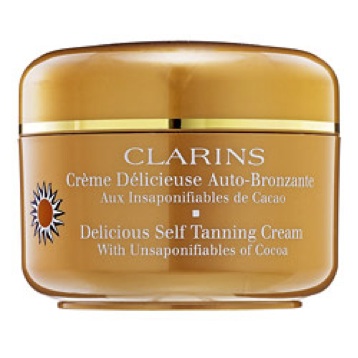
clarinsToday, open up any international beauty magazine – you will find models that are dominating the colorful pages are not all so pale boasting ‘porcelain’ complexion. Instead, beauty sites and entertainment pages have been filled with new trend – tanning. Just take a look at some gossipy newspaper articles based on curious speculation how Mitt Romney, who must have been so busy at the time, maintained the glowing tanned skin throughout his presidential campaign. Kate Middleton and her sister Pipa Middleton also captured the gossip followers with their bronzed skin complexion. Whether it happens on the stunning Greek beach, or while backpacking in Vietnam, or in a sunbed salon in New York, the result, tanned skin has become the new trendsetting skin complexion.

Among those who can afford and dream of tanned skin, the darker complexion comes with numerous labels: sun-kissed, glowing, bronze, naturally tanned… If you examine, all these words used to describe tan, entail a deep implication that tanned skin is healthy; that it is a product of healthy practice, perhaps swimming in the open ocean, hiking under the sun, or out playing by the beach. No long ago were these associated with toiling in farms under the sun, a mark of laboring, lower class. Yet in 21st century when most of people in industrialized countries, people are usually spending most of their days in their offices, then on cars or public transports, then in shops and their homes, all under the fluorescent lights and hardly under the natural sun rays. And that is exactly why “sun-kissed’ skin is glorified and sought after.

clarins2Popular legend holds that Coco Chanel first initiated this world-wide boom of tanned skin, which she got while vacationing in the Mediterranean in the 1920s. It was a look that signified health and vitality. From then on, tanned skin became associated affluence and luxury of, in short, having enough money to go on holidays and lay under the sun. This was also in such direct contrast with ‘others’ who were unfortunate and had neither time nor money to enjoy such holiday.

However, as mounting medical and scientific studies find the clear link between sun exposure and skin cancer, the trend did not end – instead, it simply turned from ‘natural’ to fake. Today at cosmetics shops, one can find an array of products that promise you evenly tanned skin and beautiful glow. So many different types of products are used to serve different purposed, from tanning lotion to bronzer powder, and fake sprays to imitate tans. You can walk into aesthetic shops and salons in your natural skin color then walk out a few shades darker in a matter of few hours and days of efforts.

The important thing about the logic behind the popularity of tanning, is that, it has fundamentally the same idea as skin brightening. It is the idea that skin complexion is a mark of certain class or socio-economic status, and that can be bought and fixed with money. The idea that beauty queue exists based on skin complexion, and consuming certain products will make you move up along the ladder. So at the end, who ‘wins’ at this game? Think about it – the same company that produces tanning creams and bronzers have different lines for skin brightening and whitening. Whether light skin or tanned skin is the trend of the year, they will never have a problem marketing either product.

Color complex and constant degradation

Sign for "colored" waiting room at a...

Sign for “colored” waiting room at a Greyhound bus terminal in Rome, Georgia, 1943. (Photo credit: Wikipedia)

by Miho Tanaka

In our class on racism and colorism, we have been talking about how light skin is considered as one of the crucial elements of beauty in and how the idea is fostered all over the world. Not only people with dark skin but also all people, especially women, try to lighten or whiten their skin color without any specific necessaries and reasons to be light. Overall the main issue is how the idea of colorism is getting fostered then racism has taken its place on this capitalism world. As everything can be bought by money, wealth is literally measured by how much economic power people have. “Power of consumption” (Rondilla 2009, p.78) is then directly connected to “economies of color” (Harris 2009, p.1).

Under this condition, people with dark skin would try to be lighter by consuming skin lighteners if they had money to consume these. Therefore impoverished people would stay in a lower status since they wouldn’t be able to buy skin lighteners, and it is the problem that people with dark skin are often needed to stay in poor communities where many problems such as crimes, drugs or robberies exist. According to Rondilla (ibid), “controlling images are designed to make racism, sexism, poverty and other forms of social injustice appear to be natural, normal, and inevitable parts of life” (p.65). Regarding African American communities in Detroit, I’ve heard from my friend the images are so natural that even inhabitants of the community cannot get rid of them. “People are so caught with personal aesthetic and social positions, than actually embracing their own features, cultures and talents” (Brandosoul 2013), and I would call it a “constant degradation of certain racial people.” As Atlanta blackstar (2013) shows, unfortunately it might be true that young African Americans are often targeted as people who resort to violence but the system in which they are stuck should be transformed.

As Angela Harris explains in the introduction to the book Shades of Difference, “[o]ne of the challenges for scholars and activists concerned with colorism is thus to disrupt―and if possible prevent―’Latin Americanization,’ in which color hierarchy is pervasive yet its relationship to racism denied” (Harris, 2009, p.5). Racism exists and the first step we could take is not to deny it and not to be ignorant.

References

Atlanta blackstar. (2013). 5 reasons young black men resort to violence. Retrieved on November 29, 2013, from http://atlantablackstar.com/2013/11/26/5-reasons-young-black-men-resort-violence/2/

Brandosoul. (2013). Colorism: the jaded mystery of race and skin color. Retrieved on December 9th 2013 from http://misedublack.wordpress.com/2013/12/11/colorism-the-jaded-mystery-of-race-and-skin-color/

Harris, A. P. (2009). Economies of color. In Glennn, N, E. (Ed.) (2009). Shades of difference: why skin color matters. Stanford University Press.

Rondilla, J. L. (2009). Filipinos and the color complex : ideal Asian beauty. In Glennn, N, E. (Ed.) (2009). Shades of difference : why skin color matters. Stanford University Press.