Changes in the beauty standard for men and women

by Satona Kato

Jyotsna Vaid’s research shows us that lighter skin is a requirement for marriage. We learned many people think lighter skin is better and is one of the conditions of beauty in various countries.

However, it is also true that the standard of beauty varies by regions or countries. In Japan, it also has changed depend on the generation. There was the time when the skin browned by the sun was seen as more beautiful. For example, in the ‘ganguro’ boom or ‘komugihada’ boom, people preferred dark skin and many people went to tanning salons. When I was 3 or 4 years old, many Japanese high school girls made their skin dark and I longed for their skin and I wanted to be like them. In that time, the models who had sunburned skin were popular and that was the standard of ‘kawaii’ for young girls. But when I became a high school girl, there were no girls who made their skin dark and the standard of “kawaii” was having white skin. Most advertisements of cosmetic products also uses models with white skin.

More and more people come to think we want white skin, not only girls, but also boys. Surprisingly, recently the boys who have white skin are increasing. In the Japanese drug store, there are many sunscreens or whitening lotion for men and many men use that, especially young boys between the ages of 15 and 30. Nippon TV interviewed 55 boys whether use whitening lotions, and 33 boys answered “Yes”.

Then, which do women like better, white skin boys or sunburned boys? The answers about this question were different depending on the women’s age. Young girls (10~30) tend to like boys who have white skin better, but most of women over 30 years old like boys who have sunburned skin. The reason why that difference exist is the influence of media. Today, many young actors and models have white skin. But, it was different 20 to 30 years ago. You can see this difference if you compare the popular actors 5 to 10 ago with actors who are popular now.

As you can see, the trend of skin color has changed. In Japan, both boys and girls become to more and more like the white skin. Last year, we were surprised the publication of the popular young men’s magazine “Men’s Egg” was suspended. When I was a junior high school student, many young boys read this and tried to be “Gyaru-o” by having browned and meshed hair, and tan skin. The reason for suspending the publication was that young people’s trend were changing. Today, most Japanese people like white skin better, and use whitening lotion. But there are possible that standard of beauty “white skin is beautiful’ will change in the future in Japan.

Are such changes in views toward skin color occurring in countries that have a connection between skin color and social status?

Enhanced by Zemanta

Globalization of Names

by Aki Yamada

Have you ever heard English names for non-English speakers? Or, have you ever introduced your friends like “Here are my friends, Christine, John, Sophia and Mason. They are all from China!!” Actually, this was my experience when I studied abroad in America and I wanted to introduce my friends to other friends. I did not feel strange about their names at that time, however, now I think it was greatly impacted by globalization. Globalization is the emergence of worldwide markets and communications that increasingly ignore national boundaries. As one of its influences, globalization has made huge impacts in cultural areas in countries, such as music, movies, radio, books, and also people’s and companies’ names. Therefore, I want to discuss why people (especially Chinese) can change their names to English names, and to compare to the Japanese case.

Firstly, in Japan, it is quite rare for Japanese people to change their names by themselves because Japanese names are so simple and easy to remember for English speakers. Thus, they do not feel necessity to change their names. In addition, if you want to change your name, it is possible, but you need to go to a domestic court to get permission for that. However, usually it is difficult to go through these processes because you need a clear reason to change your name. As another reason why Japanese keep their name is that they have own pride and honor of their names. We think this name was given from my parents so we should keep our name carefully.

On the other hand, in China, there are some reasons that why it is easy to change their names into English names. First, for English speaker, it is really tough to read and pronounce Chinese names such as Yeo Wern Xin and Yanxiao. Second, changing their names is a right and duty of Chinese people, which is defined by the Chinese constitution, article 99. They only require doing some paper work to change their name. So, I can say it is much easier and carefree things to change their names. Third, people change their names for their job hunting, which is deeply related to the tough pronunciation of their names. Above, those reasons, compared to Japanese, it is quite common to change their name in global society. And, possibly, it is good way to change their name to get used to global (English speaking) society sometimes. However, as Japanese, to know real name is most important thing to communicate other culture in global world.

Promoting a More Lively Planet

English: Internationally recognized symbol. De...

(Photo credit: Wikipedia)

by Kyle Phan

When the earthquake damaged Fukushima a couple years ago, I knew something big had occurred because radiation is not a simple matter. It was only when I came to Japan that I learned from a documentary that the aftermaths of the earthquake are indeed, really bad. People are protesting against nuclear power and the Japanese government must decide where to throw away its nuclear waste. It appears the situation got way out of control, and some people are ignoring the situation. I can’t really blame the people of Fukushima for feeling powerless, but I think everyone, especially countries who use nuclear power, should brainstorm solutions and learn from the situation instead of ignoring it. To prevent future scenarios involving nuclear radiation, the situation must be approached both locally and internationally because an environmental crisis could happen at any given time to any country that uses nuclear power.

In order to improve the conditions at Fukushima, it is really important that the government first stops denying the situation. The people with power need to take responsibility for their decisions of building the nuclear plant at Fukushima and start developing perspective of the unequal treatment of the people of Fukushima. Japanese politicians and any person with power needs to move away from their self-interests (tragedy of the commons) and realize the injustice of the situation because environmental crisis can happen to any person regardless of social background. If the Japanese government has the money, then why not fix the situation and help the victims of Fukushima? Allowing the nuclear waste pile up somewhere or discarding the waste to some poorer area in Japan or even China (environmental racism) is no solution.  If they decide to get rid of the waste like that, the politician must make sure no people inhabit the area, but doing so, either way has implications for the environment which must be handled internationally.

Since dealing with nuclear waste is easier said than done, I think the top scientists of every country that uses nuclear power should collaborate for some feasible solutions because they are the experts on the subject. The Earth is our home and we should work together to alleviate pollution! If we can’t fix the problem right now, we must strive for the future: people all over the world must start pursuing alternative sources of energy! Maybe we should invest in solar panels, or better yet, better funding for STEM research might be the answer. Since Jeffrey Jousan has said the US is partially the reason why Japan first began using nuclear power, I also think US could offer some assistance in cleaning up the waste.  I think everyone would agree that both the poor and the rich are alive because of what the Earth offers: the water you drink, the air you breathe, the food you eat, you’re alive because of the Earth.

Clearly, the current issues goes deeper than what has been mentioned. It is obvious that something must be done with the power differences among the power companies and the Fukushima victims. With that being said, only the Japanese can fix their own problem. The people with power must develop the perspective of the victims and realize that Fukushima are “Japanese” people too. In order for progress to be made, the younger generation needs to stop isolating themselves from the polluted environment (inverted quarantine) and start being getting their voices heard by those with power! Maybe we can’t fix Fukushima, but in order for environmental conditions to change for the people of Fukushima, there needs to be more support for environmental change. The Fukushima moms can’t be out fighting by themselves. Being aware is not enough, it is time for people to start being active in the process! However, it is difficult because of limiting factors such as the cultural values of Japanese people not wanting to appear troublesome to other people and the “lack of freedom of press in Japan.” People internationally also need to start being active with environmental movements because nuclear waste has implications to our home, the Earth.

References

Press Freedom Index 2013″ en.rsf.org. 2013. 11 Dec. 2013. http://en.rsf.org/press-freedom-index-2013,1054.html

Globalization in Japan

by Kaho Nagao

Since our generation has been in school, teachers, the media and so on often say that “Globalism is important and you guys might to be an global person.” On the other hand, the definition of globalism and globalization are very vague and huge. Actually I still do not know what globalization is. In addition, Japan often said that we are not globalized and we need to be hurry and adapt globalization. However, accepting globalization is really important and do we need to be so?

The specific example is mobile phone. For a long time, in Japan many people use normal mobile phone. Main work for them is calling and sending text in special way, which using e-mail address. On the other hand, the other countries such as the U.S., the U.K. and Korea, sending text through the telephone numbers was most popular. The introduction of smart phone was delayed both spreading and developing even though Japan was one of the most famous countries for these technologies. Some people said that Japan need to catch up and develop more and more.

In here, the problem is that is it important to catch up to other country or not. Of course, we sometimes need to understand what is happened on the earth and think about problems. However, in Japan, even though some says that some realize and move towards, most people are not move and do not understand the importance of that. Changing people is very difficult about knowing importance is more difficult.

Globalization is recently speed up and some are confusing about that fact, however, cherishing and knowing our own culture and learning about different way of thinking and view will be help understand one of the best way to what is globalization and how to survive international society.

KFC and Christmas cake – Christmas in Japan

by Michelle Liebheit

Screen Shot 2013-12-29 at 7.15.27 PM

„Let’s make a reservation for the best Christmas.“ (KFC Christmas advertisement, 2013). Source: http://www.kfc.co.jp/xmas/?utm_campaign=xmas&utm_source=kfc

It is December and like every year this means that Christmas is coming soon. The city is more crowded than usual, packed with people looking for presents. The shops downtown are playing Jingle Bells endless times, and from everywhere Santa Claus and his reindeers are smiling at you. A giant Christmas tree is displayed in the central station and when it turns night, all the Christmas illuminations come to light.

So which city do you think this is? New York? Berlin? Or is it London?

No – I happen to be in Kyoto, Japan. However, this description could easily suit all major cities around the globe. You might say: This is globalization! But what is this word actually and what influences does it has on Japanese culture? In the following I want to analyze this question with the example of Christmas in Japan.

Christmas is not a national holiday in Japan, although the 23rd of December happens to be one, as for being the present emperor’s birthday. While there is only around one percent Christians living in Japan, Christmas has received great approval. However, since Japanese Christmas does not consist of going to church, listening to the sermon and watch a nativity play before having dinner with your family, Japan has developed some unique elements itself.

Due to a clever marketing campaign dating back in 1974, KFC successfully established its fried chicken as the perfect Christmas dinner in Japan. Nowadays for Japanese people, Christmas equals a bucket of fried chicken from KFC just like New Years is associated with the especially prepared and in boxes presented food called “o-sechi ryôri” (おせち料理). Promoting this idea, even KFC’s figurehead Colonel Sanders, whose lifelike stature stands in front of each Japanese store, will be dressed in a Santa costume around Christmas time. Due to its popularity, people even need do reserve their KFC Christmas dinner at least a month prior to the event. KFC makes twice as much profit in December than in other months.

Another unique Japanese Christmas dish is the Christmas cake (クリスマスケーキ), its most typical type being a sponge cake decorated with whipped cream and strawberries. It is usually picked up by the father of the household. By the 26th prices drop immensely and shops are trying to get rid of their left stocks.

Even though Christmas became a “big hit” in Japan, other Christian holidays like Eastern remain rather unnoticed. Japanese have been picky in choosing what to borrow from foreign countries – apparently most, when it comes to holidays. In class we talked about how some movies are successful around the world, whereas others are not. In this case, action movies seem to be the most “translatable”, since they usually do not have a lot of talking and shooting with guns unfortunately seems to be universally understood. Converting this to our look on foreign holidays in Japan, is it simply a failure of marketing that Eastern has not been as well received as Christmas in Japan, or what are the factors for successfully making a society celebrating a non-native holiday?.

As Millie R. Creighton writes, a holiday successfully promoted by Japanese department stores needs to “accord with Japanese ideology, or serve a particular function in contemporary Japanese society” (1991, p. 683). So even though Christmas came from a different religious background, it still transports a deeper meaning Japanese can relate to: Christmas is all about love and giving. These are values that are universal throughout different societies and Japan is a living proof for this. The holiday has been domesticated and the important male figure is Santa Claus and not Jesus. Of course, this is not a Japanese phenomenon only. On the other hand, Eastern still concentrates more on the historical figure of Jesus and therefore might not seem quite appealing to people with different believes. Other examples of successful holidays in Japan are Mother’s and Father’s Day or Valentine’s Day.

This example shows that globalization is not about making everything the same. Societies adopt particular parts of foreign origin and create a version that suits them best. Through globalization ideas, things and people can easily spread and move from one place to another on earth, but what is being accepted and what is being rejected is still up to society and its values.

References

CREIGHTON, Millie R. “Maintaining Cultural Boundaries: How Japanese Department Stores Domesticate ‘Things Foreign’”. Modern Asian Studies, Vol. 25, No.4, 1991.

HODKINSON, Alan and STRONACH, Ian. “Towards a theory of Santa. Or, the Ghost of Christmas Present“. Anthropology Today, Vol. 27, No. 6, 12/2011.

QUIGLEY, J.T. “A Kentucky Fried Christmas in Japan”. The Diplomat, 12/2013. http://thediplomat.com/2013/12/a-kentucky-fried-christmas-in-japan/

Social Movements and Japanese Political Culture

English: Anti-Nuclear Power Plant Rally on 19 ...

English: Anti-Nuclear Power Plant Rally on 19 September 2011 at Meiji Shrine Outer Garden 日本語: 2011年9月19日に明治神宮外苑で行われたさようなら原発集会 (Photo credit: Wikipedia)

by Chihiro Kobayashi

When I was in the U.S., I joined some social movements such as “Stop Modern Slavery Walk” and “9.11 Unity Walk” for the first time. My image toward the U.S. is that they insist and try to change their society by themselves through social movements if the current society is not what they want. Therefore, when they want to change the society, social movements are one of the most important ways.

However, in Japan, many people would think social movements are a bad thing and they avoid doing it. One of the biggest reasons why Japanese people do not join social movement is that they fear the bizarre eyes toward people those who join movements such as demonstration march. I do not say there is no social movements at all in Japan, but I think the understanding toward social movements is lower than other countries. Since demonstration type of social movement is hated by Japanese, it is important to find the suitable social movement instead to change our society better.

At the Japanese Political Culture Theory class, I learned Japanese people tend to avoid joining social movements as their culture. Instead, they tend to rely on others to change the society. For example, in the case of politics, many Japanese people complain current policies and criticize about the government as well. However, Japanese citizens tend not to make social movements to change these, instead they depend on politicians to change these problems. I do not really know if these tendency is because of Japanese culture as I learned in the Political Theory class, but I think it is sure that many Japanese have negative image toward social movements. However, I think Japanese people need to have better understanding toward social movements because it is difficult to make our society only by depending on the politicians.

In the past seven years, the Prime Minister of Japan has changed seven times, and Japanese citizens do not expect politicians to make our society better anymore. Since Japanese cannot rely on and trust politicians anymore, how we can change our society? I think we individuals need to join social movements and speak out about the problems to the government.

For example, more and more anti-nuclear plants demonstrations have been occurring in Japan recently, since the Fukushima Nuclear disaster. However, Japanese still might avoid joining a social movement, such as a demonstration march, because they do not want to be seen as bizarre in the eyes of other people. I think there are many other ways which is more suitable for Japanese cultural characteristic to join social movements which is other than demonstration. For example, in the case of anti-nuclear power plants, we have these variety of social movements.

  1. Voting for anti-nuclear politicians: Social Democratic Party and Communist party are anti-nuclear plants.
  2. Purchasing campaign: By buying the products from local area, they can appeal that they do no need to depend on money from the nuclear power plants but they can be independent.
  3. Consumer Boycott: Avoid buying the products which company is related to building nuclear power plants, such as Toshiba, Mitsubishi Heavy Industries, and Hitachi, Ltd.
  4. Changing the deposit account: Our deposit which is deposited in mega bank such as Japan Post Bank and Bank of the post office is used in bond purchases, and as a result, it will be used to construct dam construction and nuclear power plant constriction. By changing the bank account such as to National Association of Labor banks, it is possible to prevent our deposit from being used for building nuclear power plant. (Stop Kaminoseki Nuclear Power Plant)

Even though these social movements do not stand out openly rather it is more hidden movement different from demonstration march in the city, these movements still have big power to change the society. Also, even if we cannot change our society and policies, we can still influence public policy by bringing attention to the issues. Considering the recent lack of trust in politicians, we individuals need to stand up to make our society better.

I think it is important for Japanese people to find the best suitable social movements for them, based on their political culture (avoiding demonstrations) because we have different culture and characteristics from Americans and other countries. These little by little hidden social movements might change not only policies but also might change people’s negative perspective toward the social movements in the future.

Reference

“Stop Kaminoseki Nuclear Power Plant.” Web. 19 Dec. 2013.

Can Japan Solve Pay Inequality in the Global Economy?

by Yuri Kasai

Globalization influences each country’s economy and individual salaries. The Lehman Shock of 2008, which happened with the collapse of housing bubble, affected many countries with the economic downturn and led to the global financial crisis. This accident reduced the value of currencies such as the Euro, and European countries suffered from economic recession.

Japan has had the economic downturn of manufacturing companies due to the strong yen. After the Lehman shock, the Great East Japan Earthquake in 2011 affected the world economy again. Many materials and parts supply companies in Eastern Japan area stopped production and Asian economies were disappointed. The exchange of countries’ production, stock and finance occurred. Because we made the global economic system, we cannot escape from the global economy and from competing with each other.

In the result of global competition, some companies have an economic downturn and reduce employment and salaries. This brings about pay inequality. The inequality of salaries in Japan will be mainly these two:

  1. contract employees v. regular employees, and
  2. women v. men.

Contract jobs in Japan are other jobs than regular employees and have the fixed period of employment, shorter time of work, and fewer responsibilities than regular employment (Takeishi, 50). Around 44.2% of contract employees choose this work style, for the reason that they can find no post of regular employment in any companies, according to the questionnaire survey conducted by the Ministry of Health, Labor and Welfare in 2006 (Takeishi, 51). 45.8 % of all companies have the system to change from contract employment to regular employment. Some companies pay the same salary of graduate recruitment for the former contract employees, and others pay the salary of the former contract employees considering about the practical knowledge.

About gender, it is difficult for women to follow the same course as men to be promoted. Only women who have the potential to do good work can be promoted and many women cannot get the management job. There is a big salary gap between men and women.

According to Kenworthy, the countries who have relatively low tax burdens, should ‘allow relatively low wage at the bottom of the earnings distribution’ in order to increase the employment of private sectors. If people with zero or single-earner households at the low end of the distribution, getting a new earnings relative low will push up the income of the household. And, this will reduce income inequality among households. Japan is the country who has relatively low tax burdens compared to Norway. Kenworthy’s idea is effective for many contract employees to get a better salary than today.

Japan is a relatively low taxation country. Considered about national burden rate of taxation, Japan is 38.5% compared to Norway’s 55.4%, Denmark 67.8%, and Sweden 58.9% in 2010, according to the Japanese Ministry of Finance. However, is Kenworthy’s idea effective to Japan? I want to discuss about solution of pay inequality in the concept of Japanese social welfare and the economic situation.

How about equalizing the system of government? Given the philosophy of government, the government has the role to equalize the income and reduce the inequality. Taxation has the role to equalize the inequality of wage. Japan’s low Gini index shows that Japan cannot redistribute the income. Japan needs to reconsider the income tax system and care about national pay inequality. Reduction of minimum wage is not considered about a way to solve inequality wage in Japan and the rise of minimum wage is often considered a good way. However, if the wage increases, the number of employment will decline and unemployed people will increase. Additionally, decision of minimum wage is conducted by the local or central government, not considering the situation of employees. The minimum of wage is decided in no political way. In Japanese system, taxation is a effective way to equalize pay inequality other than decrease of minimum wage.

Secondly, considering about the recent economic situation, the government should not allow the minimum of salary down depending on the economic situation.

Japanese monetary value, Japanese stock value is lower because most of investors who are foreign investors, hesitate to invest in Japan’s stock or money and observe if Japan’s manufacture companies will recover from economy recession of the earthquake. If they can see a little evidence of recovery, they can buy Japanese stock and national debt. Before they do, the economy cannot grow and salaries cannot increase. In this reason, we have to wait for a good season to grow the economy. Or, if we cannot see any growth, with the increase of consumption tax to 8%, the government maybe take the low-price policy and companies would keep the employment at the same level. Reduction of minimum tax will not happen, in my opinion.

Pay inequality becomes a bigger problem with the global economy, although there are many ways to solve the inequality problem and it is difficult to find an effective way to each country. We have to think about how we can equalize inequality in order to make more stable domestic economy and protect people’s life because we will face the risk of widespread of economy recession from the connected world and will face more competitive global market.

References

Takeishi, Emiko. “About the Convert System From a Contract Employee To a Regular Employment” Japanese Employment Research Magazine, 573, 50-53, 2008 April. 18 Dec, 2013.

Ministry of Finance, The bar graphs of OECD countries’ national burden rate of tax, 2010, http://www.mof.go.jp/tax_policy/summary/condition/238.htm. 18 Dec, 2013.
“Gaijin” to Japanese: What Japanese Often Expect from Foreigners

by Satona Kato

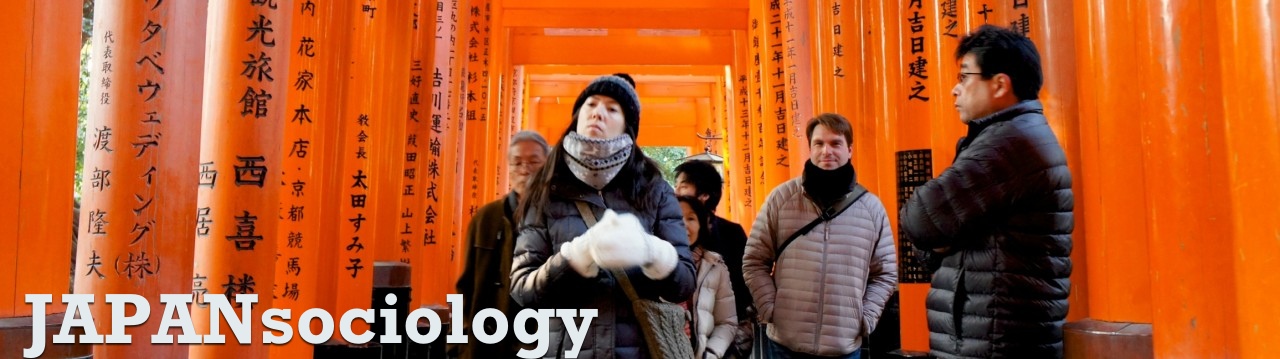
comediansTerry Kawashima argues that people have a consciousness about race, and this consciousness depends on their background. We can see this by comparing various ways of thinking about shojo manga characters by Western people and Japanese people.

In Japan, many people put the people who are not Asian (Japanese, Korean, Chinese, South East Asian) into one category called “gaijin”. Many Japanese people do not think about the country where the “gaijin” were born. Furthermore, they tend to stereotype that sort of people have specific skills. In Japan, some of the people who are unilaterally labeled as “gaijin” have experiences that they are wounded or feel alienated, especially the people who are multiracial or who were born and grown up in Japan.

As you know, in Japan, multiracial models on TV have been popular. Recently, multiracial comedians become popular as well. They do not act like fashion models. They make people laugh by talking the story about the incident happened around them only because they are multiracial. First, Japanese are surprised that they can speak fluent Japanese and cannot speak English or another foreign language. Japanese also laugh at the characteristics the multiracial comedians share with other Japanese.

They had had many troubles and unique experiences which happened just because they are “hafu.” If we listen to their stories, we can know how hafu people are treated by Japanese. For example, Anthony, he is one of the ‘hafu comedians’. He is American and Japanese. People laugh at the fact that his hometown is Tokyo and his father managed a Sushi shop. He has knowledge about sushi because his home is sushi shop, but when he goes to a sushi shop, the master of sushi shop offered him ‘California roll’ and he was surprised. He has had other interesting experiences. He is bad at English, and when he was an elementary school student, he decided to go to English conversation school. On his first day of English conversation school, when he entered the classroom, other students misinterpreted him as an English teacher and they said “Hello, how are you?” to him.

I want to tell you about one more ‘half comedian’, Ueno Yukio. He was laughed at because of his obvious Japanese name. He is Brazilian and Japanese. When he plays soccer, the opposing team judged Yukio was a good soccer player by his appearance and many defenseman surrounded him. The opportunities to watch TV programs in which many ‘half comedians’ gather and talk about the things often happen around them are increasing. According to them, following things often happen: 

  • are judged to be foreign people
  • are often stopped by the police 
  • are asked by Japanese to sing foreign songs 
  • are laughed at by Japanese when they sing Japanese songs
  • are often expected to have high athletic ability
  • have difficulty getting a part time job
  • are invited to BBQ parties or Halloween parties
  • are called ‘Bob’ or ‘Michel’ 
  • are treated as tourists everywhere

Of course their nationality is Japanese and most of their hometown is Japan. Why they are laughed? Why do Japanese people stereotype their abilities? When Japanese look at people who look like “gaijin’’, Japanese often expect some specific skills because they have some assumptions. They think that people who have white, black, or other foreign appearance have foreign names and can speak foreign languages, and cannot speak Japanese at all.

It is true that hafu people are not a majority in Japan and many Japanese have little familiarity with thinking about race. That’s why people have expectations about the skills hafu people have. If hafu do not have these skills, Japanese laugh at them and hafu are unilaterally discouraged. 

Behind the Trend of Huge Eyes in Japanese Anime

by Yukako Ikezoe

There have been controversial debates going on about why characters in Japanese manga have huge eyes. Do such huge eyes in Manga mean that Japanese people are craving for them?

Having read Terry Kawashima’s piece, “Seeing Faces, Making Races: Challenging Visual tropes of Racial Differences”, I also started wondering why the eyes of characters in Japanese manga are big, even though I had never strongly questioned that before. Readers from Western countries might have wondered about the looks of characters in Manga because the characters’ features are similar to the features Caucasians have, including round eyes or blond hair.

Thinking about the real purpose of this kind of trend from the perspective of Japanese myself, I would say that is not because Japanese strongly desire to get big eyes like Caucasians, but rather because big eyes are one of the most important techniques to express characters’ minds and make it easier for readers to observe its minute movements, since only iconography and visual languages are used to let readers read what characters are thinking. Therefore readers can easily read characters’ thoughts by looking at their facial expressions with unique movements of their eyes.

There is a proverb “目は口ほどにものを言う” ,meaning that “the eyes are the window of the mind”, or “the eyes say more than the mouth” in English. This thinking also makes us consent to the trend of large eyes in Japanese Manga. Making up for sounds or animation which enable us to understand situations and feelings of characters more easily, various movements of eyes are also a center tool for writers as well as for readers. Using large eyes can be considered as one of the essential tools or techniques to add affluent expressions on characters.  Inspired by Disney cartoons, Osamu Tezuka known as a talented Japanese manga writer, also started using that technique in order to emphasize greater expressions of characters. His works then have been the basis for all manga today. In spite of the fact that the way of drawing characters was also influenced from the West, a reason is not always the strong desire of Japanese towards Caucasians, but rather Japanese manga writers adopt the Western styles into their drawings.

I am always amazed by that technique when reading manga since characters with various expressions on eyes give plenty of punches and enable me to empathize with the manga world in which only visual languages and pictures are used. Japanese writers uniquely use huge eyes as a technique to add greater emotions on characters, which is still putting many manga fans from all over the world into a trance today.

References

Tabatha Butler.(2013). How Walt Disney Influenced Anime. Retrieved from http://themovieblog.com/2013/how-walt-disney-influenced-anime/

Curiosity, slow down!

tattoo_1038

(Photo credit: doviende)

by Sheena Sasaki

Curiosity is one of the important phenomenon to how individual acts. I believe that sharing of culture is not taking place only to understand each other for world peace, but also with curiosity towards things which you are unfamiliar with. With curiosity, people are attracted to unknown cultures of the communities outside of theirs.

When I lived in the United States, I saw many non-Japanese having tattoos of kanji (Chinese/Japanese word character) as part of their fashion. One of my friends also had kanji tattoo as well. He told me that he had strong interest in Japanese cultures and traditions and would like to major in Japanese practices in the future. His curiosity was the base of his view of what he wanted to do in the future.

He also proudly said that he chose by himself the kanji he asked to have tattooed on his body. What he wanted as his tattoo was “ogre.” In kanji, it is written as “鬼 (oni)” My friend did not know the kanji for the word, but the tattooist told him that he knew. The reason my friend was interested in this kanji of oni was its definition and meaning behind the single word. The word does not simply mean “ogre” or “monster.” It also refers to ghosts and souls of dead people, something hidden and invisible, something of abnormal physical characteristic, and something which curses people. All of this definition combined created the monster of oni. Although I am not the person who deeply knows and practices my country’s culture, I felt proud to some extent. However, at the same time, I also felt some uneasiness when I took a glance at his tattoo. As I wrote, the kanji for oni is “鬼,” but what was tattooed on his arm was “豚,” which means “pig” or refers to some who is very fat.

This type of small misunderstanding is seen often. I have also seen people walking around in kimono with right side crossed bottom which is how dead bodies wear kimono. I remember my kimono teacher saying, “I am very happy that many people outside of Japan began to hold interest into kimono, but I feel sad at the same time when I see wrong practice of kimono wearing is widely known.”

It seems that some people fulfil their curiosity just by touching or experiencing only the atmosphere of the unknown culture. I believe the wrongly mimicked cultures make people uneasy or to some extent sad since to them, it may mean to them that foreigners do not really have interest and understanding to their culture. Mimicry may be a first step to knowing the new culture; however, stopping at the stage of mimicry strikes people as incongruous. This sense is similar to when your name is wrongly remembered. You know that the person did not purposely misremember the name, but you still feel some uneasiness. Curiosity helps people to hold interest into cultures they have never practiced. Meanwhile, small curiosities may lead to misunderstanding or wrong practices of certain cultures.