What we can do for international school?

There are many foreigners in Japan now. It is to say that a lot of foreign children are living in Japanese society. They have same necessity of learning with Japanese children. Some go to international school, but there are some problems when they go and study in the school.

First is the cost of the school. International school fees are almost more than two million yen in one year. This is because that Japanese government does not accept them as an authorized school and help their working expenditure. For this reason, the schools should run their business and pay much salary of teachers themselves. Therefore, they demand higher money than other normal schools in Japan. This would weigh upon household economy.

Second is their language. Many international schools make class in English. Most of the students speak English as their mother language. However, Japanese children or others who live in countries where mother language is not English are going same school today. They need to pass an English examination when they want to go international school, but it is very difficult to pass. Add to this, after they entered at school, there are many issues. They would not get used to their difference, for example, cannot communicate with others, understand what teachers say or confuse during a lot of cultural differences.

These two problems is a part of issues. I think that it is very sad occurrence. They are children same as us, but why there are those problems for their education. The government tried to make free of charge of the school but it could not do. I think if they make some rules for help the school, it would be useful for those schools. However, changing the low about compulsory education and accept the school as an authorized school as one way to help them is next to impossible. This is because that the government needs long term to do it. Conducting a campaign to collect signatures is also difficult because someone does not like this campaign and sometime the government does not accept these signatures.

On the other hand, we can help the children to get used differences directly. We would see foreigners in our society. We could talk with them about our culture, customs or any differences during each other then. We could play with them at park. Recently, there are some opportunities to listen their lifestyle so we could hear them. Many ways we can do for help their education.

What do you think about this situation and what can you do for children who go an international school. This is a big issue now, not just an affair of other people. Please think about it and make your answer for solve it.

Reference: http://www.inter-preschool.com/policy/intl-school.html

by Koichiro Otani
The policy on immigrants in Spain

Spain accepts a large number of “legal” immigrants who are from other countries. This number is the largest one in the EU countries. In 2008, she accepted about 499,000 immigrants. Mainly, Spain accepts immigrants from three regions; Middle and South America, such as Ecuador or Columbia, Africa, such as Morocco, and Eastern Europe, for example, Romania. Of course, there are many “illegal” immigrants. She accepts about 354,000 illegal immigrants per year. Among them, illegal immigrants from Africa are often picked up and are criticized by Spanish media in terms of religion and social issues. However, there is a man who changed the policy on it. He is Jose Luis Zapatero, the current prime minister.

After Zapatero became the prime minister of Spain, in 2004, he started to change the way of treating illegal immigrants. In 2005, he decided the new policy on illegal immigrants. These are that Ⅰ. If someone who is an illegal immigrant stays in Spain more than 3 years and he or she has a job, Ⅱ. If he or she marries or cohabits with Spanish, Ⅲ. If he or she is a relative of legal immigrants, he or she can become legal immigrants. Why he changed the policy is that in Spain, declining birth rate has become a problem same as Japan. That caused the shortage of working people and possibility of collapsing of pension system; therefore, the government changed the policy on illegal immigrants to develop their economy and have them pay reserves of pension. By this policy, many of them could get a job and social security.

However, after the business became dull, many labours, of course including immigrants, lost their job. To create much employment for Spanish, the government notified to go back to their own to immigrants. The government had to change the policy again, besides direction for cracking down on them. Yet they do not want to go back their countries because though they go back there, there is little possibility of getting a job again. And now, Spanish economy gradually goes down, so it must become a strong problem to immigrants. In addition, the Prime Minister Zapatero, who promoted these changes about legal and illegal immigrants, does not run as a candidate for the next Premier Election. Therefore, there is a possibility that the policy would return to strict one for them.

by Naho Tamada

Status Switch in Female Emperor Controlling Period

Looking through Chinese imperial era, out of 400 emperors that had controlled the whole country, only one of them was a female emperor. There is a phrases in China 后宫佳丽三千which means there is thousands beautiful concubines in imperial palace to serve the emperor. But in this case when the emperor was female, she selected a lot of “secret male concubines” to entertain her.

In imperial era, each year there had hundreds of young and beautiful ladies chosen to be concubine of the emperor from all over China. To be chosen as one of concubines of emperor was a way to gain splendor life and great position, but actually those girls also had to take risks of not being known by emperor and spending rest of her life in the palace alone. They cannot go back to their hometown and marry another guy.

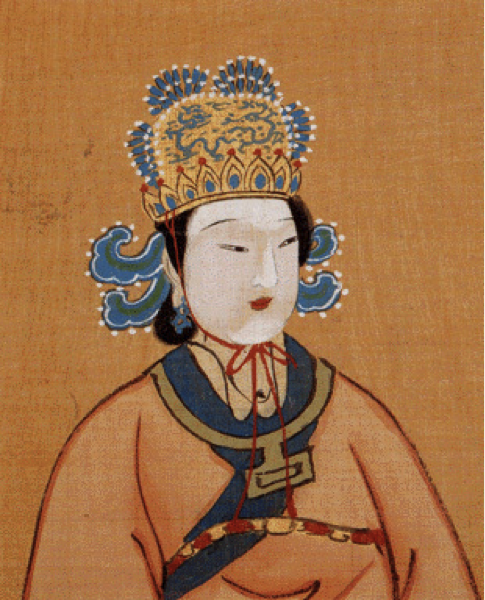
Emperor Wu Zetian

However, in Tang Dynasty, when the female emperor Wu Zetian was throne, the situation changed. Though the officer who was in charge of writing the historical deeds did not write this part, there are still some stories about her private life passed among the people. Though there were no such big scales of tribute, emperor Wu Zetian did have f male concubines when she was controlling the country. There were rumors saying that her daughter even recommended men to her to be a “secret male concubine”. The center of family has changed from male to female, she can have a lot of male concubines; these men tried their best to get her attention with some tricks like what female concubines. It shows that the male can be preoccupied and attentive like a female. For instance, one of the male concubines was an imperial doctor, in order to get emperor Wu’s attention, he exaggerated another guy’s bad behavior and told a lot bad words about that guy to Wu, which aroused Wu’s abomination of him and finally gave an order to kill him. Through this way, the doctor wiped one of his competitors out.

It is certain environment influences both female and male’s characteristics, the female become the one who make the big decision (we also can look at the political and economic aspects, Wu is one of greatest emperor in Tang dynasty.), no longer the delicate image labeled on us before and male become really sensitive, no longer as staunch as the masculine image they always depicted. Thus, we can conclude that personality is not something that is embedded in our genetic but rather they are formed by the environment and society surrounding us.

PS:  There is a Japanese movie which created a period when the General was a female. This movie also shows the characteristics change of female and male. If you guys are interested in that you can check this website http://ohoku.jp/

by Chen Siyuan

DON’T JUDGE ME BY MY UNIFORM ☺

“School uniform.”

What do you imagine?

White shirts, ties, knee length skirts, grey slacks, leather shoes, blazers…?

In the city I spent 4 of my high school years; that kind of uniform only applied to those who went to private schools.

So what about state public schools?

Uniform means a unisex polo shirt in the school colour and the logo and the rest, i.e. the bottoms and accessories, is not specified by the school. But obviously, if you want to fit in, there are certain rules on how to dress within a school. They are invisible, not written down anywhere, but created by the students. It’s a social norm.  And like, you all wanna fit in right? HELLO, THIS IS HIGH SCHOOL. YOU DON’T WANNA, YOU GON GET BEAT UP BAD – just like any other society.

Anyway, so I’ll give you an example of how to dress like a public school kid.

Girls.

First, purchase a shirt at least two sizes smaller than what the lady at the uniform shop recommends. Next buy a pair of the shortest shorts you can find. If they’re not short enough, just trim off about 5 centimeters of the material – remember, you want to put half your ass on show to the world. For the make up, cake on some foundation and bronzer, then apply a shitload of eyeliner and mascara to get a ‘Jersey Shore’ look. Now put on some silver jewelry, mess up your hair like you just got back from a wild night, slap on some shiny lip-gloss and you’re set.

Boys.

Purchase your school shirt two sizes larger than the lady recommends. Next, get hold of the baggiest pair of trackies you can find, and wear them so that half your boxers show. Also grab a Nike cap, and place it towards the back of your head so that the peak stands vertical. Make sure your rattail is tightly plaited. If the length isn’t enough, you can even get hair extensions. Finally, slip on a pair of kicks from a famous sports brand, a gold necklace and a constant supply of spit to release onto the streets and you’re ready to go.

Now boys and girls, with this uniform, you must engage in certain activities out of school. This involves underage drinking, excessive partying, loud and attention-seeking behavior in public, an experience in drugs, and other makes-your-mother-cringe acts. Oh, and never forget, a few incidents with the police wouldn’t look too bad on that resume either.

Why?

Because you are an actor. By wearing that uniform, others expect you to behave in that way.

We are made to create an identity, not only through how we perceive ourselves, but our reaction to fill the expectation of how others view us. It’s an inescapable loop – as long as others judge the children in public school uniforms, the children will continue acting in a certain way.

So to all of you out there, don’t judge, because some of us do get onto higher education. Some of us do succeed.

by Marina Sata Khan

Prejudice towards White Hāfus and Non-white Hāfus

Minami Hosokawa

Japan has always been thought as a nation of mono-ethnic, though there are numerous minority groups within Japan, making it a quite diverse society in reality. People of ha-fu, who are born from a parent of Japanese and a parent of another nationality, are included in one of these minority groups. I would like to discuss how Japanese people treat and feel about the hāfus, especially putting my focus on the differences of their treatment and attitude depending on the types of the hāfus.

Japanese people tend to indicate people who are half Japanese and half white as “hāfu” for the most part. On the other hand, the Japanese sometimes do not consider those of half Japanese and half black or latino as “hāfu” but “gaijin”. This is an awkward situation since they are all same “hāfus” according to the definition. Furthermore, Japanese people have fairly positive and favorable images towards people whom they call the “hāfu”, while there are times when they have negative images towards those who are the “hāfu” of blacks or latinos. (Let me make my point clear that this situation does not fit into every occasion).

For example, I saw a difference in treatment the doctor had made towards two hāfu children at my workplace, an orthodontic dentist. There are couple patients who are hāfu at the dentist I work, mostly children under 15. I would like to give an example of Katie, a mix of Japanese and French, and Tiffany, a mix of Japanese and Brazilian (both pseudonyms). The doctor likes Katie very much and treats her with goodwill saying “you are such a sweet girl”. On the other hand, he treats Tiffany quite differently. Although he does not show his attitude too openly in front of Tiffany, when she is gone from the clinic, he complains how she is loud or how she is uneducated.

I believe the media has a lot to do with making this situation of prejudice and image gap against ha-fus. As is obvious, there are many namely hāfu models, commentators or singers showing up on Japanese media, especially on TV. The point I want to make here is that Japanese media only puts spot-lights on to white hāfus only such as Becky, Laura, and Rosa Kato. They are popular among Japanese people and are being called by adjectives like “kawaii!” or “beautiful!”. On the other hand, hāfus of blacks or latinos rarely show up on TV shows. Thus, in order to eradicate the image gap towards hāfu within Japanese people, changing the policy of media would be the prior settlement.

Japanese in Diaspora Community

Nana Uno

 Japanese who live in Japan may not know the fact that there are many Japanese immigrants in many countries. According to Ministry of Internal Affairs and Communications, there are 373,559 Japanese immigrants in the world in 2009. They immigrated into the U.S, Brazil, Canada, England, Germany and other countries all over the world. Into Peru, 33,000 Japanese immigrated between 1899 and 1942. They were denied to access to the capital and Peruvian bank. Therefore they kept their ties, and they even made revolving credit system among their community. Now, they are not denied by Peruvian bank system, but they still get together and have a big community among Japanese in Peru.

Same as in Peru, there is a big Japanese community in British Columbia, Canada. There are many Japanese immigrants in Canada, especially in British Columbia. Their community bases on Buddhism. They meet and have events at temples. However, they are not really religious. They gather at temples and share Japanese culture, but they do not really have religious activity. Similar to Japanese in Peru, Japanese in Canada were excluded from Canada during WWII. In order to stand from exclusions, Japanese get together through Buddhism, but they try to show Buddhism is not anti-Christianity or anti-Canada. In fact, they call the temple “church”. Even after the war ended, Japanese still got together at “church”, and “church” was becoming just a place to get together for Japanese Canadian. Still now, Japanese community in British Columbia bases on Buddhism, however it does not means they are really religious, but it means they get together, share and carry on their culture, and tie up each other through Buddhism.

Agendas in Enlightenment of Dowa Problem

Kosuke Matsuura

In Japan, Dowa Problem, which refers to discrimination against those who used to be outcaste in Edo Era, has existed for the long time; however, the number of those who are conscious of Dowa Problem has been decreasing due to the long time. Should we do education which reminds me of the past? Does it worthwhile to educate discrimination now?

Until I take this Class, I have grown up without recognizing almost no dowa problem around me. After I learned about Dowa Problem, I asked my mother whether she had ever heard about the problem around her and existence of such regions. She acknowledged the existence as true and it became clear that the region was near my hometown. The fact was surprising because I had never known at all though I was living near the region for more than 15 years. Further, she told me an episode related to the fact. When she was in high school, she fell in love with a boyfriend who was born in a region which was believed to be a Dowa area; and she was severely scolded by her father due to the boyfriend’s birthplace when she introduced him. Unfortunately, they were separated and, she said, she then first recognized existence of Dowa Problem. Finally, I asked a question whether she would accept my marriage with burakumin girlfriend or not. She answered that she would accept but my relatives might complain.

From this episode, it is obvious that, though the elderly are recognizing and, perhaps, doing discrimination, the youth are hardly recognizing. That is, the more descendant the generation is, the less consciousness toward Dowa Problem becomes. The effect of Dowa Problem is getting relatively small and, if this situation continues, we can minimize the discrimination.

We can see various measures against Dowa Problem such as sayings in everyday life. For example, it is well-known “No discrimination and keep human rights (なくそう差別、守ろう人権). Moreover, we can see others on the rear of City Buses such as “Both your and our lives have the same worth (おなじです あなたと私の 大切さ). Of course, these sayings contribute to mitigating discrimination, but they may remember the existence of discrimination due to their implication.

It is clear that we should not let the existence of Dowa Problem fade away; however, it is impossible to abandon discrimination without completely forgetting that. More and more people are forgetting the existence; and less and less people are recognizing the existence. The next step will be ceasing measures which let us recall the existence. After that, the true equality will be realized.

Is this exactly the difference of the nationality?

Yukari Deguchi

Let me write my opinions about the small differences of nationalities that we feel in our daily life. I got this during the last class.

When I discussed about Chinese social dance party and the subculture groups which were formed by Chinese participants in the class, I found that we have a belief when we come in contact with foreigners. For example, if we found some differences between me and he or she, we would usually think “it’s because he or she is not Japanese”. Of course, the idea is not wrong, but it’s not necessarily right. When you have some experiences, for example, you and the person’s opinions didn’t mesh, or you felt rude although the person thought he or she treated you with kindness, did you thought it was because of the difference of nationalities? Although most of those cases would be got over with the difference of nationalities, but isn’t it controversial topic? I think the situations can be seen in the pure Japanese society. Sometimes Japanese can’t understand each other like the situations we have with foreigners. It’s also usual in the Japanese society. However, when the person is foreigner we feel the differences between us are very unusual things because we look at him or her through lends of the race without knowing.

I have this idea because the way to form subgroups in Chinese dance party is very similar to that of Japan. They formed groups based on their regions, educational background, interests and generations, and they also feel uncomfortable to sit in different groups although both of them are Chinese immigrants.

I don’t mean that it’s not good to think “because he or she is not Japanese”. It’s natural that we feel the differences of nationalities. However, I think that getting all differences over with the nationality makes invisible barrier between people. Therefore, we should carefully think weather the differences among us were because of personality or nationality.

Deep-rooted discrimination: Burakumin problem.

Sae Tamagawa

There was an interesting article on New York Times in 2009. The headline was “Japan’s Outcasts Still Wait for Acceptance”. This article was about a deep-rooted problem: Burakumin in Japan. It was written after Mr. Obama became the first African-American president in the U.S., and the article argued if it is possible for burakumin to be a leader of Japan like in the U.S. accepts the African-American. In Japan, the issue of burakumin is regarded as taboo to talk about, so it is rarely reported on the public news or newspaper. Thus I think what New York Times reported was so significant.

There is another surprising fact. Hiromu Nonaka, who was one of the politicians who never hid his buraku roots, tells his discriminatory experience in his book called “Sabetsu to Kenryoku”. After Mori cabinet collapsed, he came to be a surface to be a next new prime minister. However, Taro Aso said “How can those people be a prime minister?” in the meeting. Almost all the people who attended in the meeting denied the fact what Aso said to Mr. Nonaka, and tried to pretend as if it was not happened. However, Mr. Kamei, who is a politician in the Liberal Democratic Party, proved that Mr. Aso definitely said discriminatory comment. Although what Mr. Kamei did was tremendously brave, Japanese media tried to hide it, so it did not come to light.

Due to lack of education about burakumin, there are a lot of rumors about them, and most of them are based on bias or discrimination against them; for example, burakumin has strong blood relations. Because of discrimination, people who are not burakumin tend not to get married with burakumin from long time ago. Thus, some people believe they get married within very close burakumin community, so they think burakumin’s blood relation is so strong, despite this idea is completely totally wrong. Some scholars prove it that this idea is wrong, and also there are some evidences. According to Ishimoto(2006), burakumin get married not only with neighbors, but also with burakumin who live distant place; for example, burakumin in Osaka get married with one in Tottori.

I noticed through my experience that some people really believe such kind of rumor. The other day, I talked about Burakumin with my friends after I learned about it in the class. To my surprise, my friend believed what I said before. What is worse, she said “that is why, statistically, there are more disabled people in the burakumin community than the others in Japan”. I was shocked into silence. I assume such kind of discrimination or misunderstanding comes from lack of education. Government tries to hide the fact that there is discrimination against burakumin, and behave as if they do not exist. I think right education and accurate knowledge will help to reduce such kind of discrimination.

Reference

・Kawamoto,S. (2009,Jan,15). Ningen publication. Burakusabetsu no nazo wo toku.

・Inoue,K. (2009)”Japan’s Outcasts Still Wait for Acceptance” .New York Times retrieved from http://www.nytimes.com/2009/01/16/world/asia/16outcasts.html?_r=1&pagewanted=2. Last access date:2011/11/15

・Ehimeken Jinkenkeihatsu Center. (2006). Atarashii shiten kara Dowa mondai wo kangaeru, 13-15. Retrieved from http://www.pref.ehime.jp/h15900/jinkennituite/htm/keihatsu_center/siryohaihu/17iko.pdf last access date: 2011/11/15

How Okinawans See Themselves

Shiomi Maeda

Okinawa – Southern island of Japan – has a quite unique culture. As we covered in the class, Okinawa once was an independent country itself; once belonged to a different country; and today is a part of Japan. We non-Okinawan would say “Okinawa is of course a part of Japan, but it’s different from the rest of Japan.” Is this the case with what Okinawans see themselves? Since I fortunately have a friend (Kenshiro Oshiro) from Nago, Okinawa, I decided to interview him.

The identity he would prefer is – Okinawan identity

…So his prior identity is that as Okinawan. But, according to him, this is not because he is from a special island with unique historical backgrounds, but is more like affection/sincerity that everyone would hold toward his/her hometown.

Just because he prefers regional identity over the national one does not mean he does not have a national identity – because he DOES see himself as a member of Japanese society, just like us.

“I’m both Okinawan and Japanese. It’s just I have a stronger sense of belonging to my home, than to my country.”

However, as he continued, he came to realize the existence of special pride as Uchinanchu (Okinawan) – being different from Yamatonchu (non-Okinawan).

“We Okinawans have…a pride. We are proud of being the way we are, distinct from the rest of Japan.”

He claims this “pride” came into existence due to the history of discrimination against Okinawa.

H: We chose to belong back to Japan. But I am not sure whether it was right to have done so.

Ever since the year of 1972 when Okinawa was returned from the States, Japanese government has laid such a huge burden to the prefecture of Okinawa, such as existence of the U.S. Army bases.

On the one hand, they are forced to be Japanized. On the other hand, they have been treated different from the rest, and been facing social discrimination. They have always been left in-between. This discrimination brought up their pride – being different from the rest.

We have been considered different, treated differently. They always saw us behind in lower status. This long-time inferiority complex has strengthened our pride as Uchinanchu.”

But at the same time, he says Okinawans thank the nation for their economical development.

“If we had made a different choice, I don’t think Okinawa could survive in today’s globalized economy. In this sense, that choice was a right one.”

I personally think having different culture and values is interesting and fun, unless each culture and its people are properly respected. But in reality, Okinawans have been suffering from segregation because of its unique history. And this is now the way we can be proud of ourselves.

“It is very important to learn the historical background when it comes to discuss the issues surrounding Okinawa. Things are so complicated that not all of them can be seen on the surface.”

That is true. We non-Okinawans are too unconscious or ignorant about this issue. This is the biggest problem. The first step to resolve the issue is for us to get to know the history and current situation.

It is on us whether to leave the issue as it is now, or to try to make it better.

Special thanks to Kenshiro Oshiro (11/14/2011)