Social Movement in Japan

by Natsuki Oshiro

I’ll write about social movement in Japan. Social movement is the collective action that a lot of people do in order to realize the settlement of any social problems. The meaning of that is various. At one time, labor movement or socialism movement are typical social movements. But now, various movements are acted like environmental movement, an antiwar movement, peace movement, the movement of women or minority, consumer movement and so on. The purpose and its sense of values of modern social movements became diversification. In addition, the means used by social movements, is varied, ranging from marches, rallies, signature activities, media campaigns, boycotts, the violent use of force. Against the background of globalization, cross-border transnational social movements go on increasing.

In such a lot of social movements, I’ll write about campaigns against the Japan‐U.S. Security Treaty (in Japanese, anpo-tousou). This campaigns were acted twice from 1959 from 1960, and 1970.

This was the largest political struggle in Japanese history, workers and students and citizens opposed to the US-Japan Security Treaty. And it also had violent aspect of insurgency and conflict with Molotov cocktails and iron pipe. Momentum of the movement reached its climax in May and June 1960. Administrative Agreement and the Japan-US Security Treaty was signed in September 1951, which was decided to indefinitely stationed in Japan and the Japanese defense of the U.S. military. The cabinet of Kishi Nobusuke tried to revise this unilateral treaty to reciprocal treaty, and from June 1958, the negotiation was started between Japan and USA. And they agreed to a course of conclusion of new treaty. From October, official negotiation was started, but because of large movement to revision of Security Treaty and the cautiousness in the Liberal-Democratic Party (LDP), the negotiation did not go smoothly.

At last New Japan-US security treaty was signed in January 1960. Against it, large opposing movement was occurred by the opposition party and Japanese people. They criticize that this treaty was actual military alliance, and especially the Far East article was to involve Japan to war in Asia. This was campaigns against the Japan‐U.S. Security Treaty. It was organized by the stop security treaty nation diet (in Japanese Anpo Soshi Kokumin Gikai), and 60 millions of participants and 25 millions of signers participated in this movement. It became the largest social movement after WW1 in Japan. In May 1965, against the opposing movement, the government and the LDP appealed emergency means like that introduction of the police force, eliminating the members who opposes, the extreme measures of a single vote. And they pushed ahead to pass to the session extension and the new treaty. Opposing movement got more intense, and the function of parliamentary government was stopped by the siege of parliament by the demo day and night.

Going through many incidents, like that Michiko Kaba crush to death incident in June 15, cancellation of Eisenhower’s visit to Japan in June 16, finally New Japan-US security treaty was approved in Diet in June 19. In June 23, it went into effect by ratification exchange, and in same day, Kishi Nobusuke expressed resignation.

Is Child Care Only Women’s Duty?

by Chika Oki

Nowadays, a lot of women of developing countries go to developed countries to make money leaving their children behind. Some says these mothers can’t build a good relationship in family and cause their children to have mental problems. This ignores the real problem; who takes care of children. Many people still believe that fathers should go working to make money and mothers should stay home to take care of their children. In our time, however, it is impossible for family to live only with father’s earning, and both parents should take care of their children equally.

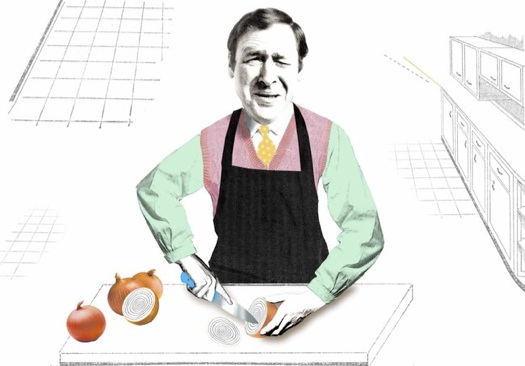
Actually, caring for children brings good effects on fathers. It has been found that male hormones “testosterone” decrease after a man has a child, and the more time he spends taking care of his child, the less testosterone he would have. This decrease of hormones can protect men from having a prostate cancer. Also, this shows that men’s bodies are naturally made to be a good father. According to the study, the number of testosterone declines after men get married, and men who get a child had much lower testosterone. Moreover, men who spend much time taking care of their children showed the lowest testosterone (Belluck, 2011). A decrease of testosterone not only reduces the risk of becoming cancer but also helps fathers notice a small sigh from their children. Instead, men may be less sensitive to women, but this will keep husbands from having an affair with other women. This does not mean that men lose attractiveness as males after they got married and have a child. On the contrary, this is very good news because this proves that caring for children is not an only women’s duty, rather men are also physically made to be well adapted to housework and caring.

In addition, the old stereotype which says the role of wife and husband is separated seems to be changing. In a survey which was performed in America, it was found that many middle-age men now regret for not having spent much time with their father when they were a child, and they wants to commit to housework and child care more(Lawlor, 1998). Also, it is becoming natural for fathers to do housework and care for their children while mothers are working. This proves that double-earning couples can do their duties as a parent by making up for the partner’s absence each other. Now, child care is not a women’s job but a parental duty, and fathers should commit to this work more positively because it will brings physical benefits and good relationship of family.
References

Pam Belluck, In Study, Fatherhood Leads to Drop in Testosterone, The New York Times, 2011.

Julia Lawlor, EARNING IT; For Many Blue-Collar Fathers, Child Care Is Shift Work, Too, The New York Times, 1998.

The Meaning of Demonstrations in Japan

by Naoya Suizu

Recently, I was invited by my friend on Facebook to a mass demonstration about rising consumption. Although I was a little interested in it, I didn’t join it because I must work at the day.  Such an invitation is not my first experience when I entered Ritsumeikan University.  For a year, I made some friends who often join a demonstration and I’m studying social problems with some of them.  But I’ve never joined the demonstrations because I don’t like a demonstration as the form of a complaint.  At the same time, I think it is very important to complain of the policy as a nation.  So, I have some doubts about the recent demonstration, but I believe people must complain the failure of the government if they feel it is a mistake.

In Japan, the positive demonstrations are not so many events now.  In fact, I have not heard the demonstration a little until I entered Ritsumeikan University and I have no good images for the demonstration, such as violent and radical action. I think not only I but also many Japanese people have not good impression. But, such Japanese people held many demonstrations radically in 1960s and 1970s.  They complained the existing power and sometimes acted violently.  In particular, many university students held the demonstrations for the achievement of their insistence at this age.  The big movement started against the Vietnam War, and after that, spread the demonstrations to change the existing situation. They are very aggressive and protect the national policy and fought against army by throwing a pebble and a Molotov cocktail. At first, many people evaluated the demonstrations as the young power to change the bad situations.  But the demonstration was gradually received as a dangerous action and continued to weaken the power.

Since the demonstration is dangerous for many people and weakened, it is arising in Japan now.  The cause is the accident of the Fukushima nuclear plant and many people gradually distrust politics when they knew the government’s bad action after the accident.  The movement spread largely and the demonstration against nuclear plants was held in various parts of Japan. Some university students are also joined and the demonstrations became a kind of trend. But I think some people just join the demonstration without a thought about the bad problem because of a trend. Exactly, the demonstrations are not so dangerous before and we can feel close, but the meaning that it changes the bad situations doesn’t change.  I think if they joined the demonstration, they should complain the government from they understand the principle of the problem.

The complaint against the bad politics is indispensable and demonstration is one of the most important movements. Particularly, it is very significant that the social responsibilities such as university students in the future join the demonstration. If people obey the existing rule without a complaint, the country is maybe declining and they don’t hope the good future.  Like this, demonstration is very necessary, but the thought of the activists is very important for it at the same time. Demonstration is not a play and unfinished thoughts result in no change.  I think the activists having the strong thought we can change the bad situation must join the demonstration.

Reference

http://jbpress.ismedia.jp/articles/-/35255

Do you think husbands can completely do child care and housework?

by Daisuke Matsumoto

I don’t think husband can completely do child care and housework.  The best reason why I think so is husbands, you know, don’t have a maternal instinct.  In addition, men have less handy about child care and housework like the diaper changing or cutting vegetable. So mostly husbands let their wives pull the double jobs.

For decades, mothers have been coming to complain that motherhood is more taxing than fatherhood and this disparity often get to become subject in couple’s house.  Of course, fathers are now struggling as much or even more than mothers in trying to fulfill their responsibilities at home and in the office. This is because husbands’ role are typically bringing home the bacon, but also husbands increasingly desire to spend more time with their children as wives have faced since 1970s―how do I be a good parent and good worker?―(Tara 2010).  However, there seems to have some problems for husbands to do the home tasks.  First, husbands tend to do child care in a “stealth” fashion―in other Japanese words “恥ずかしがる” ―.  It seems difficult for men to take advantage of flexible schedule and family leave like taking their child to the doctor or picking him or her up from school rather than take a formal flexible work arrangement.  Second, although men do more vacuuming or dishwashing than woman, they still lag behind women when it comes to housework.  In the U.S.A, when both husband and wife work out side home, the wife spends about 28 hours a week on housework, on the other hand, the husband can spends only about 16 hours (Tara 2010).  Moreover, men and women themselves disguise their domestic duties with different case.  In the 2008 families and work report of the U.S.A, 49 percent of men stated they do more or an equal of child care while only 31 percent of women gave husbands trust in child care.  Furthermore, the perception gap can apply to cooking and housecleaning.  More than 50 percent of husbands stated they do most or half these tasks, to the contrary, 70 percent of wives insist that they do all of these (Tara 2010).  If wives are right, you will understand how bad men’s work-life conflict is.  It would be suitable for fathers to fix a tricycle, play video games with their child or put away outdoor toys. That is why fathers do childcare or housework is less suitable than mothers do.

Reference

Tara, Parker-Pore. 2010. “Now, Dad Feels as Stressed as Mom” The New York Times. June 19. http://www.nytimes.com/2010/06/20/weekinreview/20parkerpope.html?_r=1

Meaning of Social Movements

by Kensuke Kubo

Around the world, a lot of social movements are happening, fighting against those who have power. Recently, in the United States, big social movement happened. In 2011, after occurring the Lehman shock, Wall Street was occupied by young Americans against the US government. The reason why they had such a strong social movement was that US government did not take enough steps to deal with the situation of economy or unemployment people after the Lehman shock. The movement is lasting even now. Participants had their common slogan, “We are the 99 percent” which means that since 1970s, the properties of rich people in top of 1 percent in the US has more and more increasing and expand gap between the 1 percent people and the others. Participants wanted to insist such an opinion to government through the social movements.

But, was this an efficient way to send their opinion? I do not think that it is efficient way to insist that. In the case of such social movements, a lot of people fight with policeman, break something like shops, cars, windows and so on. Of course gathering many opinions is important and become strong to protest someone, but participants do not have to be violent in this case.

In Japan, comparing the world, social movements are not active. Many people think that it is one of the cultures of Japanese which means that Japanese people hesitate to insist their opinion in public and tend to become silent. So, I have never seen this before until last year. But, after the big earthquake and the accident in Fukushima Daiichi nuclear power plant happened, demonstrations are increasing more and more in all over Japan. In this demonstration, participants are gathered by using SNS such as Twitter, Facebook, mixi and so on. People from various generation are doing that, especially young or mother who has children are a lot. When I saw the scene, I noticed that it did not relate between the less social movements and specific cultures if people have to protect something like their future or family. All of the participants of the demonstration are hoping to change something, and it is the common consciousness around the world. Even I attached before that social movements is not an efficient way to insist their opinion, I think it is a good for society to be able to share their opinion.

A Demonstration and Cohesion

by Chinatsu Kitamura

On September 17, 2011, the protest movement started by Wall Street in New York, the United States of America In this movement, since investment company, Lehman Brothers of the United States, will move application of federal Bankruptcy Law of Chapter 11 for a Federal Court in September, 2008, which is called the Lehman shock occurred, not only the United States but also the inside of the world has panted dully. Therefore, influenced people occurred the movement.

Especially, 40 percent of the young men who were 19-25 years old, graduated from high school or university did not have a job and the people participated in the demonstration to appeal to complaint against government which were not successful in Employment policy. However, with increasing the number of people who participated in demonstration, the demand was also diversified and people complained everything, a high improvement demand of an unemployment rate or a pension problem, global warming prevention and to a big-ticket house rent and tuition.

The people who participated in the movement have a common slogan, “We are the 99%.” This expresses the situation that the property which top 1% of the wealthy own in the United States of America is increasing since 1970s. According to U.S. Congress Bureau of the Budget, during in 1979 to 2007, income which top 1% of U.S. averaged increased in 275%. However, the increase in the income of the middle income group occupied 60% in the same period had only been 40% by the lowest income bracket of 20% of the low rank at 18% of increase. However, when the demonstration started, participants were young people but a lot of people who were every generation gather in Wall Street with expanding the demonstration. Many of participants were concerned with the demonstration through social networks, such as a twitter and Facebook.

In actual activities, participants stage the demonstration at 9:00 a.m. which start business of the stock market in New York stock market and 4:00 p.m. which finish it in front of New York Stock Exchange. Action policy is decided by talks by a representative system through a general assembly. And also, it has one of the features to perform systematic activity with dividing of roles such as facilitator group, medical group, food group, media group and so on.

Now, the world depression stuck in the mud. We will not see an end to this depression within a few years. Therefore, demonstration was held in the world. However, I didn’t see the demonstration directly. In Japan, few demonstrations were held and Japanese don’t express their will. So I think Japanese should imitate the United States. If Japanese don’t speak one’s mind, government may take so many liberties. Japan stand on the edge of a precipice and we have to take actions against government.

Reference

http://t21.nikkei.co.jp/g3/CMN0F12.do

Nikkei terekon21

Article of the newspaper

・反ウォール街デモなぜ拡大?――格差と雇用低迷、若者に不満

・NY「反ウォール街デモ」2ヵ月、排除に反発、抗議激化――「非暴力」から変質。

・危機先人に学ぶ――ハイエク(6)

・反ウォール街デモ、世界に波及、「格差」「反緊縮」

・反ウォール街デモ、世界に波及――NY、勢い維持。

・反ウォール街デモ、世界に波及――東京でも集会。

Malcolm X -the Radicals and the Moderates-

by Tomotaka Isono

What is one of the most famous Social Movements in the world and in history? I think some of you answer that is  African-American Civil Rights Movement by leader, Martin Luther King, Jr.. He was awarded the Nobel Prize for Peace in 1964. However most of Japanese don’t know actuary there is another person who tried to tackle racial discrimination in the same time. His name is Malcolm X. In contrast to nonviolent and peaceful leader, King, Malcolm X is famous for violent and aggressive leader. (Incidentally, the main characters of X-Men, Professor X and Magneto are designed in the motif of King and Malcolm X.)

If you want know more about his life, I recommend the movie “Malcolm X” in 1993, so on this report, I omit the history of Malcolm X.

Now, I sort out the differences between Martin Luther King and Malcolm X. King taught nonviolent resistance, and appealed racial integration that white and black will go hand in hand. He said “Darkness cannot drive out darkness; only light can do that. Hate cannot drive out hate; only love can do that.”

On the other hand, Malcolm X accused of King’s ideas and actions as “weak in the knees”. He taught that white is devil, and mentioned that black can’t live peacefully with white.  He appealed complete racial segregation that black should establish new black original country in USA or in Africa. Moreover, he also spoke that in order to protect myself, black also have rights to use several ways like white. And one of his famous quotes is “Black is beautiful”.

Though both of them had the common views that blacks should stand up and call for own rights, however, their each ways and ideas were quite different. These different position between King and Malcolm X are called “the moderates” and “the radicals”. Generally speaking, we tend to regard the radicals as bad and wrong ways to tackle social issue. I think that violence action is wrong way, but there is a reason why the radicals are the radicals, we must consider about that. Giving one of the reasons, “freedom expression”. In the country allow the citizen to have rights to express, if people who want to do social movements publish free-paper, adress the audiences, they will not be arrested or be prohibited. If the country don’t allow freedom of express, people only have way to become more violent in order to be reported truly by foreign media. I think freedom of express make the radicals less violent.

References:

Noboru Uehara, 1994, King and Malcolm X, Koudansha-gendaishinsho

Spike Lee, 1992, Malcolm X (Movie), Warner Brothers

Social Movement in Japan

by Hana Iwaki

In the world, there are many social movements come to arise.  For example, in Greece, about 13 million people joined the demonstration parade against the government’s tight fiscal policy.  This is very huge demonstration parade and it considerably affect to its policy. While, in Egypt, about hundred million people joined the demonstration and it made the president reignited.  This is called Egypt revolution.  According to these facts, the huge demonstration has power to change any situation.  However, in Japan there is less demonstration than other country.  Of course, I do not mean there is no demonstration in Japan. But its scale is very small.  I know that it doesn’t matter how small it is, if it could change the situation.

The most of the cause of social movements are dissatisfaction to life. But most Japanese people don’t develop this dissatisfaction to the demonstration. There are some reasons why Japanese people do not take action. First, it is said to Japanese character is one of reasons. Basically, people are gentle and they don’t like make a noise.  To say something badly, people are obedient.  They do not claim and just watching what happened in front of them. Many Japanese people are onlookers. And they have mind “self-responsibility” fundamentally; so many think the dissatisfaction to life is one’s entire fault not the government or social situation. Second, this is connected to the first reason, the lacking of interest in the politic of Japanese people.  This is big issue in Japan.  Many people think that the government won’t listen to our voice so the interest decrease and even if we took action and do the demonstration parade, it would no help for them.  And the government should reflect our voice but it doesn’t. It takes time for public opinion to be reflected in the Diet.  So people think the government doesn’t have ability to deal with and they do nothing just watching other people doing the demonstration parade. It’s none of their business.

I wrote about who don’t take action but there are surely many people who doing social movement.  However, it’s a minority group.  I think we have to take action because “Nothing action, nothing started.”

Reference

凛. (2011, 10 21). Why there is less social movement in Japan? Retrieved June 9, 2012, from Something connected to the politic: http://blog.livedoor.jp/amuro001/archives/3620949.html

Bilingual Education in the United States

by Chinatsu Kitamura

Bilingualism is to be able to use two languages. In generally, bilingual education started Montreal in Canada, 1965. It is goal which assimilates to a majority language community in socially and culturally. There are two ways, “submersion” and “immersion”. Submersion is a form aiming at assimilation. This is very negative to use two languages and throw the people into the common class of a majority language suddenly without special education. And also, the tendency seems around the area which a lot of immigrants live. The problem is to increase the student to have trouble with. On the other hand, immersion is to educate the two languages with using two languages as an object of using the majority language. And finally, it aims to use two languages at once. Thus, although there was the method of various educations in bilingualism, bilingual education was not worked like today.

For example, in 1960s, a lot of Hispanic-American live in Texas. In fact, a half of people can’t read and write or educate within 5 years. And also, in California, a half student dropout before 8 grades. Therefore, there are miserable situation in the United States then. Soon, bilingual education became federal law. On the background, it involved in the civil rights movement in 1960s. The people who recommend the bilingual education are representatives from New York, California and Texas, for instance, John. F. Kennedy and Lyndon Baines Johnson. In Civil Rights Acts in 1964 apply that “if state discriminate the other people by reasons of race, homeland and so on, federal government prohibit all financial support.” Moreover, by the bilingual teaching methods in 1974, bilingual education was established and the Hispanic children who become the object increased in number rapidly. However, Bilingual education criticized because the actual conditions of bilingual education maintain Hispanic culture. And it was pointed that it was only a thing social and for Hispanic immigration to realize political and economical ambition. Finally, it lost support of the nation. In this way, the bilingual education which lost support became a target of criticism according to English official language movement which will start in 1981, and it was abolished in California in 1986.

Thus, bilingual education have a lot of problem. Although the problem cannot to solve easily in the world which live a variety of species close together, the bilingual education is spreading in the world while overcoming many difficulties. I feel that it is never meaningless to study over languages including English now when the world is being connected more closely.

Reference

JACET bilingualism kenkyuukai. 2003. Nihon no bilingual kyouiku gakkou no zirei kara manabu (Bilingual education in Japan. Study from case of school.)Tokyo sanshuusya

Toshihiro,Yoshioka. America ni okeru bilingual kyouiku to eigo kouyouka no zehiron (Bilingual education and argument against official language in English in United States) http://www.ritsumei.ac.jp/acd/cg/ir/college/bulletin/Vol.21-3/04YoshikawaToshihiro.pdf

Is Hostess a Dirty Job

by Tomotaka Isono

I want to write about the topic which is talked with my classmate in the class. The topic is why we see hostesses as dirty or shameful job, but, on the other hand, we see Geisha as Japanese traditional culture. Are both of them something same? What is the diference between hostess and Geisha? I watched the movie “SAYURI ~Memories of a Geisha” to know about Geisha. (This story is about Geisha girl before WW2.)

First, I mention the common thing. Both of them talk and drink with their customer, sing a song and dance, and sometimes they play games. Thus, business is very similar. Is the diference only clothes (Geisha: Japanese kimono, Hostess: dress)? So why does hostess be seem as dirty job?

You can know the big difference when you learn about Geisha for the first time. Of course, Geisha is similar occupation with hostess. However, if you want to be geisha, you have to go to Okiya (置屋; a Geisha house), and receive hard training from youth. (Once, poor family sell their girl to Okiya and get money.) These apprentice Geisha are called Geiko (芸妓) in Tokyo, Maiko (舞妓) in Kyoto. Everyday they do housework, take care of senior Geisha, practice of singing and dancing. Moreover they have to obey the severe rules for modern girls; for example, they can’t go to convenience store, or can’t go to Karaoke, bowling something like that. Finally They become Geisha in severe rules and environments.  I think people seem them as great culture because these severe process to Geisha. And geisha’s patience and perseverance are also Japanese traditional virtue.

On the contrary, anyone who want to be hostess can become as soon as possible regardless of good singing or dancing. And illegal foreign hostess come to Japan, hard work like indentured servitude, and to force to play sex with customer etc., many factor makes hostess job minus images to people.  This is a result which the owner and government could not help them by rule or something like that. Many of them force to work as sex workers.

So, I think we should  protect them by establishing more severe rules for owners and customers. And also they should obey the rules like Geisha. We should know about hostess and Geisha, especially Geisha system and Hostess problem.

References

Rob Marshall, “SAYURI~Memories of Geisha~”, SPE, 2005 (Movie)