In Japan, you get the education you (the consumer) pay for

Image

Reposted from the Japan Times blog “Yen for Living,”  written by Philip Brasor and Masako Tsubuku

Last week, the Organization for Economic Cooperation released a list that ranked the 31 member countries with “comparable data” in terms of public spending on education as a percentage of gross domestic product. Japan came in last at 3.3 percent. The average percentage was 5.0, with Norway at number one with 7.3 percent. However, in terms of private spending as a proportion of all expenditures on education, Japan came in third out of 28 OECD member countries with comparable data, at 33.6 percent. Only South Korea and Chile were higher.

These findings were based on data from 2008, which means they don’t take into consideration recent changes implemented by the Democratic Party of Japan. The most relevant change in this regard is the government’s decision to waive tuition for high school students by paying subsidies to local governments. High school is not mandatory in Japan, and even public high schools require fees of some sort. These subsidies will probably change the OECD’s rankings when it compiles a list for public spending in 2011, but it may not have any effect on the list for private spending. One of the reasons the DPJ pushed the tuition-free policy is because the party recognizes that in the current job climate even entry-level, minimum-wage service employment requires a high school diploma. The days when junior high school graduates were solicited for factory jobs and other blue collar work is long gone. But compared to many of the other costs that parents pay to have their children educated, public high school tuition is almost like a drop in the bucket. According to education ministry figures for 2006, the average publichigh school student paid ¥112,000 a year in tuition, which is certainly high for lower income families; but at the same time, the average public high school student also paid ¥176,000 a year for outside cram schools, or juku. Altogether, parents paid on average ¥520,000 a year in education costs for a child if he or she went to public high school, which is about half the cost for private high school students, who paid on average ¥1,045,000 a year (including ¥785,000 tuition and ¥260,00 for juku).

But it’s really in elementary and junior high school where costs mount, since you have to start “investing” early on to guarantee that your child will get into a name brand school, which in turn guarantees a better job down the line; or so the thinking goes. This starts in kindergarten, which is also not mandatory in Japan though almost every Japanese child attends. It costs about ¥500,000 for 2 years, mostly in “incidental fees,” for public kindergarten, ¥1 million for 2 years of private kindergarten; though some local governments, like Shizuoka Prefecture’s, subsidize kindergartens, thus bringing the cost down considerably. About 80 percent of Japanese kindergartens are run by private entities.

On average, parents spend a total of ¥2.76 million per child for all six years of elementary school if the child goes to a public institution, and ¥8 million if the school is private. Strictly speaking there is no tuition for public elementary and junior high schools, but there are lots of incidental costs, including lunch, which typically runs to ¥40,000 a year, and kyoikuhi, or “educational fees” for things like field trips and supplemental materials (textbooks are free) that run to about ¥55,000 a year for elementary school and ¥130,000 for junior high school.

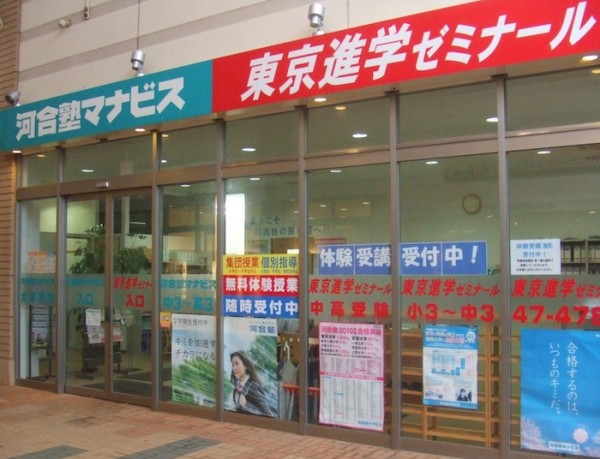
But it’s juku where the real money — and the difference — is. The whole point of juku is to prepare a student for the next level of education by giving him or her the tools to pass entrance tests, which means the closer to graduation the child gets, the more money is spent. It is also where public school clients outspend private school clients, at least on average. A public junior high school student spends ¥471,000 a year while the private junior high school student spends ¥1,269,000; but public students spend about ¥20,000 more per year on juku than do private students. That’s because almost all public junior high school students have to take entrance tests for high schools, while about half of private junior high school students will matriculate to the high school affiliated with their junior high school (and some will even go on to the affiliated university). Private schools are profit-making businesses, so it’s against their interest to discourage continuing students with entrance exams.

Only 6.7 percent of junior high-age students attend private schools, and juku is considered such an integral part of a public school student’s education that many local governments provide funds to lower income families so that they can pay for juku. Since 2008, Tokyo has provided up to ¥150,000 a year for juku to students whose family receive welfare, the idea being that such subsidies are necessary to “break the cycle of poverty.” The education credo in Japan guarantees that the juku and private school industries will always prosper. Last year jukus raked in ¥371 billion in revenues.

Update (Sept. 25): The education ministry yesterday released the results of its annual survey of how many families receive supplemental educational assistance for elementary and junior high school students. Supplemental assistance is money to pay for things such as school excursions, stationery and other materials that students have to pay for themselves. It is given to students on welfare or those from low-income families. In 2010, 1.55 million students received the supplemental assistance, which is about 15 percent of all elementary and junior high school students. That’s 60,000 more students than in 2009. When the survey was started in 1995, the number who received assistance was about 716,000. Osaka prefecture has the highest portion of students receiving assistance, about 28 percent.

Skin Lighteners and Racial Betrayal

by Minako Sanda

After World War II, South African companies began to manufacture skin lighteners that were aimed for African dark-skinned women in and out of their country. Although the South African population is mainly divided into four categories (European, Asiatic, mixed and other colored, and native people), the special encouragement of the companies to use skin lighteners flourished in the market, especially in urban areas. Young women in such areas were remarkably enthusiastic to lighten their skin in terms of getting the urbane appearance, I assume it happens in elsewhere of the world’s most urban areas that people define beauty by showing what they can afford, to elevate their position to a higher social status. These people used skin lighteners not merely to make them look whiter, but some of them simply wish to eliminate their blemishes on face, some wanted to fix their sun-damaged skin, and others just wanted to have smoothing effect on their skin. However, disagreed to such a big trend of skin lighteners, two types of critiques on skin lightening products existed among South African society. One is that African political leaders who are mainly consisted by male nationalists say that the use of skin lightning is a racial betrayal against “black is beautiful” or ”the black movement”. At that time in 1970’s, according to marketing survey, such approach from ‘black pride’ was recognized, however, the number of people who want to buy skin lighteners were similar to the number of people who said they don’t buy because they are proud of their skin color.

The interesting point in here is that it’s only taking a serious look at black becoming whiter as ‘racial’ issue. If changing your original features of your race were thought to be race betrayal, no one would hardly see any of beauty products making such a huge amount of money in this global world. Race betrayal is happening in many ranges, like EMINEM being more like black while South Asian females encouraging plastic surgeries. The preference of white people getting bronzed by tanning should be, in the extent of a pure white race, a betrayal act. One another thing I thought was that making black people willing to change their appearance by lightening their skin or straightening their hair, happened to be one-way direction of marketing on them; if not tanning for black, then go for lightening.

It is sad to think that most of the features we see in beauty were created, or at least manipulated by marketing companies. I’m shocked to see people sell whatever they want to sell, and people buy whatever they get to satisfy their belief in beauty, and how powerfully affect own health. Similar to the topic, I disagree with wearing high-heels. They might make my legs nice and long for now, but there is no evidence that the preference in heels will remain in 30 years later. This can be same as skin lighteners, colored contact lenses, hair products and nearly every products made by a fixed idea of beauty.

It seems like ‘unhealthy life in the future’ is commonly seen as a important feature in current beauty products. I rather think what beautiful means should be re-defined by each individual instead of marketing cosmetic companies that selling mass-producing artificial, toxic products to make us ‘beautiful’.

Skin Lighteners in South Africa

by Maiko Takada

I would like to discuss about the issue of “betraying the race” by examining the discussion question from class.

The first question is “Does betraying the race happen not only when people try to whiten or lighten their skin color, but also when people try to get tanned or darken their skin color?” My answer is, “It depends on the purpose or reason that you change the skin color”. In the case of South Africa, one’s racial category determined most life outcomes. Whiteness, purity, and social power are strongly connected. However, if your skin color was black, you are not able to get well-paid job or higher social status. In addition, people do not see you as an attractive person because of your skin color. Therefore, black people are eager to whiten their skin color. In other words, they aim to racial uplift by using skin lighteners as technologies. On the other hand, in the case of white people or Japanese, they go to the beach or pool side to get tanned because they enjoy seasonal benefit or vacation. Those ideas are similar with “Eat watermelon because it is summer” or “Let’s have a massage because we are vacationing at hotel”. It is clear that they are not trying to darken their skin to live in better life in the society. The differences between the two cases are that denying own feature or changing appearance for fun. People get tanned not because they are denying their skin color but black people abandon their blackness and eager to whiten the skin color. In conclusion, if people are not proud of their natural skin color and try to get tanned to change the race, this would be called “betraying the race”.

Second is “Are there any action which are seen as a betraying the race besides changing the skin tone?” Hair straighter, color contacts, and high heels were suggested as the examples in the class. When I was in high school, there were many girls who use hair curler because they think they look cuter with curly hair than straight hair. American celebrity Taylor Swift sometimes appears with straight hair although her hair is naturally curly. One of my Japanese friends showed up with gray eyes and said that she is wearing color contacts which she wanted to have for a long time. I can see many girls in high heels at the university, station, or shopping mall. In my opinion, those cases are closer to the case of getting tanned than using skin lighteners in South Africa. Because they seem like they just enjoy the fashion. Thus, I do not think people are betraying the race in this case. However, as Misa explained in the class, if Japanese people wear blue color contacts to pretend different race for example, then it could be “betraying the race”.

Fair Enough?

by Misa Fukutome

Since the Internet became easily accessible for the majority, looking for partners has also become a common activity. The demand on what is written on the profile is also something important, because despite all the suspicion there is something that you always look for in a person’s profile that makes you want to meet him or her in person. In class, there was an opportunity to write our own hypothetical profiles. However, at first there were questions about where the profile would be displayed, in a Japanese, internationally or on any other country’s website. This triggered a realization for me, below there will be two types of profiles one made for a Japanese website and one for a Swiss website.

An ad on a Japanese website:

Age: 21

Height: 163cm

Sex: Female

City: Kyoto

Nationality: Swiss/ Japanese

Self-Introduction: I grew up multicultural, mainly lived in Switzerland until I came to Japan 4 years ago. I enjoy sports very much, also cooking brings me joy. Currently I am a student and am looking for a man who is around the same age and does not mind a strong personality but out going.

Of course there are a lot of reduction in this profile, however the emphasis in the profile is made on the fact that I do not have much Japanese in me. Also, the demand I have for the other is not very clear because in reality I am not expecting to be dating a Japanese so it was hard to set a demand. Now what does the profile for the Swiss website look like?

Age: 21

Height: 163cm

Sex: Female

City: Zurich

Nationality: Japanese / Swiss

Self-Introduction: I have black long hair and have a fit body. I love sports and I like keeping in shape. I love cooking and relaxing. I have a bright personality, out going and am independent. I am looking for a partner who does sports and enjoys sharing ideas and point of views.

As mentioned before, this profile is brief, but still there is a change in tone. The profile focuses on the looks and the order in putting nationality; in the Japanese ad, I put Swiss before Japan and in the Swiss one the other way around. This is because, in Japan, it is more likely to get attention if you are “gaijin,” an opposite. In Switzerland, “half” are considered exotic not only that but also as Asian beauty. The conclusion would be that there is not only the person looking for a curtain race or skin tone but also people selling their own skin color or race to attract the other.

Filipinos and the Color Complex

by Misa Fukutome 

During class a lot of questions and topics were thrown about still, it has ended without getting closer to a theory or something clearer. The discussion started with those three questions.

  1. Why do Japanese cosmetic commercials use only Japanese models to represent?
  2. Since definition of beauty has changed through out the centuries do you think that the sense of beauty will stay “light” or shift to “tanned”?
  3. Do you prefer “skin-whitening” or “skin-lightening” ?

Breaking down the first question, the book mentions that it is common to use mixed-race models, mixed-race as in half-Asian half-Westerners, for cosmetic commercials. Since they have some Asian features, they can feel a connection. However, in Japan it is less common for mixed race models, such as Becky, for cosmetic commercials instead there are Japanese or Asian mixed-race as models. Therefore, my presenters and I came up a theory, which is that Japanese people have the impression that Western mixed-race are a “perfect” or “ideal” feature that they don’t need anything more to get better, meaning that it contradicts with the reading that they are able to connect to the models. Then, the theory is that for East Asian it is their goal to look more western and “exotic”. However, for the South Asians their goal is to look East Asian with lighter skin but still maintain their Asian features.

The second question, the possibility of the shift in definition of beauty from “light” to “tanned”. This is all about what the market demand is. For now, Westernization has been a big influence, nevertheless this can change and the influence from China could be the next market and their sense of beauty becomes the demand. That is why the sense of beauty might change in the future, or even looking into the past one can see the shift in the change of beauty. Even in Japan, there was a time where they thought being “tanned” was beauty, where as now they would do anything to stay “white” and to remove the dark spots from their skin.

Then what is the difference between “skin-whitening” and “skin-lightening” if there might come a time where it will turn into “skin-blackening” or “skin-darkening”? This brings us to the third question. This “skin-whitening” and “skin-lightening”, is it just word play or is there a focus for different types of complex? The presenters and I thought that the two have a difference in the sense that the consumers are different. For the “skin-whitening” it would be focused on the African American consumers who want to become European, where as the “skin-lightening” is for the Asians who want to keep their Asian features but just purify and cleanse their skin. Is this just a naïve assumption that we do not sound racist?

Fair Enough?

by Minako Sanda

Through looking at the Indian marriage advertisements, I found it surprising that family have custom to use marriage arrangement service. Such custom is nothing new in India, but it is certainly new that people start to make the skin color as the big matter of marriage as out loud as caste system. When I first saw the commercial for Fair&Lovely, in which a dark-skinned woman is disrespected by the marriage arrangement company, I thought that was merely a parody against Indian racists. But the word ‘racism’ actually has nothing to do with Indian preference of ‘marry the light’. Instead of talking about race, their matter is the appearance. Indian women do not have to be like white people, but why does being lighter skinned have so much privilege compared to others?

If this preference for lighter skin is the effect of the marketing commercial or the traditional culture that has been excised in every generation’s marriage, I wonder if there is any way to effectively change the situation. Marketing companies, especially cosmetic production, continue to be flourishing by creating opportunities for consumers to be different from what they naturally are. Although all consumers in the world are equally consumers, as we talked in class, one interesting comparison is that getting tanned for white people is acceptable but Indians getting skin lightener is taboo. Why not Indians get tanned (or, considered as ‘brown beauty’) in West, if white people are the models of lighter skinned celebrity in India? To think about such inclined beauty into light, white skin in the world, as we talk in the class we should have more equal choices when defining a beauty. Indian advertisement on marriage for example, has to be internationalized. Then people will start thinking that the expectation to have only fare candidate is restricting the idea of beauty in India.

I think, when someone from foreign country brings the new feature of ‘beauty’ into the others, people can adapt new feature to the old one, if not to totally transform the shape of ideal beauty. If the Western colonial era left the idea of fair is beautiful in India, it can simply be flipped over by the power of globalization which now promote tanned skin as beauty. Therefore I thought the continuous preference on the light skinned people is perhaps maintained by custom in India. One possible explanation for this custom is that people might not have any choice but to lighten their skin to make appearing change in their appearance, since most of Indian naturally have dark brown skin that never be exposed to ‘tanning’. If so, when whiteness is one way to show wealth, I believe that Indian natural beauty should be publically accepted by the majority of people.

White Hegemony

by Moe Kimura

We learned about the superiority of whiteness in the Philippines. This superiority comes from not only the value of people but also colonization by white countries. The effect of these countries remains still now, after decades. From these things, I think about “white hegemony”. As we learned in this class, superiority of whiteness is not only the thing in Philippine but all over the world. I wonder where the value comes from. It seems to be many reasons, but I will state the one of them, the value comes from the white powers especially west Europe and the United States, which controlled the whole world in the 19th and 20th centuries.

First, I would like to mention English. At present, English is the most popular language all over the world and it’s regarded as “the world’s common language”. We, Japanese students, have to study English from elementary school and other many countries have similar situation, I guess. These happen although the native-speaking population of English is not largest in the world. The population of native-speakers of English is the second largest (over four hundred million people) in the world, after Chinese (over one billion people). In spite of this, English is the strongest language all over the world. In my opinion, English is so strong not because it’s so easy to learn but because English-speaking countries have power, especially the United States, of which the origin goes back to the Britain, the country of English. Britain expanded its power during the 19th century and colonized many countries. The United States was not the colony of Britain but its “history” was started by English people (I can‘t mention Native American people in this text). So the United States is an English-speaking country. As you know, the United States has huge power today. Other countries which are non-English-speaking have to adjust to the United States. So, English is spreading not because it is the greatest language in the world but because strong country use English.

Same thing can be said about skin tone, I think. Values of western countries which colonized other countries affected to countries they colonized like the Philippines or some African countries. I think, if the South Africa or another African country were the strongest country in the world, dark or black skin would be superior to light skin. In my opinion, white or light skin tone is popular so much not because it looks beautiful for every single person in the world but because it is the standard of those who have power in the world. I would like to call this phenomenon “white hegemony”.

Reference:

List of countries by population Wikipedia. http://en.wikipedia.org/wiki/List_of_countries_by_population

Sekainobogojinko Ministry of education, culture, sports, science and technology Japan (n.d.) http://www.mext.go.jp/b_menu/shingi/chukyo/chukyo3/015/siryo/06032708/003/001.htm

Statistical Summaries Ethnologue.com (2009) http://www.ethnologue.com/ethno_docs/distribution.asp?by=size

Japanese Culture in the World

by Ryoko Yorifuji

In last class, we see a PV which was made Japanese fashion by Gwen Stefani. It seemed that she got inspiration from Harajuku, but in my opinion, the PV is crazy. And I think many things; why are back dancers’ hair styles traditionally Japanese hairdos? Why they wear a school uniform with the hairdo? Does she look down on Japanese culture? Anyway, I was shocked that Japanese cultures are misunderstood. However, possibly we may misunderstand foreign cultures too. So, I mention the gap.

First, I mention that I felt senses of incongruity before. I sometimes watch movies. From these movies, especially making in the USA, we can find some strangeness. For example; “The Fantastic Four: Rise of the Silver Surfer”, in a scene of wedding, the ceremony is Japanese fashion. The bride and groom stand in front of a torii and wear like a yukata. In fact, we don’t hold a ceremony in front of torii. And a bride generally wears a white kimono. And “Godzilla” in the movie, fishermen in fishing boat printed the Hangul eat sushi and watch sumo on TV while warming themselves at a kotatsu. I think there aren’t kotatsu and TV on the boat, don’t eat sushi and the Hangul isn’t Japanese! Moreover some foreigners think Characters are cool. So, they wear T-shirts printed Characters and tattoo on Characters. But they decide from Characters’ form, these meanings are sometimes strange. I saw a foreigner wear T-shirts printed “妹”, the meaning is “sister”. But it seems that such T-shirts are popular in foreign countries. In same case some foreigners tattoo with Characters odd meaning; “台所”, the meaning is “kitchen” or “日本製”, the meaning is “made in Japan”. Such as these things, Japanese cultures are misunderstood. But they may be regarded as exotic things, Japanese admire foreign cultures too.

Second, I’m worry that Japanese cultures aren’t distinguished from Chinese or Korean cultures. In fact, these cultures are used Characters and these exist in Asia. So I understand foreigners cannot tell them. Recently I hear that Korean culture is introduced as Japanese culture in France. What is more, Korean culture makes a profit by using the problem. To prevent such an incident, Japanese government makes an effort to impress our culture on foreigners.

But after all, I’m glad that many foreigners are interested in Japanese cultures even if the understand is made mistake.

However, I think Japanese misunderstand about foreign cultures too. For example, I study French now, I learn many French words are misunderstood in Japan. In Japan, Japanese foreign languages are flooded. Especially, Japanese English is the best. Japanese English is that the meaning change and made in Japan. For instance, the former is “sandbag”. The original meaning is “blackjack”, but it changes to “punching bag” in Japan. And the later is “Office Lady”. This meaning is “female office worker” in Japan. This word is made in Japan. Such as things, I think this is one of the intercultural misunderstandings. I know nothing about foreign culture, and perhaps foreigners are the same. So, I would like to study right foreign culture.

References

Movie

Tim Story (2007) “Fantastic Four: Rise of the Silver Surfer” by 20th Century Fox

Roland Emmerich (1998) “Godzilla” by TriStar Pictures

Music video

Gwen Stefani (2004) “Harajuku Girls”

Globalization and Inequality in the EU

by Yuuki Tashiro

These days, globalization more and more is spreading. In Europe, the European Union was established in 1991 by Maastricht Treaty. And currency was unified to the euro and regulation of immigrant workers was relaxed. However, in Europe, the number of unemployed increased recently and economic crisis was happened in Greece and other countries. So I wandered globalization is good for economy and life of ordinary people actually.

People who live in area of the EU was admitted to work at freely everywhere of this area. I think that it is one of the globalization. It led deregulation of work and mobilization of economy, however it made a lot of problem. Firstly, in large country like France and Germany, many immigrant workers came to these countries in order to get better jobs than these of their countries. Because their native countries’ minimum wage is lower than that of French or Germany, employer can make them work at low wage. As a result, it became difficult for the French and Germans to get jobs. And the number of unemployed increased. For example, in Germany, the number of unemployed was 5.8 % in 1991.¹ But after establishing of the EU, the rate became 11 % in 2006. ² With other cause, I guess that establishing of the EU is cause for this low number of unemployed.

Besides deregulation of working area made inequality between immigrant and other people. Because a lot of immigrants who went abroad to look for new jobs can get only unskilled works, for example works in factory or house keeper usually, their wage is very low. So between immigrants and other people, big inequality is made.

In addition to economic inequality, cultural inequality is also problems. In French, a low which ban Islamic women from wearing veil approved these days.³ As the background of this law, there is exclusive mentality. Because many French lost or can’t get jobs by immigrants who came from other countries, they turned this anger to immigrants.⁴ Globalization increased the number of immigrant rapidly, but diversity of race and religion which were made by it led exclusive law mentality of people.

Reference

¹²・The World Economic Outlook database 2012.6.29. http://www.imf.org/external/ns/cs.aspx?id=28

³⁴・China Radio International 仏「スカーフ禁止法」、正式発効 2004-09-03. http://japanese.cri.cn/1/2004/09/03/1@26042.htm

Globalization and Inequality

by Momoyo Tanaka

Globalization creates inequality between developed countries and developing countries, and rich and poor in domestic. One researcher showed that developed countries like the U.S., EU and Japan are one hundred times as rich as developing countries like Ethiopia, Haiti and Nepal. The West countries have been developing since nineteenth century (after the Industrial Revolution), and also the rising nations.  However, ex-colonial countries have not.  In addition, because of globalization, domestic inequality between rich and poor is a big problem now. There are some causes that occurs inequality; education and poverty.  Then, I will show the solution.

First, education causes inequality because of globalization. Generally speaking, benefits cannot be divided equal in globalization because capitalists and people who owe resources gain most of benefits.  Because of globalization ― expansion of the market and the development of IT technology ― when companies find employees, they tend to hire the people who have high skill, not the number of people.  Rich people can have high education, but poor people are difficult, and they lost the chance of working.  Rich people would get high wages and widen the sphere of work, but poor people tend to work in bad labor conditions and low wages.  Education is necessary to survive the global world, and it causes inequality.

Second, poverty causes inequality. A lot of developing countries suffer from poverty because they do not have chance of business. Developing countries are dependent on Mono culture which grows coffee, cotton, and so on. At the colonial period, these countries were forced to grow one material to create industrial products in law prices. After finished Colonization, the system of Mono culture remained.  Developing countries cannot create industrial product because they only produce one material, so they cannot extricate themselves from poverty.  If developing countries escape from poverty, they might develop and less poverty.  Then, developed countries are developing because of globalization, for example trade, the development of industry and technology. These countries are rich and have skill, so they succeed in globalization. Recently, inequality between developing countries which were colony and developed countries which were suzerain states are expanding. Thus, poverty causes inequality.

Then, what can developed countries to correct inequality?  One solution is that to achieve Millennium Developing Goals (MDGs). MDGs aims to achieve peace and safety, development and poverty, environment, the role of 21st century, and so on by 2015.  However, it is said that it is difficult to achieve it by 2015 if the present situation were to continue.  The world needs to cooperate with each other more to accomplish MDGs and to correct inequality.

References

・Future Problem Solving. “Globalization Creates the Inequality in Developing Countries”. June 29, 2012. http://www.geocities.jp/fpspjapan/inequitypaper.html

・the Ministry of Foreign Affairs. “What Japan Do to Achieve Millennium Developing Goals”. June 29, 2012. http://www.mofa.go.jp/mofaj/press/pr/wakaru/topics/vol13/index.html

・Hunger Free World. ”the Relation between MDGs and Us”. June 29, 2012 http://www.hungerfree.net/special/31_2.html