Protecting Ainu Culture and Language

Do you know Shigeru Kayano? He is a man who made an effort to protect Ainu culture and language, and he is Ainu himself. He was born in 1926, Nibutani, Hokkaido. He was brought up by his grandmother, who spoke only Ainu language. So he became to be able to speak two languages: Japanese and Ainu. He talked with his grandmother in Ainu when they go to get wild plants. Then he grew up, when he was young, he didn’t feel good about being Ainu, and he was thinking that he wanted to escape from being Ainu.

However when collectors and scholars started to collect the tool of Ainu for agriculture, his heart was injured. Then he started to collect them by himself. This is the start of his life to protect Ainu culture and language. After that, he made a lot of efforts to protect Ainu culture and language. He recorded Ainu language, wrote dictionary of Ainu language and published it. He made a wedding of Ainu style again, and he made houses of Ainu style. He made a museum to preserve his collection of the tools of Ainu. He made a preparatory school to learn Ainu language; this is to maintain Ainu language.

Moreover he became the first Ainu member of the Diet. He made a question in Ainu language to know everyone there is another ethnic group except Yamato race. This is the first time to be used other language except Japanese language. During his term of a member of Diet, the act to promote Ainu culture was established. This is very important point about protection of Ainu culture and language.

Now, various events to show Ainu culture are held. For example, the Ainu traditional dance performance is performed by young people whose ancestors are Ainu. The recognition that there were Ainu people on Hokkaido except Yamato race is becoming spread. Long time ago, the homeland of Ainu people was taken by Yamato race. Ainu culture and language was received lots of pressure.

This is the event in very old time, but the problems about Ainu culture and language still exist. We cannot miss this truth. We must know the existence of Ainu people, culture, language and unfair treatment for Ainu people. To say that Japan is a mono ethnic nation has a lot of misunderstanding.

by Ayako Miyamae
The Differences between Japanese Society and American Society

There are a lot of Japanese Americans called “Nikkei” in the United States. I’ve home stayed in Nikkei’s family and they told me that situation during the WW2 was hard time for them. They were discriminated and sent to the camp for few years because the United States was fighting against japan during that time. After coming back from the camp, they stopped using Japanese in public and started to stay with other Americans. Especially for the second generation and third generation, most of them married non-Japanese American.

Therefore, Nikkei people adapted their self to American society. Also, it was not too difficult for them to be the same like other Americans because there are so many different nationalities in American society and Nikkei is not only one who looks different. For example, there are Chinese American and Korean American living in the same area so it’s difficult to distinguish them. Besides, there are Indian American and Italian American so they all look different.

But the situation is not so easy in Japanese society. I think there are two reasons to make them hard to live without discrimination in Japan. The first reason is because there aren’t so many Nikkei people in Japan. Nikkei people in Japan who came from South America look different from Japanese people. When we see them, we can see that they are different. The situation might be changed if the numbers of foreigners increase so much in Japan in the future.

The second reason is that in Japanese school they make us look the same. We need to wear uniforms and our hairs need to be black all the time. This circumstance also makes us to distinguish Nikkei people that they are different. Japanese people should get used to live with the people who don’t look the same. But for now, I guess it’s uncomfortable for Nikkei people to live in Japanese society.

by Misaki Fukada

Nikkei Brazilian Students

 I strongly remember that there were a lot of Nikkei students in my elementary school in Mie. The number of the Nikkei students was over 30 at that time. It means that four to five students were Nikkei students in each class. Most of them were from Brazil and their grandfathers were Japanese so they had a Japanese last name. The reason why there were so many Nikkei people in my hometown was because there are a lot of factories near my hometown like Honda or Sharp. And the second reason was the prefectural housing, which they could live in a low price and they are located in my hometown.

The teachers of my school liked to teach us cross-cultural understandings, so we often learned about the culture in Brazil. Sometimes the class was held in Portuguese and I remember that I didn’t understand anything. Because of those lectures, all of the Japanese students in my school thought Nikkei students were Brazilian and different from Japanese. And also the Nikkei students understood that they were Nikkei but different from Japanese. So Nikkei students didn’t play with the Japanese students and they played with Nikkei students and spoke Portuguese. The situation was not so bad until they enter the middle school. In that elementary school, there was special Japanese class for Nikkei students so they can learn Japanese. But there weren’t in the middle school, and also the classes became difficult than in elementary school so they couldn’t catch up. As a result, many of them dropped out from school and became delinquents. I don’t know what they are doing now, but I really think it is a sad situation. I know some of the Nikkei students studied hard and entered high school or even university but they are minority.

The prefectures that have high population of Nikkei people have to think about the education for them. Before taking this Japanese Society class, I thought that it was good thing that the teachers taught us about the culture of Brazil or Portuguese to know their culture, but after the class of Ha-Fu and Nikkei things, I felt it made them feel different from us. But on the other side, they were born in Brazil and they should keep their culture and we need to know about it. Well… was it right or wrong?

by Misaki Fukada

The Way to Learn about Zainichi Koreans

In the previous blog, I wrote about education of Dowa Problem and suggested that we should hide that so as not to remember; namely, 寝た子を起こすな論. In my view, the theory does work in the case of Dowa Problem; however, as described in Pacchigi!, lack of correct understanding of certain kind of problems such as about Zainichi Koreans may cause troubles. In the movie, when Kosuke (main character) attempted to pray in his Zainichi friend’s funeral, he was refused by the friend’s families due to lack of understanding of Zainichi’s history. That is, unlike Dowa Problem, the problem of Zainichi Korean requires another way to learn; thus the following will discuss the way to learn about Zainichi Koreans, comparing with the case of Dowa Problem.

The first difference between burakumins and Zainichi Koreans is their identities. The former has identities as Japanese and the latter has those as, more or less, Koreans. Unlike burakumins who are completely Japanese, Zainichi Koreans are different from Japanese. The second difference is in their demands; i.e. the former requires assimilation into other Japanese majority because they have a historical background that they were outcasted in Edo Era, while the latter keep on having their own culture including, as described in the movie, makkori and Choko (high schools for Zainichi Koreans). In other words, Zainichi Koreans requires diversity unlike burakumins who are seeking to assimilation.

In the case of burakumins, 寝た子を起こすな論 works because they have Japanese identities and require assimilation; while in the case of Zainichi Koreans, the theory does not work because they do not completely have Japanese identities and require diversity; thus, we need to have correct historical understanding of Zainichi Koreans actively. In the movie, Kosuke was refused by his friend’s families and the sole reason was his nationality: Japanese. Zainichi Koreans have a historical background that they came to Japan through the colonialism of Japan and they perhaps do not have good image to Japan. The movie described Kosuke as naïve and ignorant; while at present, Japanese youth are unconcerned about such problems; in other words, they tend not try to know. The historical backgrounds are different between 1970s (in the movie) and 21st century; but both are common in a sense that both Kosuke and Japanese youth do not have knowledge about Zainichi Koreans; thus, the lesson of having historical understanding can be applied not only to Kosuke but also to us.

by Kosuke Matsuura

Anti-Hanryu Movement in Japan

On the 7th of August, one of the main Japanese broadcasting stations, Fuji Television was surrounded by hundreds of people demonstrating against its pro-Korean bias. The demonstrators prepared their assembly on an internet website. What made them so angry about the bias? Today, there is a massive wave of Korean pop singers coming into Japanese entertainment industry, and it is said that Japanese Production Company can make a lot of money promoting them in Japan. Moreover, it is said that the Korean Government is supporting the flow to spread their cultural industry worldwide. Therefore the mass media always tried to push Korean culture and avoid bad news about them. Fuji television is said to have the strongest bias. The demonstrators say that they do not dislike Korean people or its culture, but they want to see Japanese news on TV.

Historically, however, there lies antagonism between Japan and Korea. The two countries have a territorial dispute, Korea wanting justice for Japanese invasion of Korea during the war, and Japan, violation of intellectual property rights, etc. People still feel deep down unsure about their relationship with Korea, holding many problems. The extremists would sure be feeling uncomfortable about this pro-Korean bias.

For Japan’s benefit, accepting Korean culture is now no going back because they have already created the boom and trend here, and it can be a good influence to the economy. However, the news should not be biased towards only Korea. If the broadcasting companies wanted to share the news from other parts of the world, they should pick it from different countries, not from just one country. It might have been the last choice for them to promote Korean culture, because of the decreasing budget and the viewers drifting away. However, TV is still a credible main source of information for people, so the companies should consider the effects that it can create. Otherwise we are creating more and more Anti-Korean people in our own countries.

by Kumi Nakamura

Non-Japanese Workers in Japanese Society

One Japanese TV show showed an interesting topic. That is the living of the Greek. This TV reported that they finish working in the morning and they can spend the rest of the time enjoying something they want to do. Of course, we don’t know that this is the case, and I think only some of them do this. However, does Japanese have the image that Japanese work much longer than Europeans or Americans? In fact, ILO shows that among five developed countries (the US, England, German, French, and Japan) Japan has the longest time of yearly working in 2005. As this express, firstly, one of the characteristics of the Japanese working environment is the long working hour. Another is that the overtime work is common, and that people do not take paid holidays without hesitation. That is, Japanese work environment which can cause overwork death, karoushi, is different from that of Europeans or Americans.

As markets are being increasingly globalized, many Japanese companies employ foreigners. For instance, FAST RETAILING, UNIQLO, has the plan to employ 1050 people, 80% of the overall graduate recruitment in 2012. On top of that, Panasonic, in 2011, took 1100 people as the graduate recruitment and this is about 80 % of overall. In this way, the number of non-Japanese people who work in the Japanese work environment are certainly increasing now.

I think here is an interesting problem we will be faced with. The issue is that how Japanese companies are dealing with foreigners as their workers. In my opinion, Japanese firms have main 3 measures to deal with this situation. First, they apply this Japanese environment to foreigners. It means that foreigners may work much longer and will not take paid leave. Second, companies have the distinction between Japanese and non-Japanese workers, which maybe shows that Japanese workers still work in the severe environment and foreigners work as if they were spend relatively comfortable time working overseas. Third, the increase in non-Japanese workers changes the Japanese traditional work environment into the place similar to Greek one. This means that non-Japanese workers who have different way of thinking about the labor may destroy deep-rooted environment.

For example, how about Ritsumeikan? Do non-Japanese workers have some dissatisfaction about their work place? I don’t know that. Anyway, that Foreigners work in Japan or Japanese work environment has been gradually common. What do you think about this issue?

by Shinya Shimatani

What Is Nationality?

Where are you from? When you meet with somebody at first time and introduce yourself to them, how many of you tell your nationality? It may depend on the situation and the person who you are going to introduce yourself. However, is it important to say your nationality to recognize you as you? Then, what kind of information do people need to know about you? Maybe your name, sexuality, ethnic group, religion belief, or place you are born etc. Then, what does “NATIONALITY” means? For me, nationality is something that categorizes people and creates difference between others. Is that really nationality is? What is NATIONALIY?

In Japan, there are three situations that a person can become a Japanese national. First, when either parent is a Japanese national at the time of birth. Secondly, when the father dies before the birth and is a Japanese national at the time of death. Third, when the person is born on Japanese soil and both parents are unknown or stateless. Because Japan determine lineage, parents’ nationality and citizenship are important. In other word, if you born in Japan and grew up in Japan, but neither of your parents are not Japanese, you cannot be Japanese. Also, if you born in other country and you never live in Japan and cannot speak any Japanese, if their parents are Japanese, they are still Japanese. Then, is nationality really important to recognize others?  If their nationality and their homeland don’t match, what is the meaning of nationality?

Zainichi Koreans deal with difficult situation and issue of identity now. In Japan, Zainichi Koreans are discriminated in various ways in society. Not only Zainichi Korean, people born and live in other country, they are confused and struggles to recognize themselves. Then, what is nationality? Why we have to classify people with nationality? Is there any meaning by discriminate people by their nationality? I believe nationality can be important information to recognize them, but it also create stereotypes and discrimination.  Therefore, I believe accepting people as an individual is important than classify by their nationality. Look at that person as an individual. Moreover, if people can choose their nationality from lineage or place they are born by themselves, it will be easier for people to recognize themselves and to be recognized by others. I think looking and condemn a person with their nationality or ethnic group is not polite.

by Ayako Kofuji

Feel Of Outsider

 Almost people have own parents, family, community and so on. There are our greatest supports to live our life. Especially, hometown is very precious thing for us. We can feel that where we belong with because of hometown. However, sometime we feel like as if we were outsider in spite of we are in hometown. Why people think that so? What is hometown? I consider about the topic.

   I think that change is cause of feeling like outsider. Every time when I go back to my hometown, I can see the regular scenery and meet the regular friends. So, I can feel there is my hometown and I belong in here. Although, I guess that I may feel like as if I were an outsider if the scenery and friends gone, and change my hometown that I pictured to strange space. Even if the location of my hometown has never change, there is not my hometown any longer if there have no things that belong with me. Therefore, we need hometown to proof where we belong with and who I am, I think.

      In the class, we learn about outsider in some countries. I think that they also feel about the changes. Increasing immigrants make their hometown strange place. Opening new cultural restaurants, selling some strange things are the instance of changes. Only that things, but it is very important things for people who living there. Finally, people feel just like they were robbed job and treated cruelly. Can it really be true? I think that it is not true in almost cases, but some changes make them feeling so.

      In conclusion, feel of outsider come from the changes. We cannot live without relations. We need to proof where we belong with and who I am. So, we need to hometown too. I think that if people know about the relations, the matter of outsider is decreasing.

by Erina Hayashi

How had foreigners who live in Kyoto been treated?

Do you know that there were areas for discriminated people in Kyoto until pretty recently? These areas are called “Buraku” area, for example, “Sujin-area” in Higashikujou. Surprisingly, people in Buraku are divided from other people by Kyoto City. I state the situation of Sujin-area at that time.

“Sujin-area” is at the east of Kyoto station. In the Edo period, there are people called “Eta” or “Hinin” who play a role of socially undesirable characters. It is Sujin-area that they lived in. And then, Korean people who lost their home town by the fires of war are getting to live in Higashikujou. People who live in Kyoto were cautious of Korean people who started their living suddenly. The situation of Sujin-area at that time was so terrible. People in Sujin-area lived in shabby shacks, broken glasses and plastic bottles were thrown away, and crows ravaged garbage. Kyoto City considered living of Korean people was illegal, didn’t equip infrastructure (a water supply or electrical instruction) and dispose of garbage and human wastes for long time. So, they had no choice but to drink river water and flow human waste into Kamogawa.

Furthermore, children live in Buraku (whether Korean or not) were discriminated in education. The differences between children live in Buraku or other children caused the differences of employment similarly. As a result, it was caused a vicious circle that children were born in Buraku area cannot receive enough education and get jobs. In 1980s, school violence was serious problem. Children disturbed classes, broke facilities of school. However, teachers didn’t scold children and ask their parents to cooperate for normalization of school. On the contrary, schools tried to hide the terrible situation. It was because Kyoto City adopted special treatment for children live in Buraku that these problems happened. Teachers gave the special classes and projected special camps for children live in Buraku. So, children misunderstood that they get away with murder. It was the most important problem that Schools or teachers were under children thumb.

Now, the situation has been improved. However, it seems that the minds of discrimination against foreign residents still take root in people live in Kyoto. Kyoto still seems to be difficult place to stay for foreign residents in getting jobs, looking for houses and so on. Now, it is not administration or government but people that things make the mind of discrimination exist.

by Ayako Takagi

The country of immigration, shaking tolerance ~Norway terrorist explosions~


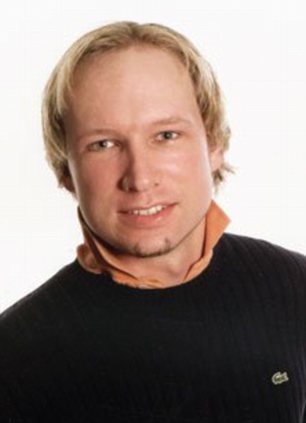
Anders Behring Breivik

Terrorist explosions and death by shooting case broke out in Norway and 76 victims were sacrificed. A lot of people who has the bouquet offered to victims came near a government office quarter in capital Oslo where terrorism broke out and they shed tears and embraced each other. Trial was performed Anders Behring Breivik who is defendant in Oslo court in 2011,7,25. His motive of a crime is rebounding of immigration tolerant policy in Norway. They that are “Open country” face big crisis.

Defendant said “Labour Party of governing party accepted Islamic system immigration too much. The strong signal was sent in order to make it stop.” He justified his action. On the other hand, one woman who lives in Oslo said “nobody sympathizes. It is wrong to do. He should have stopped only by thinking.” Norway government kept to accept immigration positively by Labour Party initiative. Islamic system immigration, such as Pakistan, Iraq, Somalia are 2% of a population of about 4,850,000 in Norway. The economy of Norway was favorable by the favor of abundant oil incomes however Norway growth rate of the gross domestic product decreased and the unemployment rate rose, thereby sense of incongruity to immigration acceptance spreads among people.

Islamic system guerrilla groups can pose a threat for Norway by intelligence service. Extreme right-wing organization is very quiet in recent years however they are a tendency of the increase in activity from last year. There are a lot of people who value foreign culture in Oslo however there are also some people that eliminate other culture. The guess that Islamic system guerrilla groups attacked Oslo where big terrorism has not broken out flowed into Norway.

A woman who lives in Oslo said “People are skeptical to immigration that differ culture, but the natives in Oslo and immigration live together satisfactorily.” It is important for us to understand each other. What do you think?

http://sankei.jp.msn.com/world/news/110726/erp11072607160001-n1.htm

by Sunao Tanaka