Japanese Popular TV Shows in Which a Girl Plays a Role of a Boy

In Japan, people tend to like TV shows in which a girl plays a role of a boy.  It doesn’t mean an actress performs a boy.  From the past, an actor performs a woman in Kabuki which is one of the Japanese traditional dramas and an actress performs a man in Takarazuka Kageki which is played by women only.  Today, people tend to like the scenario itself that a girl has to pretend a boy.  Why do people like such a story?  There seem to be some reasons related to the view on gender in Japan.  I would like to mention about them.

First of all, the reason why people like such a drama is that they are gradually absorbed in the story.  At the beginning, they think it is too unrealistic, as a girl plays a role of a boy there.  But as the drama unfolds, the heroine behaving like a man seems to be more charming and realistic.  Secondly, the Japanese people are still bound by gender roles, but on the other hand they gradually want to go against them.  For example, a person who tries to be attractive only to the opposite sex may be disliked by the same sex.  Such a person emphasizes too much his or her gender.  So women are more attracted by the boyish heroine than women who flaunt their sex appeals.  Women are also attracted to the heroine because she becomes popular with men, although her hair is short and she always wears pants like a boy, and I agree with her brave, strong will and positive way of living too.

In conclusion, now the Japanese have a trend to think it is smart to have gap between the looks and the behaviors.  The hair styles and clothing are becoming unisex.  I think the tendency can overcome the established gender role.  This culture has a power to change this unfair social custom.


                  by Sakiko Maruyama

Confucianism and Gender


The picture shows the development of the Chinese character, the word “woman”. It belongs to the pictographic character which is a writing system that depicted real world objects, events or ideas. So clearly we get the image of a woman that shows her “kneeling position” which means to be obedient and docile. This is the gender role women should play since this word had originated from ancient China. The image expanded much more strongly when it had been united by Confucianism.

Confucius, as we know, was a philosopher, educator and political figure. His teaching which called Confucianism formed the basis on education and comportment of the individuals, which made their lives more ideal. He developed an ethical system, described the important principles of humanity, loyalty, morality and consideration in society. Also, he discussed how the individuals interact with others in society, especially focused on the model of “home” which for him was a microcosm of the state. He expressed the perfect range of human interaction in his word “Five Relations”; the ruler to the subject, father to son, husband to wife, the elders to the young, and the last one is between friends. These ideas not only affected the shape of the individual roles, but also fixed gender roles differently between men and women in the society. Especially, “women” had been kept staying at a disadvantage position.

The Confucian family morality which is the spiritual fetters of wifely submission and virtues imposed on Chinese women called “three obedience and four virtues”. For women at their every stage of life must “obey her father as a daughter, her husband as a wife and her sons in widowhood”. These are the “three obedience”. As for the “four virtues” are the proprieties in behavior, speech, demeanor and diligent work, of course women’s work only centers around the home because men’s work centers around outside. Also, there are more unbalanced in case of divorce. A man can divorce his wife if she doesn’t obey his parents; also if she is lecherous, jealous, has a nasty disease (even be disabled that classified as “nasty”), barren (especially not be able to bear a “son”) and she talks too much or steals. Unfortunately women don’t have the same rights to charge their husbands. It sounds strange, unfair, discriminating, but this is the gender role for women in Confucianism.


by Linda  (Ying-Yu Lin)

CRIMINAL MINDS (Not the tv show..!)

What is the first thing we think about when we hear, see or read about criminals in the news? You will naturally assume that they are bad people and that they deserve to go to prison and rot in there. But we forget one important issue, what turns a normal person like you and me into a criminal? What motivates criminals to act as they do even when they know they are doing something wrong and society does not approve of it? I intend to find the answer to this mystery with a little application of sociology.

Bernard ‘Bernie’ Madoff, founder of the Bernard L. Madoff Investment Securities LLC was arrested in 2008 for probably the biggest financial fraud in the United States. “He stole from the rich. He stole from the poor. He stole from the in between. He had no values,” Said one of his victims. (Internet article, 2009) According to his two sons, Bernie had earlier on confessed to them that his investment advisory business was ‘a giant Ponzi scheme.” Whereby he would pay investors with money paid by other investors rather than actual profits generated from the organization. All the money from his customers would go straight into his account.

In a sociological point of view, Bernie Madoffs criminal acts can be seen as deviance. According to Robert Merton’s strain theory, deviance occurs when a society does not give all its members equal ability to achieve socially accepted goals. That is, people are forced to act the way they do because the society has forced them to. Therefore, Bernie Madoff can be seen as an innovator. He accepts the goal of making money since it is a major necessity in the society, but comes up with different means and methods of acquiring it. These means are not accepted in society of course, but he is forced to come up with them simply because society has not given him a chance to get employed, get a good salary or even be able to provide himself and his family with basic necessities needed in daily life and hence, resorting to a life of crime.


References:

Madoff gets 150 years for fraud Retrieved from an internet article on 11/10/2011www.cbc.ca/news/business/story/2009/06/29/madoff-ponzi-fraud-sentence564.html

Status Switch in Female Emperor Controlling Period

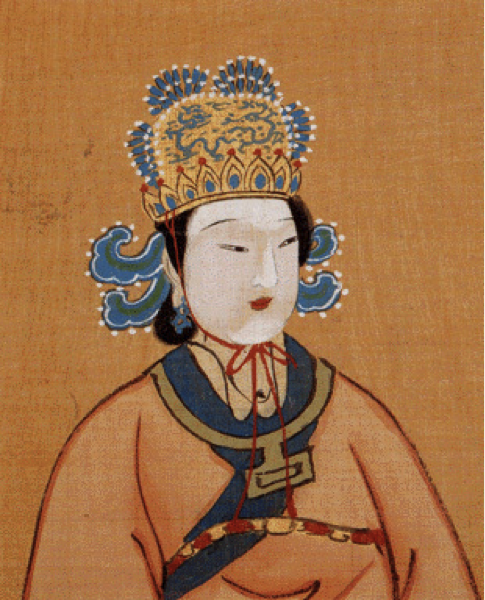
Looking through Chinese imperial era, out of 400 emperors that had controlled the whole country, only one of them was a female emperor. There is a phrases in China 后宫佳丽三千which means there is thousands beautiful concubines in imperial palace to serve the emperor. But in this case when the emperor was female, she selected a lot of “secret male concubines” to entertain her.

In imperial era, each year there had hundreds of young and beautiful ladies chosen to be concubine of the emperor from all over China. To be chosen as one of concubines of emperor was a way to gain splendor life and great position, but actually those girls also had to take risks of not being known by emperor and spending rest of her life in the palace alone. They cannot go back to their hometown and marry another guy.

Emperor Wu Zetian

However, in Tang Dynasty, when the female emperor Wu Zetian was throne, the situation changed. Though the officer who was in charge of writing the historical deeds did not write this part, there are still some stories about her private life passed among the people. Though there were no such big scales of tribute, emperor Wu Zetian did have f male concubines when she was controlling the country. There were rumors saying that her daughter even recommended men to her to be a “secret male concubine”. The center of family has changed from male to female, she can have a lot of male concubines; these men tried their best to get her attention with some tricks like what female concubines. It shows that the male can be preoccupied and attentive like a female. For instance, one of the male concubines was an imperial doctor, in order to get emperor Wu’s attention, he exaggerated another guy’s bad behavior and told a lot bad words about that guy to Wu, which aroused Wu’s abomination of him and finally gave an order to kill him. Through this way, the doctor wiped one of his competitors out.

It is certain environment influences both female and male’s characteristics, the female become the one who make the big decision (we also can look at the political and economic aspects, Wu is one of greatest emperor in Tang dynasty.), no longer the delicate image labeled on us before and male become really sensitive, no longer as staunch as the masculine image they always depicted. Thus, we can conclude that personality is not something that is embedded in our genetic but rather they are formed by the environment and society surrounding us.

PS:  There is a Japanese movie which created a period when the General was a female. This movie also shows the characteristics change of female and male. If you guys are interested in that you can check this website http://ohoku.jp/

by Chen Siyuan

DON’T JUDGE ME BY MY UNIFORM ☺

“School uniform.”

What do you imagine?

White shirts, ties, knee length skirts, grey slacks, leather shoes, blazers…?

In the city I spent 4 of my high school years; that kind of uniform only applied to those who went to private schools.

So what about state public schools?

Uniform means a unisex polo shirt in the school colour and the logo and the rest, i.e. the bottoms and accessories, is not specified by the school. But obviously, if you want to fit in, there are certain rules on how to dress within a school. They are invisible, not written down anywhere, but created by the students. It’s a social norm.  And like, you all wanna fit in right? HELLO, THIS IS HIGH SCHOOL. YOU DON’T WANNA, YOU GON GET BEAT UP BAD – just like any other society.

Anyway, so I’ll give you an example of how to dress like a public school kid.

Girls.

First, purchase a shirt at least two sizes smaller than what the lady at the uniform shop recommends. Next buy a pair of the shortest shorts you can find. If they’re not short enough, just trim off about 5 centimeters of the material – remember, you want to put half your ass on show to the world. For the make up, cake on some foundation and bronzer, then apply a shitload of eyeliner and mascara to get a ‘Jersey Shore’ look. Now put on some silver jewelry, mess up your hair like you just got back from a wild night, slap on some shiny lip-gloss and you’re set.

Boys.

Purchase your school shirt two sizes larger than the lady recommends. Next, get hold of the baggiest pair of trackies you can find, and wear them so that half your boxers show. Also grab a Nike cap, and place it towards the back of your head so that the peak stands vertical. Make sure your rattail is tightly plaited. If the length isn’t enough, you can even get hair extensions. Finally, slip on a pair of kicks from a famous sports brand, a gold necklace and a constant supply of spit to release onto the streets and you’re ready to go.

Now boys and girls, with this uniform, you must engage in certain activities out of school. This involves underage drinking, excessive partying, loud and attention-seeking behavior in public, an experience in drugs, and other makes-your-mother-cringe acts. Oh, and never forget, a few incidents with the police wouldn’t look too bad on that resume either.

Why?

Because you are an actor. By wearing that uniform, others expect you to behave in that way.

We are made to create an identity, not only through how we perceive ourselves, but our reaction to fill the expectation of how others view us. It’s an inescapable loop – as long as others judge the children in public school uniforms, the children will continue acting in a certain way.

So to all of you out there, don’t judge, because some of us do get onto higher education. Some of us do succeed.

by Marina Sata Khan

Same-sex kissing in Japanese Entertainment Industry

Yes, they are two straight guys. And yes, they are kissing.

In Japan, one of many bizarre things that amaze me is that, even though homosexuality or bisexuality are still taboo subjects in the society (and there are still negative perceptions and condescending remarks  targeted at the out-of-closet queers),  the line of sexuality is blurred in the world of entertainment.  Two guys in a boy band can kiss without anyone doubting their ‘straightness’ or labelling them as gays. Why, they can even lick and grope each other on stage and then come home as straight as ever.

When I first got into the world of Japanese entertainment, I was surprised (and weirded out) to find such acts were done frequently by the idols, in concerts and music events. But that is not all; the even weirder part is that the female fans love it! The ear-splitting screams echoed through the stadium every time  the idols do something ‘intimate’ convince me that the fans not only love it but they want more!

In Sociology class we learned that there are heterosexual women that engage in same-sex kissing as a way to get attention, but in Japan, I can say that the male idols also kiss each other for the same reason; the attention of their fans. And somehow, the whole thing is even made as a value for marketing purposes.

While we know that the male idols make out as a ‘fan service’, I cannot fathom why the female fans love seeing two of their favourite male idols kiss.  Like the guys who love seeing girl kissing another girl in a party, do Japanese fan girls also find male-kissing-male ‘hot’ too?  Or is it only because it is a kiss between two handsome guys?

Regardless of the answer, we can still conclude that the role of sex and gender in Japanese entertainment is definitely different from the norms.  Japanese idols certainly bring new perspective of what doing gender really means.  And that sexuality, sexual desires and behaviours do not always have to be parallel and they can very much contradict one another, without us losing our sexual identity over them.


         By Sakina Mahmud

Brand names in education: a sad portrayal

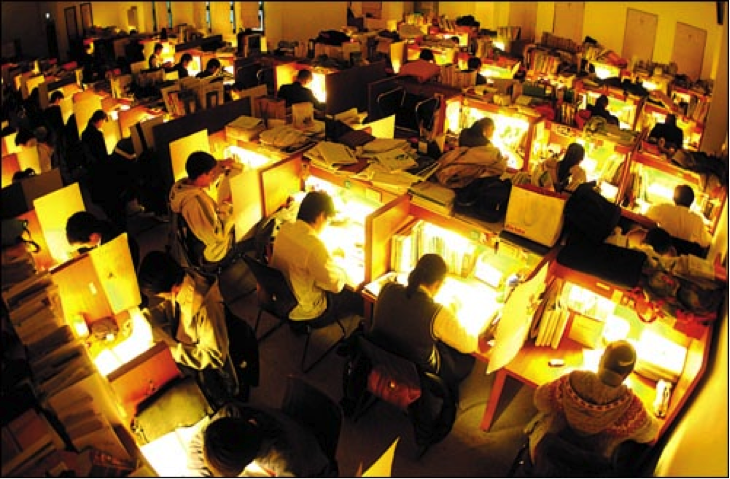
수능: [pronounced: Soo-nung] University Entrance Examination in Korea, the hurdle every Korean high school student must pass. On the day of the exam, sometime in November, the entire nation is on alert: mothers pray in temples and churches; flight schedules are delayed in the morning; police cars are called for those running late, etc. It’s like the SAT in America, but of a much, much higher importance and national highlight. To foreigners who do not know about the Korean education system, it must look bizarre how a single examination can have such significance in society. And why is that so? Well, long story short, getting high grades on the Exam allows an entrance to a brand-name university, which is believed to guarantee a successful career in the future.

In Korean society, a degree from a high-ranking university has always been looked up to – like as a social norm. You might argue that it is not only in Korea that famous universities are highly regarded. But it is quite more than that. It doesn’t matter much whether a student is actually capable; if you didn’t get into one of such brand-name schools, too bad, you will never achieve the proud social status given to graduates of those schools. Did you not feel well on the Exam day and get a low score as a result? Too bad, you’ve just been given a negative label as an ‘unsuccessful’ student. Likewise, such social norms dictate the way people think of education. From the age as early as 10 (or younger), children are sent to numerous academies, cram schools and to private schools so that they can get high scores on the University Entrance Exam. It is not uncommon that young and bright 19-year-olds sacrifice a year of their youth, just to take the test one more time; or in extreme cases, to commit suicide out of desperation.


Typical "study rooms" where students pay monthly to have a single desk and quiet setting for studying

I think this is one good example of how we develop the sense of ‘self value’ through socialization. Ordinary students in Korea are raised in social settings in which studying to get high grades, and thus attending a ‘good’ high school and university are considered the best thing you can achieve as a student. Playing sports or music is pursued as a hobby only seldom. Even for myself, it was only after I came to Japan and attended an international school that I discovered I could manage both academics and club activities.

This is not to downgrade universities or students in Korea and their efforts, but just to address the ridiculous amount of pressure imposed upon them due to inflexible social norms. Instead of enjoying their “青春” (youth) to maximum, students are overwhelmed by the society’s expectations. Having grown up in such settings, students are socialized to follow the system, without many other ways out. Just imagine how many different skills and dreams could have been discovered, had the system been different. Recently, there have been many proposals for reforms, as well as positive changes in people’s views on the current education system. Hopefully, a better future is waiting for younger generations.

PS. This year’s Exam just took place on November 10th. A big cheer for those finally freed of the shackles!

"Thanks officer!": A student, running late, is hurriedly getting off of a police car 10 minutes before the exam begins

by KyungYeon Chung

What makes a guy fashionable: Being fashionable in Japan and in the U.S.

I have analyzed how the standard of being fashionable differs in Japan and in the U.S. Three years ago, when I was 16 years old, I lived in Atlanta, Georgia, and went to a public high school there as an exchange student. Unlike most of Japanese high schools, most American high schools do not have school uniform, so that the students can wear whatever they want to. Japanese kids wear their own clothes only when they are off school. I noticed during my stay in the. U.S. that what the American high school students wear is different from the Japanese counterpart, and I decided to analyze why they are different on the premise that people wear clothes that they think will make them look good.

There is a considerable difference between American fashion and Japanese fashion. For example, in the states, many boys that are called “cool” and seem popular among the American teenagers wear their sport wear, especially the one of the sport team that they belong to, and a sweat shirt with their school’s name on it. Those who do not belong to any sport teams wear a simple plain t-shirt and jeans. Some people wear what Japanese would call pajama in school. One thing that the clothes that American boys wear have in common is that they are focused on comfortableness rather than appearance. Obviously, sport wear is made very comfortable; otherwise, it is not suitable for sports. The sweat shirt is nice and soft and warm. In Japan, on the other hand, if a boy comes to school with his sport wear or very plain clothes, he will be asked by his friends, “why are you wearing that kind of clothes today? Did you have no time to change after club activity?” or “are you wearing pajama today?” Japanese boys are very concerned about their fashion, so they usually wear fashionable clothes rather than comfortable ones. Not only clothes but hairstyle is different in the U.S. and Japan. In Japan, many young men dye, perm, and style their hair with men’s cosmetics, whereas few American men, if any, in the states do.

My insight is that the standard of being fashionable is different in Japan and in America because what the media portray fashionable boys is different. People tend to wear what others wear; you do not want to wear something that is completely different from what others wear, otherwise, you will look strange. People have a common sense of being fashionable, and it is highly influenced by the media, in a sense that what they are wearing is basically the same as what people in the media, e.g. TV actors wear.

As a conclusion, we can say that it is obvious that what makes people look good in Japan and in the U.S. are different, but there is one thing common to both the countries: people want to look good in society, and their sense of being good-looking or fashion comes largely from the media.


by Yutaro Nishioka

Social Norms and Suicide Rate in Japan

Japan is notorious for its high suicide rate among all the industrialized countries, and I believe that the answer for this phenomenon lays in the deep nature of Japanese society. According to the statistics of  World Health Organization (WHO), male suicide rate is 36.5 and female suicide rate is 14.1, out of 100,000 people. Base on the statistics, we can see that female suicide is 22.4 points lower than the male suicide proportion in Japan, in 2003. I personally believe that the reason for Japan to hold high suicide is because of its social norms. For instance, it is anorm for many Japanese men in the modern society to be responsible for all of the family incomes, that is, Japanese men have to face both economical pressure and mental pressure in their home and work place, their usually established their life objective on the job that they have, however, once they are being layed off form the work, those Japanese men suddenly lose their goals and fall into the state of anomie. After being dismissed, they might still wear the same suit, same tie, and leave home at exactly same time, but end up sitting in the park alone till every body goes home. They are afraid of telling the family about the abysmal condition they have brough about, and in the end, they put a period on their life in a very miserable way, to escape fromthe reality, and pressure form society and family.

In addition, suicide are also triggered by the way society treats those people who lose their jobs, unemployed people in Japan are often being labeled as loser, and as time goes by, they are affected by the comments, and they might start to falsely judge themselves as loser as well, which made them think that they are valueless to the society, therefore, they commit suicide “for good”. Those examples are all about how norms affect our life in the society, social norms, to be specific, is invisible but has the strongest impact on our thinking and behavior. If Japanese workers can attempt to change this kind of negative norms into a positive one, I believe tragedy like suicide might be well avoided.

References:

World Health Organization. (2003, May). Suicide rate by country,year, and gender. Retrieved from http://www.who.int/mental_health/prevention/suicide/suiciderates/en/

By. Yuuki Nagahara