Kyoto urges more samurai dramas: “Constant production is indispensable”

Image from the samurai action film “Hisshiken Torisashi”

by Robert Moorehead

According to Kyodo News, officials from Kyoto city and prefecture visited TV network offices to urge them to continue to broadcast samurai TV dramas. Why? Could it be because the dramas are often filmed in Kyoto, at the city’s film studios and the city doesn’t want to lose the jobs?

While that would seem like a reasonable concern, Kyoto officials packaged their concerns in terms of spreading “Japanese culture” around the world. The TV programs are “extremely effective” in teaching Japanese culture, according to the officials. But what version of Japanese culture are the TV shows teaching? The last time I walked outside my home in Kyoto, I didn’t see any samurai walking down the street. Why the insistence on depicting an image of Japan that’s trapped in the era of samurai?

“Constant production is indispensable,” according to Kyoto governor Yamada and mayor Kadokawa, to preserve and pass on the knowledge of staff and artisans. Whether enough people actually watch the shows is apparently less important than keeping people employed in the time-honored, traditional practice of … making a television show. I would like to add that my family also requires “constant production,” that is, “constant employment” to preserve and pass on knowledge, to pay time-honored bills, and to continue the cultural practice of putting food on the table and a roof over our heads. So where’s my TV show?

How about new shows, like a drama about working in the accounting department at Olympus, where fudging the numbers, hiding losses, and padding wallets has been taken to a new level? You could even make one of the accountants dress like a samurai.

Or a show that combines samurai with cosplay?  In which a samurai travels through time to find himself winning a costume competition at Comicon.

Or the samurai get new neighbors from Brazil, and all sorts of wacky adventures ensue? The samurai could drown his sorrows by talking to a hostess from the Philippines at his favorite sunakku.

Or combine shows to make “My Samurai is a Foreigner” (Samurai wa gaikokujin), in which the lovable, romantic Tony Lazlo not only loves kanji but also is a samurai.

Or “My Wife Is a Foreign Samurai” (Okusama wa Gaikokujin Samurai), combining the Japanese pastimes of watching samurai dramas and gawking at foreigners.

Or last, but not least, a brave samurai attacks the radioactive fallout at Fukushima Dai-ichi, repairs the reactors, and then unleashes his wrath on TEPCO. Now that’s a show I’d watch.

Cardboard beds in the land of high technology

by Robert Moorehead

I don’t know whether to be impressed or depressed. A cardboard manufacturing company has come up with a way to keep tsunami refugees warm when they sleep in their temporary homes: bed frames made of cardboard boxes. Instead of laying their futons on the cold floor, refugees can now lay them on a bed made of overturned boxes. With their bodies off the cold floor, the refugees can stay warmer when they sleep.

Is this a case of private sector ingenuity? Of concerned citizens filling a gap left by government incompetence? Of people pulling together to help each other in a time of crisis? Of a manufacturer looking to sell more boxes? Instead of a cardboard manufacturer stepping up to the plate, why aren’t Nitori and Ikea donating a bunch of beds?

On the one hand, this is a low tech, environmentally friendly solution. It uses items that are readily available, and costs very little. On the other hand, be careful you don’t spill any liquids on your bed, or it will disintegrate. And sexual intimacy with your partner on a bed made of cardboard? Now that’s romantic. More importantly, why are the temporary houses so cold in the first place? They also leak when it rains. How long will refugees have to endure such a standard of living? And in a land of plenty, why are refugees forced to to emulate the homeless when trying to stay warm?

What’s next? Newspapers make good blankets, so when you’re sleeping on your boxes, cover yourself with newspapers you find in the trash. Is this glass half-empty or half-full?

Source:
“Cardboard Beds to Keep Quake Victims Warm, Comfortable in Winter.” Mainichi Daily News, Oct. 27, 2011.  http://mdn.mainichi.jp/mdnnews/national/news/20111026p2a00m0na020000c.html

Occupy Tokyo – We Are the 99%

Sharing their pain: Participants in the “Occupy Tokyo” rally demonstrate solidarity with their counterparts in New York City during a gathering at Mikawadai Park in the Roppongi entertainment district Saturday. SATOKO KAWASAKI PHOTO

by Robert Moorehead

The Arab Spring turns westward to the United States, and now across the Pacific to Japan, as protestors are occupying public spaces to demand a more just distribution of wealth. In the United States, protestors have decried the dramatic concentration of wealth in the top one percent of the country’s population. While the US holds much of the world’s wealth, recent decades have seen this wealth concentrated in the hands of a select few, while much of the country struggles with long-term unemployment, a housing crisis, and growing poverty. While the nation’s political debate has focused on whether millionaires and billionaires should receive new tax breaks, and how large those tax breaks should be, protestors have occupied a park near Wall Street, demanding a new social contract that focuses on the needs of the many, rather than acquiescing to the luxuries of the few. Protests have also spread across the United States, and to Tokyo, where protestors have added demands for a safer energy supply.

Mass media in the United States have largely ignored the protests, despite the arrests of hundreds of demonstrators. However, Twitter, Facebook, and other social networking sites have filled the void. Gil Scott-Heron told us 41 years ago to not sit back and wait for the revolution to come to us via corporate-run mass media. Instead, “the revolution will not be televised.”

“You will not be able to stay home, brother.
You will not be able to plug in, turn on and cop out …
Because the revolution will not be televised.”

But will it be Tweeted? Will it be live-streamed over the Internet? Can social networking sites sidestep the mass media and “televise” the revolution, even if mass media ignore it?

Are you the 99%? Or the 1%?

Student Essay Contest – Reimagining Japan

This is from nipponnomirai.jp. Contest winners can receive 250,000 yen or an iPad 2.

McKinsey & Company recently convened 80 thinkers in and outside of Japan to share their perspectives on the future of the country. The process evoked candid and creative answers that came together to form the book Reimagining Japan: The Quest for a Future That Works.

To celebrate the publication of this special book and add to its rich mosaic of ideas, McKinsey & Company is organizing an essay contest. Participants are asked to select one of six essay themes addressing the future of Japan (details below), and submit essays of no more than 2,000 English words or 4,000 Japanese characters. The grand prize winner will be awarded ¥250,000, and five runners-up each will receive an iPad2. Winning student essayists will be recognized at an awards ceremony and their essays will be published on the Reimagining Japan website, http://www.nipponnomirai.jp.

Eligibility

【Student division】The contest is open to individuals of any nationality enrolled in an undergraduate or graduate university program in Japan, and to Japanese nationals enrolled in an undergraduate or graduate university program in abroad as of October 31, 2011

【General public division】The contest is open to individuals of any nationality who are living in Japan and to Japanese nationals who are living abroad under age 31 as of October 31, 2011

Submissions

Students are required to complete the online submission form and submit essays online and also send a copy by postal mail. The contest deadline is October 31, 2011* (submissions must be postmarked no later than October 31, 2011).

* Deadline has been extended to October 31 from September 30.

-Online: Please visit http://www.nipponnomirai.jp and click on the “apply” button to send your essay via e-mail (in .doc or .docx format) with your
①Name
②Address
③Telephone
④E-mail address
⑤Gender
⑥Date of birth
⑦Name of school/company
⑧Faculty&Major/department
⑨Class level(*student only)
⑩Theme
⑪Division(Student or General public)
-Postal address: Essay Contest Office, McKinsey & Company, Inc., Japan Roppongi FirstBuilding, 9-9, Roppongi 1-chome, Minato-ku, Tokyo 106-8509, Japan (please include your name, address, and telephone number)

Essays must be prepared in MS Word in either English or Japanese, and be no more than 2,000 English words or 4,000 Japanese characters in length. This count excludes any footnote citations or bibliography. The file size should be 10MB or less. Essays will not be returned after the contest.

Themes

Essays must cover one of the following six themes:

  1. Reimagining Japan “My vision” (the overall theme of Reimagining Japan)
  2. Revamping Japan’s economy
  3. Japan’s role in a globalized world
  4. Recapturing Japan’s leadership in technological innovation
  5. Developing the future leaders of Japan
  6. Revitalizing Japanese society

Judges

  • Tadashi Yanai, Chairman, President, and CEO of Fast Retailing Co., Ltd.
  • William H. Saito, President of InTecur Inc.
  • (We are going to expand our list of judges before the end of the contest)

Winner notification

McKinsey & Company will notify winners by post an announcement on the websites in December 2011.

Awards

The grand prize winner will be awarded ¥250,000, and five runners-up will each receive an iPad2. Winning participants will be recognized at an awards ceremony, and their essays will be published at http://www.nipponnomirai.jp and other selected websites of McKinsey & Company.

All participants will be invited to a planned gathering with judges and senior McKinsey & Company consultants.

Conditions

Only one submission will be accepted per student. Students must work independently (no joint submissions). The work must be original and not previously published.

All participants who submit an essay agree that McKinsey & Company is permitted to display their essays on websites, and publish them in upcoming books and periodicals by McKinsey & Company.

The Reimagining Japan essay contest, essay submissions, and contest results are separate and unrelated to McKinsey & Company’s recruitment process. All decisions made by McKinsey & Company in relation to the essay competition are final.

Contact

McKinsey & Company, Inc., Japan, Essay Contest Office

–E-mail: nipponnomirai@mckinsey.com
–Address: Roppongi First Building, 9-9 Roppongi 1-chome Minato-ku, Tokyo 106-8509, Japan

Contest organizers

McKinsey & Company, Inc., Japan; Shogakukan

Blackface is back (if it ever left)

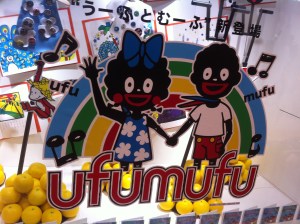
Window Display of Ufu and Mufu

by Robert Moorehead

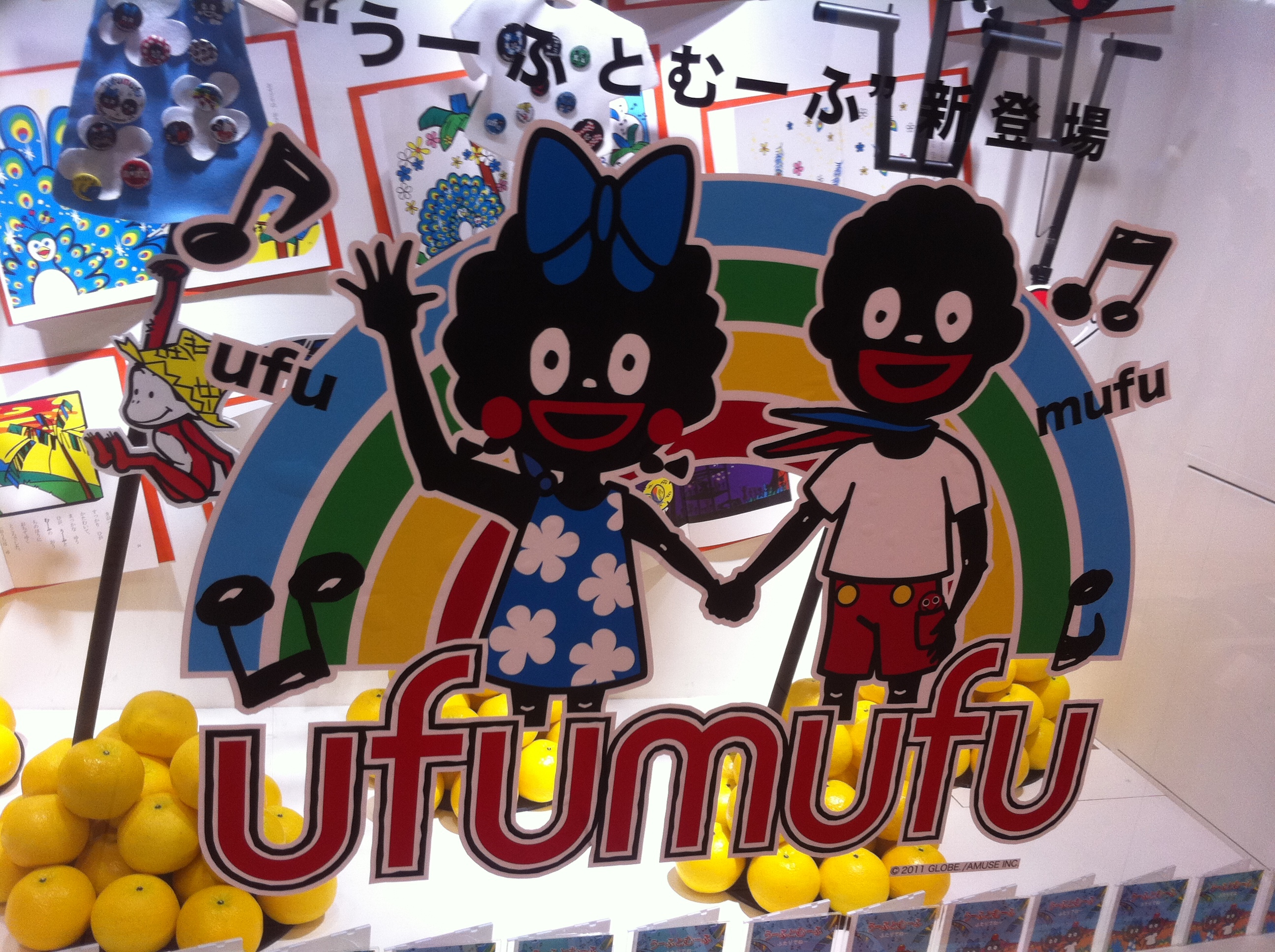
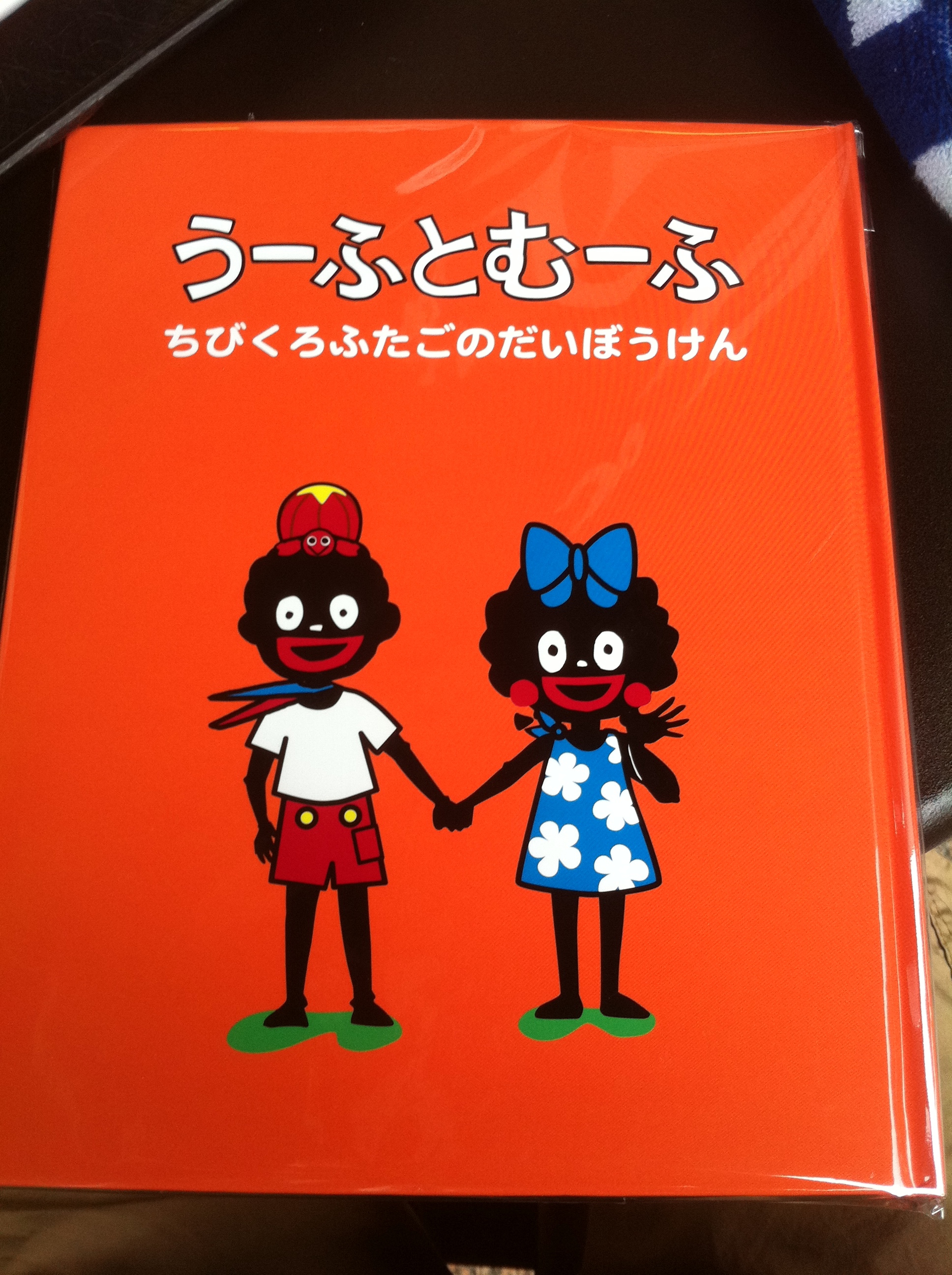
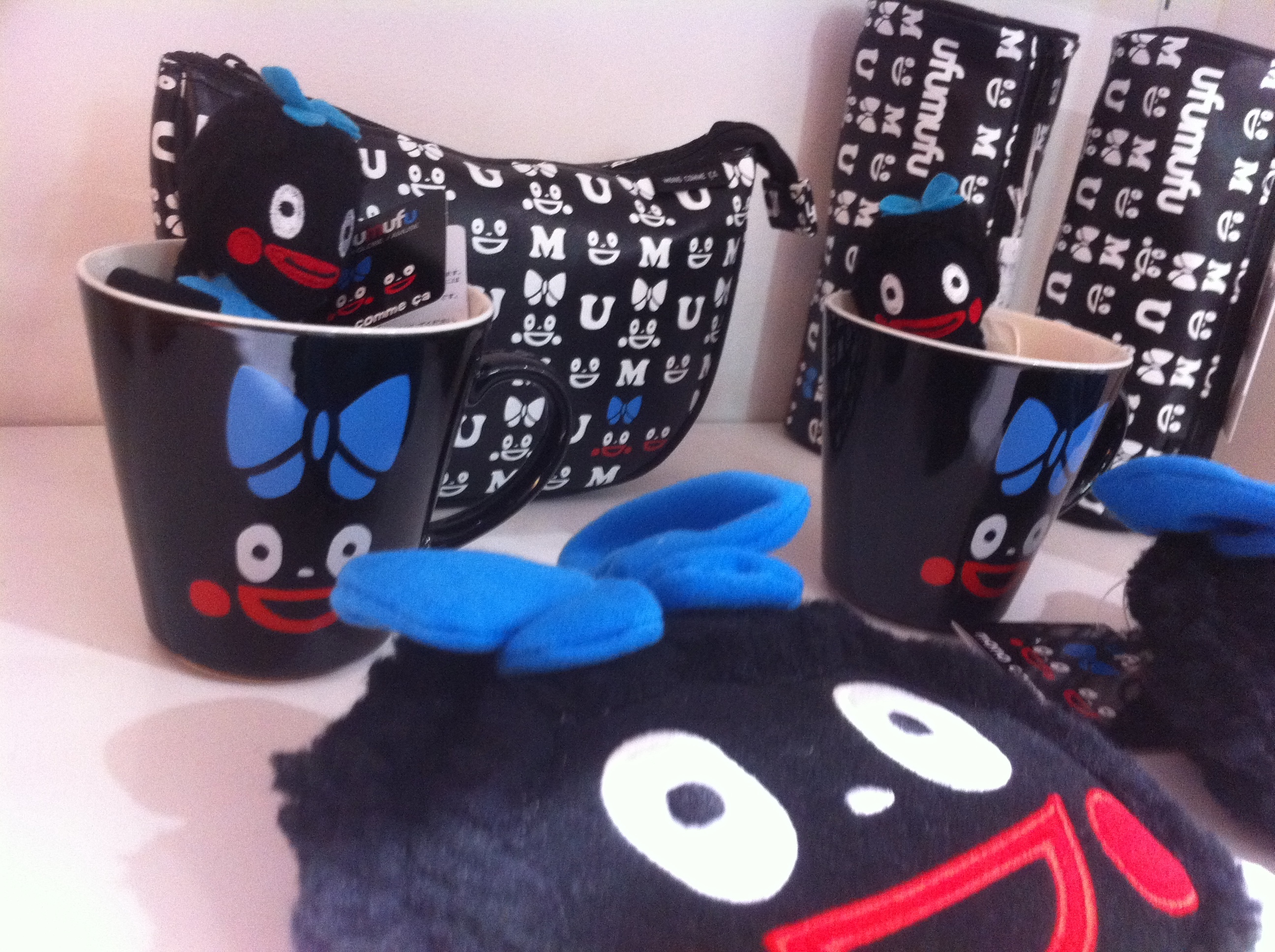
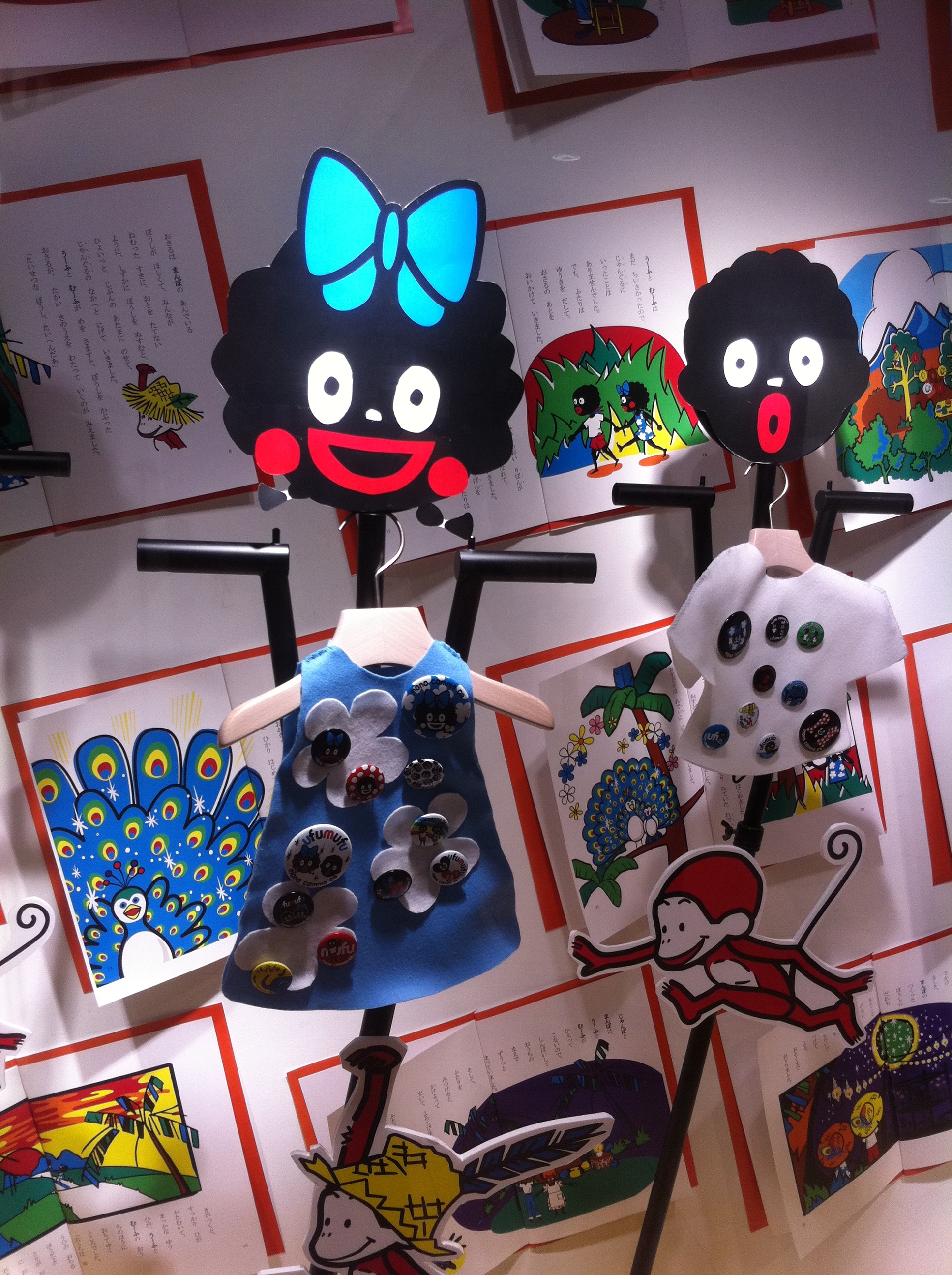
Imagine my surprise as I walked through Kyoto Station’s shopping areas today, when I came across a large window display filled with cartoon images of blackface children. Skin as dark as night, giant, oval eyes, ruby red lips, and large, bushy afros greet customers to the shop “Mono Comme Ça.” The display announces the release of a sequel to “Little Black Sambo,” called “Ufu and Mufu: The Cute Little Twins’ Big Adventures.” Ufu and Mufu are Sambo’s younger twin siblings. The parents, Mambo and Jambo, are still around, and with Mambo still dressed as a mammy, right down to her plus-size body, red apron, and red bandana. Accompanying the release of the book are a CD-DVD combo, and various merchandise, like pins, patches, dolls, mugs, and purses, all adorned with jet black faces and giant eyes. The DVD features a music video of the whole family dancing in the jungle with wild animals.

So, is this racist? Is it just a cute children’s story about two African children who have an adventure in the jungle? What harm could there be in that? What could be racist about “Little Black Sambo”? I won’t rehash the history of LIttle Black Sambo here, but you can check out the Wikipedia page. I will ask why some people find stories that depict racial others as simple, primitive, and musical so appealing. Why do we still see blackface characters in 21st century Japan advertising products and adorning t-shirts?

Cover of the story of Ufu and Mufu

Before showing my Japanese students the documentary Ethnic Notions last semester, I asked them this question. Several raised the valid point that the images can have different meanings in Japan than in the United States, and that we shouldn’t impose American meanings on the Japanese context. Others noted that Japan lacks the United States’ particular violent history of systematic racial oppression. I agreed, but I argued then (and still argue now) that these images still do the same thing in Japan as they have done in the US: they define a racial other, and thereby help those who are consuming these images to define themselves as superior.  As John G. Russell has argued, Japanese people have historically used these images to place themselves within a global racial order.

Some have used cultural arguments to claim that these images represent long-held Japanese beliefs regarding skin tone, and the valuing of lighter skin. However, this claim fails to recognize the historical evolution of these images in the popular imagination in Japan. The images are not recent imports from the United States (Commodore Perry’s crew performed a minstrel show in blackface for their Japanese hosts upon securing the opening of Japan to US trade in 1854), nor are they simply kawaii (cute) adornments for modern-day children or adults.

As Russell (2008) notes:

The various characters in the story, including Mambo

Japanese attitudes toward black people have been neither static nor universally negative. Rather it appears attitudes evolved in tandem with Japan’s exposure to outside cultures, principally—but not exclusively—those of the West, whose own attitudes toward blacks and other dark-skinned peoples were decidedly negative when it encountered Japan in the sixteenth century. Cultural reductionist models that attribute Japanese antiblack attitudes to deeply embedded, remarkably static traditional aestethics or to a visceral revulsion toward black skin tend toward an ahistoricism that retreats from interrogating power relations in the construction of color prejudice writ large and the role Western racial paradigms have played in the global invention of black alterity. Such models fail to explain why racially ascribed attributes such as laziness, stupidity, and hypersexuality—which Japanese had ascribed to outsiders regardless of skin color—came to be associated primarily with dark-skinned people. Nor do they explain why—unless one is prepared to posit a universal negrophobia—these traits are identical to those ascribed to blacks in the West.
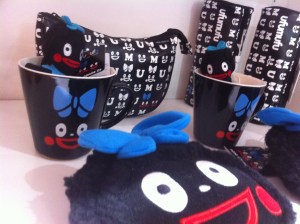
Ufu’s merchandise

Russell connects negative perceptions of Africans with the various historical institutions of slavery, which transmitted images and understandings to Japan. These perceptions were further fed by the import of Western “scientific” racism, and other global discourses on race.

Long story short, these images not only matter, they also travel. Japan doesn’t exist in a vacuum. While we can re-interpret these images in new contexts, those new interpretations often hew closely to their original meanings. Race remains a key social marker, and using images of happy little darkies sitting down to a meal of pancakes after a long day of dancing with tigers and monkeys does little to help us reach the promised land.

This story depicts blacks as primitive and musical—showing them as sexual might be too much for a children’s story. Perhaps we should be thankful they’re not also playing basketball?

So what do you think?

Links:
Wikipedia page on Little Black Sambo.
Russell, John G. 2008. “The Other Other: The Black Presence in the Japanese Experience.” In Japan’s Minorities: The Illusion of Homogeneity, 2nd edition. Edited by M. Weiner. London: T&F Book UK.
iPhone App for the book in the Japanese iTunes Store. Write a review.
Facebook page for Ufu and Mufu. Post your thoughts on their page.
Five Foxes Customer Service number: 0120-114563. Share your thoughts with the corporate office.

Window display for Ufumufu merchandise

Robot teachers replacing foreigners?

by Robert Moorehead

I don’t understand this one, or maybe I just don’t want to. While Japanese researchers focus on building high-tech robots that can provide health care to the country’s growing elderly population, South Korean researchers are building robots to teach English to Korean children. The planet is already teeming with people who can do both tasks, and who could really use a job. So why use robots?

According to the Mung Sam Kim, of the Center for Intelligent Robotics at the Korea Institute of Science and Technology, South Korea has a shortage of English teachers. Plus, past teachers have suffered from a “moral problem.” These robots have no sense of morality at all–a clean slate! The robots will connect to a call center in the Philippines, where English teachers can help the children without sullying up Korean classrooms with their presence.

The $100 million the South Korean government is spending on robotics grants could hire a lot of English teachers, and the same goes for the Japanese investments into robot caregivers. The children and the elderly would have human contact, and after work the teachers and caregivers could go out into the Korean and Japanese economies and spend money, thereby returning money back into the government pension and health care systems.

But then we wouldn’t have cool robots tell us in lame computerized voices that our English pronunciation is not good.

What does this say about the prospects for integrating foreigners into Korean and Japanese society? Why are robots preferable to people? Should I be replaced with a robot?

Link: The Chronicle of Higher Education

Being Zainichi and being forced to choose

At his K-1 matches, Choo wears both a Korean and Japanese flag on his uniform. Provided by the JoongAng Ilbo

by Robert Moorehead

K-1 UFC fighter Choo Sung-hon and soccer player Lee Chung-sun have more in common than their Korean ancestry and their status as professional athletes Both also surrendered their Korean citizenship when they became “Japanese.” Lee (known in Japan as Lee Tadanari) says he grew weary of the taunts he suffered in Korea because he grew up in Japan. Choo (known in Japan as Akiyama Yoshihiro) acquired Japanese nationality so he could compete on the Japanese national judo team. Choo wears both the Korean and Japanese flags on his uniform when he competes, to honor his dual heritage.

Faced with older Koreans in Japan pulling them toward retaining a Korean identity, and younger Koreans in Japan feeling a kinship to the Japanese country where they had been born and raised, many activists have pushed for a “third way,” an identity as Zainichi (Korean resident of Japan) that reflects their experiences as both of and not of Japan and Korea.

This interview with Choo captures his thoughts on his in-between status.

Racism in South Korea?

by Robert Moorehead

The discussion of alleged racism in South Korea in The Diplomat sounded so similar to discussions of the same issue in Japan that I wanted to post a link to the article. I can’t comment on the prevalence of racism in South Korea, since I’ve never been there and have read little on the issue. However, the issue of English teachers complaining of racial discrimination is familiar to me.

Like the teachers in South Korea, in Japan I’ve had people avoid sitting next to me on the train or subway, I’ve been followed in stores, and I’ve been harassed by a train conductor who insisted that he had stopped me multiple times trying to evade paying my fare (did he think we all look alike?). English teachers have the same right to complain about mistreatment and to pursue positive social change. But these teachers also have a higher status than other foreigners who face far greater challenges. In both Japan and South Korea, foreign migrant workers toil in low-status and low-pay “3-D” (dirty, dangerous, difficult) jobs that native workers avoid. These workers are often on the margins of the society, lacking legal protections from discrimination.

So how to address both the concerns of the teachers and the foreign migrant workers? What’s behind the allegations of mistreatment, and how can we move forward?

Korean hibakusha

Hibakusha diaries: Shin Hyong Gun, South Korean consul general in Hiroshima, points to exhibits featuring the diaries of foreign atomic bomb survivors at the city’s peace museum on July 15.

by Robert Moorehead

An estimated 30,000 Koreans, many forced laborers, were killed by the atomic blast in Hiroshima, and another 10,000 in Nagasaki. Myths of Japanese homogeneity have limited our understanding of the extent of the suffering in the war. Colonial powers are, by definition, multiethnic, and Japan was no exception. This exhibit helps us recognize this fact.

Links: Japan Times, Mainichi Daily News, David Palmer’s article in Japan Focus

Under pressure

Mats, bedding, chairs, slippers, empty bowls and cups lie on the floor of the gymnasium at Karino Elementary School, which was used as an evacuation shelter shortly after the nuclear crisis erupted, in the town of Namie, Fukushima Prefecture, on July 26.

by Robert Moorehead

These articles from the Japan Times and the Mainichi Daily News raise questions about the Japanese government’s response to the multiple disasters of March 11, especially its decisions about what information to share with the Japanese people. Disasters never follow the nice, neat plans prepared by bureaucrats and scientists. But when you’re deciding what information to share with the public, whose ass do you cover? Whose interests win out? Do you risk worrying people unnecessarily? Do you risk letting innocent people suffer from radiation exposure because you decided not to warn them a plume was likely heading in their direction? Whose interests does the bureaucracy serve?